This Tiny Town in New Jersey Feels Like a Living Time Capsule
Mount Tabor, New Jersey, is a former Methodist camp turned residential village, where colorful Victorian homes, winding pedestrian paths, and century-old traditions keep the history alive.
There’s a tiny village in northern New Jersey that looks like it was plucked straight out of the 19th century. Welcome to Mount Tabor, a residential community full of narrow roads and colorful Victorian houses. Located just off Route 53 in Parsippany-Troy Hills, it’s listed on the National Register of Historic Places.
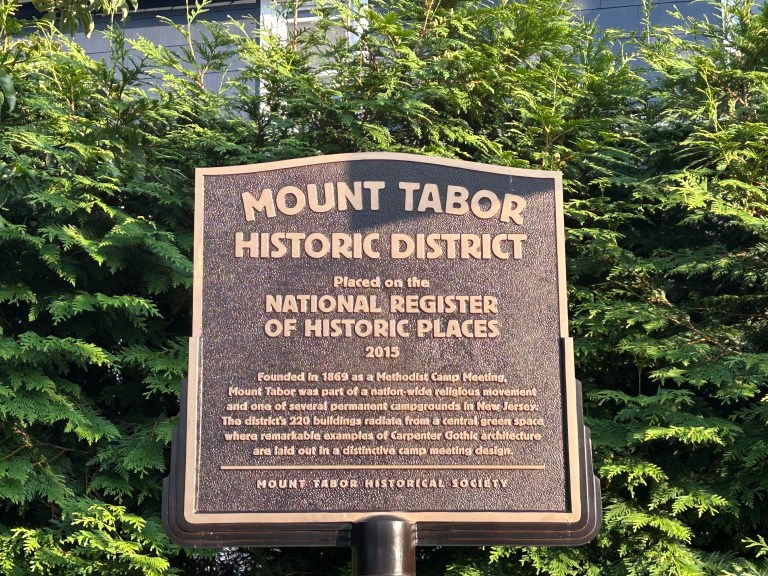
Mount Tabor was founded in 1869 as a Methodist camp meeting ground, part of a larger religious revival movement. Despite the changing times—and the abundance of strip malls and industrial buildings that have popped up nearby—Mount Tabor has held onto its historic roots. More than 150 years later, it still exudes the same charm and communal spirit of the 1800s, though it now functions as a secular neighborhood.
The border of this New Jersey town is defined by a decorative iron arch. In my opinion, it’s the perfect precursor to the storybook setting inside.

Once you cross the border, the first thing you'll notice is the narrow and winding roads. These streets were part of the town’s original layout, and you can tell they were designed for walking and community gathering—not for modern cars and trucks.
The roads lead to the Tabernacle in the center of the town. This open-air pavilion started as a place of gathering and worship, and it still holds concerts and other community events. Nearby, you’ll also find Trinity Park, a pedestrian-only circle that acts like a traditional village green. When I visited Mount Tabor, I enjoyed taking in the gardens and homes surrounding the park.

Mount Tabor began as a tent community, but those tents were soon replaced with quaint summer cottages, often built on compact 25-by-16-foot lots. Eventually, these seasonal dwellings evolved into year-round residences. Many of them are tiny Victorian homes that showcase gingerbread trim, intricate latticework, decorative porches, and other features. These homes come in a myriad of colors—such as purple, yellow, green, and blue—and they’re packed side-by-side on the hilly streets. I could spend hours admiring the unique and charming facades.

What really makes Mount Tabor feel timeless—aside from its Victorian houses and winding roads—is its unwavering commitment to its history. For example, the community celebrates Children’s Day every year, a tradition that dates back to 1873. During this event, people decorate their homes, and the streets come alive with parades, music, performances, and games.

It’s apparent that the residents of Mount Tabor are friendly and familiar. It’s not unusual to see them sitting on their porches, waving to each other on the street, and attending nostalgic local events together.

Mount Tabor is technically part of Parsippany-Troy Hills, but it maintains its own distinct identity. In fact, it has its own post office (where residents must retrieve their mail by hand), fire department, library, and community association. These public buildings are walkable from every house within the town, further adding to the old-time charm.

If you’re looking for a quick stop in the northern part of the state, consider adding Mount Tabor to your list. You might even take the New Jersey Transit train, considering that the Mount Tabor platform lies a short distance away. Visitors can spend hours strolling through the peaceful streets, taking in the unique historic architecture, and escaping from New Jersey’s endless suburban sprawl.
Subscribe to our newsletter
Get the latest updates and news
Thank you for subscribing!