The writer was invited to this location as part of a paid press trip opportunity. All thoughts and opinions expressed herein are their own and not influenced by the developing company in any way.
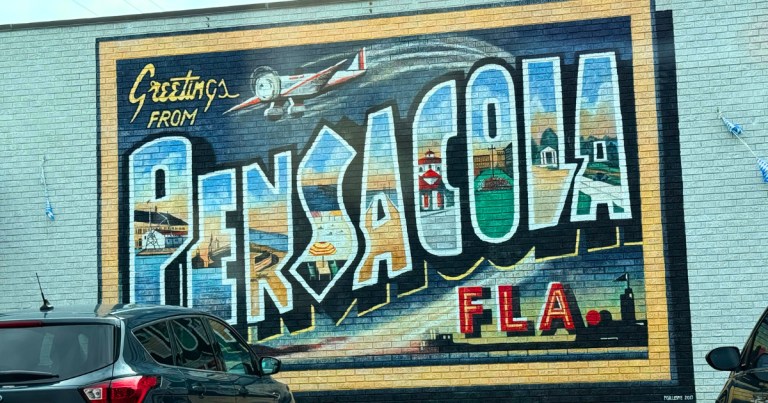
I Almost Skipped Pensacola—But This Historic Florida City Completely Surprised Me
I came for the beaches—but found a side of Pensacola most travelers completely miss.
When most people hear Pensacola, they imagine the same scene: neon wristbands, packed beach bars, and a blur of spring breakers chasing the Gulf Coast sun.
I assumed that, too.
In fact, I almost skipped Pensacola entirely, convinced I already knew the story: best beaches in Florida, sprink break galore, etc. But the moment I arrived and started tackling various attractions, it became clear I’d misjudged the place completely. Beneath the beach-town reputation is something far more layered—fascinating history, smatterings of nature, and a unique culture quietly woven together in ways that reveal themselves slowly, one discovery at a time.
The Side of Pensacola Most Travelers Never See
My first surprise was the National Naval Aviation Museum. Inside the cavernous hangars, aircraft hang suspended as if paused mid-flight—sleek fighter jets beside fragile biplanes that look almost impossibly light. Walking beneath them, I felt a strange mix of awe and humility. Each plane carries the weight of ambition and risk, a reminder of how far humans have pushed themselves to chase the sky.

I was lucky enough to be given a tour of the museum by Captain Stirling Gilliam, a retired Naval Aviator with over 30 years of service and the museum's Director. It was with Captain Stirling that I saw the different exhibits, from the Blue Angel Atrium to the fascinating Korean War exhibit. One of my favorite highlights of the tour was the USS Nimitz Flight Deck, a one-quarter-scale replica that showcases features of modern nuclear-powered aircraft carriers operating worldwide.

We met future naval recruits and retired veterans who now volunteer at the museum, dressed in their naval attire, willing to chat with guests and share their knowledge and stories.
Before ending the tour, I asked Captain Stirling what advice he gives the recruits throughout their training; his answer resonated as necessary for life as well: "Be aggressively smooth, be mentally tough."
Trading Crowds for Quiet at Tarkiln Bayou
But the moment that truly got me hooked on Pensacola came later, when I traded roaring engines for quiet wetlands at Tarkiln Bayou Preserve State Park.

Here, the pace of everything changes. Boardwalks stretch over still water reflecting longleaf pines draped in Spanish moss. The air is thick with the scent of warm earth and salt carried in from the Gulf. A heron glides silently through the shallows, barely disturbing the surface. A highlight for me within this preserve was seeing the carnivorous Pitcher Plants on the 1-mile bayou loop hike. These insect-eating plants are highly evolved, luring prey with sweet nectar and stunningly colorful markings.

Standing there, listening to the soft creak of the wood beneath my feet, I realized something: Pensacola’s beauty isn’t always loud. It’s the kind that rewards slowing down.

Where History Comes to Life on the Gulf Coast

At Fort Pickens, wind whips across miles of pale sand before colliding with thick brick walls that have stood guard over the Gulf for generations. As far as America's national seashores are concerned, Gulf Island quickly became my favorite.
From a distance, Fort Pickens feels imposing but quiet—just another coastal landmark shaped by time. Up close, it tells a more complicated story.
Constructed in the early 1800s, much of the labor that built Fort Pickens was carried out by enslaved people—an unsettling truth that lingers in the weight of the structure itself. Running my hand along the sun-warmed brick, I couldn’t help but think about the lives behind it—the hands that shaped these walls, the stories that rarely make it into travel guides.

Inside, the fort reveals another surprise: a kind of fortress within a fortress. Narrow corridors open into hidden corners, defensive positions layered within each other in ways that feel both strategic and claustrophobic. It’s easy to lose your sense of direction wandering through its passageways, the sound of the wind echoing faintly through arched doorways.

Standing there, looking out toward the Gulf, the contrast is striking—the beauty of the coastline set against the gravity of the history held within these walls.
The Heart of Downtown: Why Palafox Street Stands Out
Later, the energy shifts again along Palafox Street, where Pensacola’s past and present seem to share the same block.

Historic brick buildings line the street, many dating back more than a century, their facades carefully preserved even as what’s inside them continues to evolve. What were once general stores, warehouses, and trading posts are now filled with independent boutiques, art galleries, and restaurants that spill out onto the sidewalks. There’s a rhythm to it—doors opening, conversations drifting into the street, the low hum of a place that’s both lived-in and still discovering itself.
Pensacola’s story stretches back further than most people realize. Long before Jamestown or even Mobile, Spanish settlers established a colony here in 1559, making it the first multi-year European settlement in what would become the United States. That layered history—Spanish, French, British, and American—has left its mark in subtle ways, from architectural details to street names to the cultural blend that defines the city today.
You feel it most in places like this.

Sitting a few steps from Palafox Street, with the late afternoon sun casting long shadows across the brick, it’s easy to imagine the generations that passed through here before—sailors, merchants, families building lives along the Gulf. A bartender at Pensacola Bay Brewery drops off a fresh Kolsch, brewed right on-site, and suddenly the present snaps back into focus.
It’s that balance that makes downtown Pensacola so compelling. It doesn’t feel preserved for tourists—it feels lived in, shaped over time, and still evolving.
Climbing Above It All at Big Lagoon State Park
If Tarkiln Bayou is where Pensacola slows down, Big Lagoon State Park is where it opens up.
Just a short drive from downtown, the landscape shifts again—this time into wide coastal stretches where pine flatwoods meet salt marsh and the horizon feels almost endless. I followed the boardwalk trail as it wound out over the wetlands, each step carrying me farther from the noise of the road and deeper into that quiet, in-between space where land and water blur together.

The air here feels different—lighter, breezier, with the Gulf never too far away. Grasses ripple in the wind, and somewhere in the distance, birds call out across the lagoon. It’s the kind of place that doesn’t demand your attention, but gently holds it.
And then there’s the observation tower.

Climbing to the top, the entire landscape reveals itself at once—layers of green marsh, dark ribbons of water, and the Gulf stretching out in the distance. From up there, Pensacola feels expansive in a way that’s hard to grasp at ground level. Not just beaches or historic streets, but a patchwork of ecosystems all coexisting within a few miles of each other.
Why Pensacola Is More Than Just a Beach Destination
On my final evening, I stood along the harbor as the sun dipped toward the water, turning the sky shades of gold and rose. Boats rocked gently in the marina while the city settled into that calm, coastal rhythm that only arrives at sunset.
In that moment, it struck me: Pensacola isn’t defined by a single season, a stereotype, or a week in March. It’s a mosaic of centuries-old history, wild coastal landscapes, and the quiet resilience of a community that has been evolving here for generations.

I came expecting a party town. What I found instead was a place full of stories waiting to be uncovered—and the kind of destination that rewards travelers who take the time to look a little deeper. And honestly, that’s exactly why it’s worth the trip.
If You Go: Don’t Miss These Pensacola Highlights
- National Naval Aviation Museum
- Tarkiln Bayou Preserve State Park
- Fort Pickens
- Palafox Street
- Big Lagoon State Park
Plan your own trip to one of the most underrated destinations in Florida with Only In Your State’s itinerary planner.
Subscribe to our newsletter
Get the latest updates and news
Thank you for subscribing!