I Learned A Lot About Texas History When I Stepped Back in Time at Austin’s Pioneer Farms
If you love learning about history during your travels, you're going to love exploring the vast number of historic buildings at Jordan-Bachman Pioneer Farms in Austin.
I've been to Texas a few times in the past and I've even driven across the Lone Star State once or twice on the way to someplace else. Admittedly, though, I'd never spent much time exploring Texas until recently. In December 2024, I visited Austin for a long weekend for some concerts and decided to experience as much of this really cool Texas city as I could.
During our three-day visit, my travel companion and I drove all over, ate lots and lots of excellent food, and filled our days with a variety of tourist activities. I'd been to Austin on two other (short) occasions, but this time, I felt I finally got a true taste of ATX.
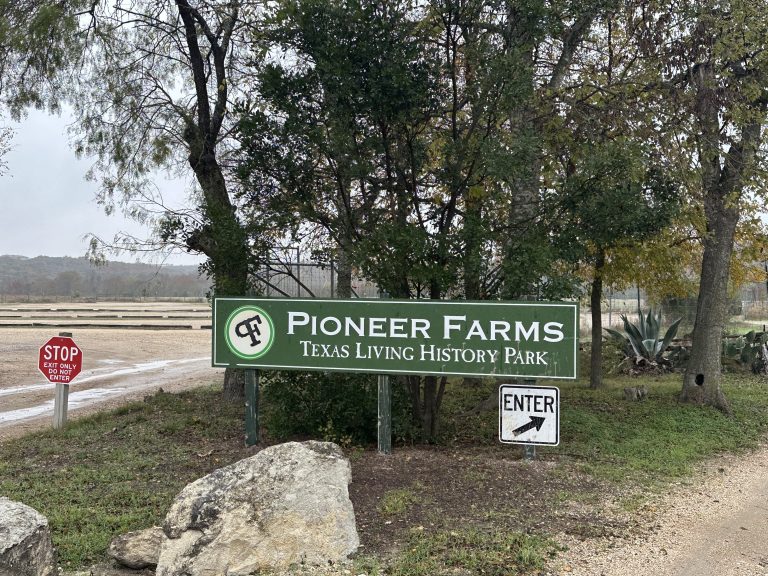
Our first day in town was rainy, but we wanted to get out and do something fun and educational, so we headed to Jordan Bachman Pioneer Farms for the afternoon. We needed to walk off lunch and we wanted to make sure that we'd be hungry for dinner. Plus, I love open air museums and historic buildings and I work at a similar, but smaller place in Colorado, so this attraction was right up my alley.

We parked and checked in at the general store near the entrance, where we paid our (very affordable) admission fee. Although Jordan Bachman Pioneer Farms offers nine different school programs for students from PreK through 8th grades, we arrived mid-afternoon, so any groups who had visited that day had already left. Thanks to the rain, there were no other guests onsite during our visit, so we had the entire 90 acres to ourselves.

Jordan Bachman Pioneer Farms focuses on life in the 1800s in Texas Hill Country. The property is full of real, historical buildings that were moved onsite for restoration and display. They're organized by time period, which is a cool bonus: you literally walk through history as you explore, journeying further back in time the farther you venture from the entry point.
The front section of the museum recreates a small town in 1899 Texas, although many of the buildings in this area are much older. Several homes are found in this area, along with an apothecary, a blacksmith shop, storefronts, and a dance hall.

Every building on the museum map has been beautifully restored both inside and out. Most are unlocked and visitors are encouraged to enter to view the period furniture and decor, too. The Houston-Orsay House, pictured above, was built in downtown Austin by a prominent businessman and was once owned by one of Sam Houston's nephews.

The Ayensworth-Wright House, located next door at the museum, was built in 1853 by a preacher-farmer-surveyor from Tennessee and was later home to a doctor who lived there until he died in 1876.

The Tate House was built northwest of Austin in the late 1840s. Samuel William Tate and his wife, Martha, raised 12 children in the home, and Tate operated a post office and grocery store in it until his death in 1899. This house was abandoned in the 1920s and later donated to the museum by Lady Bird Johnson in the 1970s.

Inside the Tate House, visitors can see what a telegraph station and a post office from the time period would have looked like.
I found Wessels Hall to be especially interesting. This historic wooden dance hall was built around 1900 and was moved to Pioneer Farms in 2012 from LaGrange. It was built by two brothers and was a popular social center during its heyday. It is unique in that it is a very large space with no interior supporting poles.

Today, bands sometimes play here and dance lessons have been offered by the museum as well. I couldn't help but think about all the people who had fun inside this place well over 100 years ago.

After exploring the 1899 village - which the museum calls Sprinkle Corner - we decided to venture further onto the property to check out the other areas. Near the museum's Scarborough Barn, built in 1850, we had the opportunity to visit some Texas longhorn cattle. According to the museum's website, this barn is one of the oldest barns in the state that's still used for agricultural purposes.

Nearby, we were able to visit the 1859 Bell House which was one of the most impressive homes on the property. This house was home to James Hall Bell, an associate justice of the Texas Supreme Court, and his family. It's a gorgeous example of the types of homes that the very wealthy lived in during the Victorian era.

The rooms of this home, like others at Pioneer Farms, are furnished with furniture and other decor from the associated time period. The Bell Farm house is especially impressive; each room is more beautiful than the last, and there was so much to look at and take in in each one.

Kruger Farm gave us the opportunity to view the type of home where people on the other end of the economic spectrum might have resided. The family of Fritz Kruger lived in this small cabin that was built in 1866, for example.

It's hard to believe that 13 children were raised in this one room log cabin. Meals were prepared in an outdoor kitchen.

The Schwarzkopf Blockhouse was built in 1854 by a German immigrant named Gottlieb Schwarzkopf. It's quite different from other homes at the museum due to its brick construction.
There are over a dozen more buildings on the grounds. There's an old stagecoach shop, an example of a Tonkawa Native American encampment circa 1844, a tenant farmer farm, and a farmhouse that was once home to emancipated former slaves. There's a church, built in 1897, where Elvis Presley sang gospel songs in 1955. There are also homes that have been moved to the property more recently and are in the process of being restored and reopened to the public.

In addition to visits and tours, this museum offers dozens of workshops throughout the year covering topics as diverse as cooking, textiles, woodworking, blacksmithing, leatherworking, ceramics, farming, and music.
This place is absolutely fascinating and it's well worth a visit for anyone visiting or living in Austin, Texas. I learned so much about Texas history during our two hours on the property and I easily could have spent more time there examining all the details in the buildings. I think it's quite impressive that Jordan Bachman Pioneer Farms has been able to save and preserve so many historic structures. This museum is a true hidden gem that's accessible for guests of all ages and interests. Visit soon and learn all about Texas history in a very memorable and enjoyable way.
Subscribe to our newsletter
Get the latest updates and news
Thank you for subscribing!