North Carolina Schools In The Early 1900s Were Nothing Like They Are Today
North Carolina's education system saw significant changes and improvements in the early 1900s, including the establishment of rural high schools and increased funding.
The early 1900s in North Carolina education was a difficult time of expansion and growth for leaders from the previous years of mostly apathy toward prioritizing educational goals. In 1901, for the first time, the General Assembly made a direct appropriation of tax funds for public schools — $100,000 for each year of the biennium. And the old State Literary Fund was reorganized, providing a revolving loan fund to build schools. Then in 1907, the General Assembly authorized the establishment of rural high schools, a very important move as up until then, they only existed in special tax districts in the state's towns. Here's a look into some of those early days.
1. The buildings were different, including the Vine Hill Academy in Scotland Neck, established in 1810 as a private boarding school for boys.
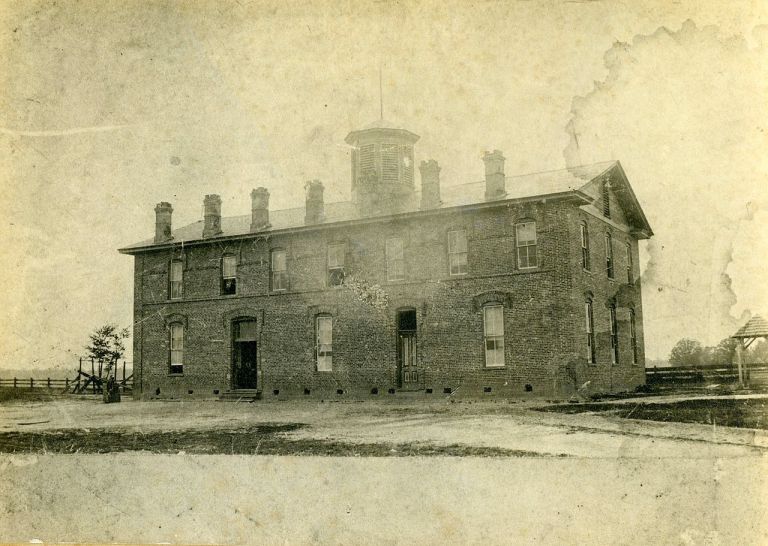
The picture was snapped sometime between 1880-1900.
Someone took this photo between 1900 and 1905, of a smaller, rural-frame, one-room schoolhouse, Edgewood School in Wayne County.

A handwritten ID label stuck to the mounting card reads, "No. 4 Buck Swamp," which is a Township located in northwest Wayne County.
During the same years, students and teachers posed at Dobbersville School in Wayne County.

Dobbersville is a community located in southwest Wayne County near the Sampson County line.
2. The desks were different at which these students of Claremont College for girls and young women sat in 1914 in Hickory.

The college was founded in 1880 as Claremont Female College, and the name changed to Claremont College in 1909.
3. The students dressed differently as you can see by a photo taken of these classy seniors the very same year at the same school.

Because the institution never achieved financial stability, it closed in 1915 just a year after this photo was taken.
And they looked better for recreational activities.

4. The school kitchens are very different from this one in a North Carolina public high school in 1917.

5. The teachers dressed differently, such as these fine-looking professionals in 1909 pictured in an Elizabeth City State Teachers College Catalog.

6. The tools of the trade were different. Can you imagine plucking the keys of the understroke Fox?

This beautiful instrument was patented in 1898, invented by Glenn J. Barrett, and named after the company's President William R. Fox.
Students studied the same subjects in zoology class, including this specimen in 1907.

7. But the rooms in which they studied looked different, such as this lab at the East Carolina Teachers Training School in 1910.

With education, technology, legislation, funding, and other supportive factors, North Carolina schools have improved greatly since these early 1900s schools. And while everything now is better and faster, what we wouldn't give for a chance to walk a mile or more to school, sit at one of those antique desks, and experience — just once — a school day back then.
Subscribe to our newsletter
Get the latest updates and news
Thank you for subscribing!