The Pyramid-Shaped Earthwork In Arkansas That Still Baffles Archaeologists To This Day
Battle Mound in Lewisville, Arkansas, is a mysterious ancient earthwork constructed by the Caddoan Mississippian people that continues to baffle archaeologists.
Throughout history, archaeologists have been trying to solve mysteries of the ancient past. And while scientists have learned a lot, there is still so much to uncover. For example, the Battle Mound is an ancient site in Lewisville Arkansas, that still baffles archeologists to this day. This ancient earthwork holds secrets of a time long gone, and with very little excavation, these secrets have remained hidden. Let’s explore the fascinating history of this ancient site.
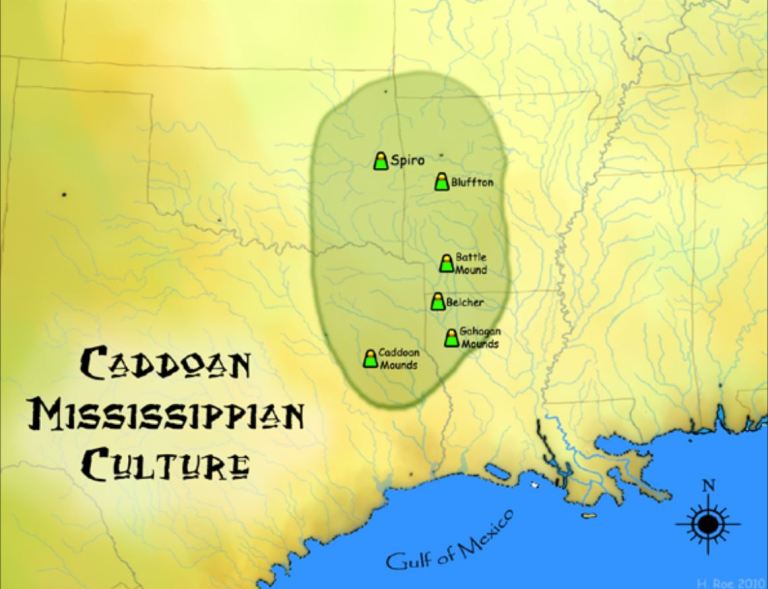
Located in Red River basin in Lafayette County, the Battle Mound is the largest earthwork constructed by the Caddoan Mississippian people.
And at approximately 650 feet long, 300 feet wide, and 31 feet in height, this ancient structure is the length of 2 football fields

Additionally, it has 3 platforms and is said to be one of the largest pyramid-shaped structures in the southern United States.
It’s no secret that there are many geological sites in Arkansas that still baffle scientists, and the Battle Mound is no exception.

To add to the mystery, not much information is available about the construction of this massive structure, but it dates back to A.D. 1200.
The mound was built by the Caddo people, who were a thriving tribe living in the Red River valley basin.

But with European invasion, the tribe was eventually removed from their land, leaving behind this fascinating ancient geological site.
In 1911, Clarence Moore, an amateur archaeologist, performed the first documented archeological exploration.

Eventually in 1948, another excavation was led by Dr. Alex D. Krieger and supervised by Lynn E. Howard. Fortunately, some discoveries were made which revealed the sacred purpose and use of the mound.
In recent years, the Arkansas Archeological Survey organization, along with the efforts of other researchers, have excavated and surveyed the area.

Consequently, unexplained anomalies were discovered, which has left the scientists baffled. Excavations of the fascinating site will continue because of its historical significance to the region and to the Caddo people.
Due to the continued archeological efforts, this site is not open to the public. But if you would like to learn more about this ancient earthwork, visit this website.
And don’t forget to check out our previous article about these fascinating museums.
Subscribe to our newsletter
Get the latest updates and news
Thank you for subscribing!