This Abandoned Graveyard In South Carolina Is Unexpectedly Hiding On A Tiny Island
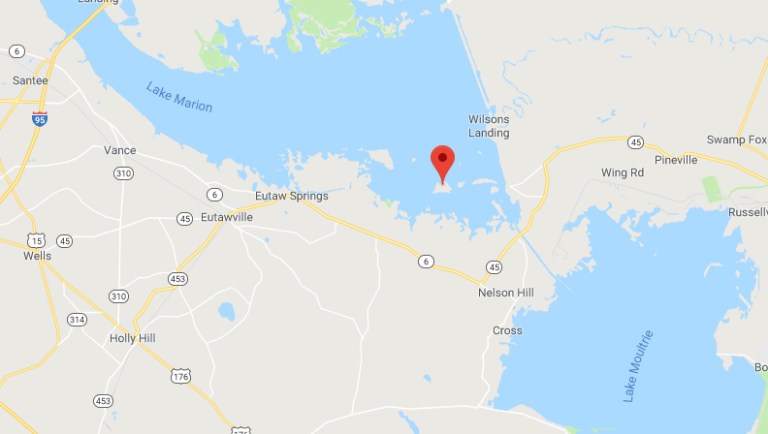
Lake Marion's creation in 1941 led to the formation of Church Island, a cemetery island with graves dating back to 1807.
For many South Carolinians, life was forever altered with the creation of the state's largest lake in 1941. Lake Marion came to be when a dam measuring more than 19 miles across was built to hold back the Santee River in efforts to create hydroelectric power to light the rural landscape in the early 40s. In doing so, homes, businesses, farms, and people were uprooted and moved to make way for the rising waters.
But not everyone went willingly — and not everyone moved. A little-known perch of land rising less than 15 feet out of the lake still remains and on it...
...are the remains of loved ones, interred in a water-locked graveyard for eternity.

Now known as Church Island, this island cemetery was once a high knoll on the landscape and also was home to Rocks Church, which was consecrated in 1844.

Although the church on Church Island no longer exists (it burned at some point in the mid-1900s), those interred here remain, as if keeping an eternal watch on the hallowed land.

After Rocks Church was established, a newer, more conveniently located church was built in Eutawville. The Church of the Ephiphany (Eutawville) created a monument to those buried on Church Island...

It's here for all to read the story of the church and the cemetery filled with relatives and friends.

The Eutawville church still makes it known to visitors that they're walking on hallowed ground and to be respectful of those souls forever interred here.

There are several sad tales associated with the 183 graves and markers found in the cemetery. Even sadder, are the 15 or so graves that contain no markers at all; most were destroyed by the elements.

Reportedly the oldest grave on Church Island dates back to 1807.

And the newest grave is dated 1939 and is that of a former plantation owner whose family had acquired their land from the wife of Francis Marion in gratitude for assistance and protection while Marion was away fighting in the Revolutionary War.

His Palm Bluff Plantation was slated to be swallowed up by the rising waters of the new lake created by the dam, and Joseph Palmer Simons was so devastated by the impending loss, he took his own life inside the home he was about to lose. He was laid to rest on what is now Church Island in the summer of 1939.

The rising waters of Lake Marion affected more than just this church and cemetery. It also flooded entire communities. Parts of one of them can be seen nearby rising above the high water line near Eutawville. Keep reading here to learn more about the underwater ghost town of Ferguson, South Carolina.
Subscribe to our newsletter
Get the latest updates and news
Thank you for subscribing!