I Hiked This Historic Hiking Trail in Wyoming, Here’s Why I Loved It
Butch Cassidy, the McCarty Brothers, Jesse James, the Sundance Kid — many of the most notorious outlaws in Western lore holed up in Wyoming after their heists. Now, you can follow in their footsteps.
Growing up in the Northwest, the natural urge to scramble up mountains and pitch a tent above the tree line is built into my DNA. But as much as I hate to admit it, there are days when piling on my usual layers of gear and hoofing it up an endless maze of high-altitude switchbacks is the absolute last thing I want to do. On those days, heading out on a road trip is much more reasonable, and as a history buff, the more backstory along the way, the better.
This past year, we spent a few weeks exploring numerous spots on the 4,900-mile Lewis and Clark National Historic Trail and the 1,900-mile Oregon Trail across multiple states. With such a hyper-focused itinerary, though, what you quickly realize is that waypoints, interpretive trails, and periods of history overlap, intermingle, and influence one another. In no time at all, we found ourselves making lengthy detours, venturing out on side trips, and flipping last-minute U-turns to check out spots along the way that had absolutely nothing to do with Wyoming's early pioneers. Instead, we found ourselves on Wyoming's very own Outlaw Trail.
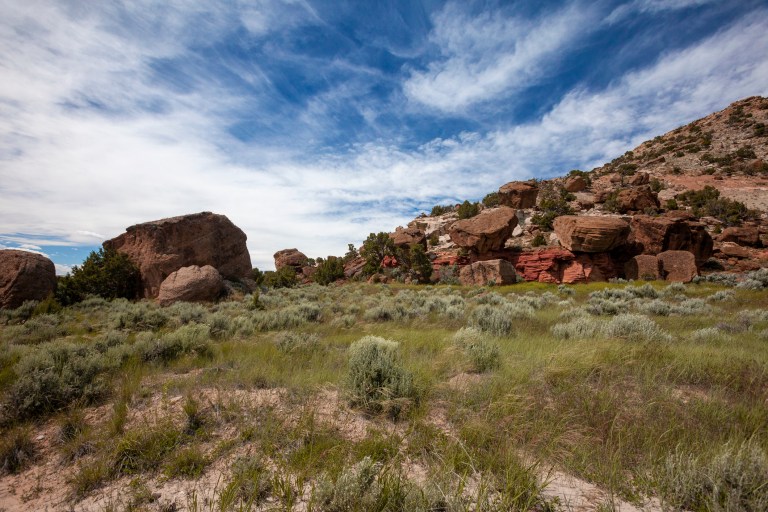
If you've lived in or visited Wyoming for any length of time, you know that Wyoming was once a hotspot for bandits and ne'er-do-wells back in the day. By the 1920s, with the rise of the automobile and the days of wagon trains long past, the Wild West had vanished, but in the late 1880s, the age of notorious thieves and outlaws was just getting started.
Not to be confused with the Outlaw Trails found near Cody or the quick and easy Outlaw Trail near Sundance, the larger Outlaw Trail traces the secret getaway routes that famed robbers and bandits like Jesse James, the Logan Brothers, Butch Cassidy, and the Sundance Kid used to disappear into the Badlands and escape capture in Wyoming, Utah, and Colorado. These storied outlaws turned ravines into hideouts, caves into shelters and ambush points, and used Wyoming's numerous rocky alcoves to their advantage as they fled, knowing that only the bravest and boldest would dare to follow them into the wilds. As part of our unscripted adventure, we headed north of the main Emigrant Trail and hiked the Outlaw Cave Trail near Kaycee. Because what better place to experience a slice of history that looks the same as it did a century ago?
And let me just say, it was stunning.

After passing through the infamous Hole-in-the-Wall area (which we spent a massive amount of time admiring), we drove another half-hour or so to the Outlaw Cave Campground, which is where the Outlaw Cave Trail begins. But be warned: the hike into the canyon to explore the caves and Middle Fork Powder River is not for the faint of heart. Since this is an "unofficially official" trail, it involves a 500-foot winding, rocky, gravel and dirt descent that is well-defined but unmaintained, and includes an equally tough climb back out of the canyon. It's incredible to think that famous bandits once managed it with their arms full of stolen goods.


As the story goes, the notorious outlaw, Butch Cassidy acquired his nickname right here in Wyoming while working at a butcher shop in Rock Springs. Like many bandits in the 1890s, Cassidy and his gang, the Wild Bunch, often disappeared into these rocks on secret getaway routes after their heists farther south, which usually involved train robberies and livestock theft. The Kaycee/Powder River Canyon area naturally offers numerous places to store loot and was an easy place to cash in on stolen horses as well, making it an ideal spot for the Wild Bunch to hide out. The base of the Powder River Canyon just happens to have a perfect little nook to do so.
The Outlaw Cave Trail drops fast into Middle Fork Canyon, which is a steep, scorched gash in the hills southwest of Kaycee. The trail starts just beyond the vault toilets at the campground, which sits right on the edge of the canyon. From there, the trail winds through patches of sagebrush and blackened trees before tipping over the rim and diving straight down almost vertically. The half-mile path is narrow and loose underfoot — more like a gravel chute than a trail in places — so it's definitely not for hikers who are unaccustomed to sketchy descents.
As we gingerly tiptoed down the wall, it wasn't hard to picture a crew of outlaws disappearing down this same slope while a posse hesitated at the top, unsure whether to follow. The drop is also easy to miss if you're blazing by on a high-speed horse pursuit, but slow going on the way down if a lawman chose to follow and continue the chase — one wrong step and it becomes a slip-n-slide.

Fortunately, the trail levels out just before you reach the river, where the dry dust underfoot gives way to dark, damp soil. After the relentless sun glinting off the desert and rock faces, the cool air near the water felt amazing. Brushy willows lined the edges of the trail for some shade, and the sound of water tumbling over rocks was definitely welcome.
A red-wall escarpment is visible from most of the Middle Fork area, and this spot boasts excellent hunting and fishing opportunities if you feel like adventuring deeper into the public wilds. Instead, we sat by the water for a while, watching moths and butterflies hover over the rocks and the distant wildflowers dance in the breeze. Everywhere we turned, the canyon walls towered upward, pockmarked with shallow nooks and rock shelves that were perfect for storing stolen treasures and holing up until the coast was clear. This was one of the most relaxing spots I've experienced in quite a while!

The actual Outlaw Cave is little more than a small hole in the side of the cliff, but the deep, circular nook is obvious when you're standing at the base of the rocks looking up. However, it was really the lush canyon scenery that kept and held my attention. I almost forgot to even look for the cave.

However long you choose to stay at the river, the hike out is a steady grind back up the same path, with only slightly more traction than on the way down. We stopped a few times to catch our breath and look back down at the spectacular views, and we were still blown away. Before tackling this hike, I had no idea this spot existed. The Powder River, yes. The famed Hole-in-the-Wall, yes. But all this rugged canyon beauty hiding in plain sight? I had no idea. Even though the Middle Fork Powder River area is only about 21 miles southwest of Kaycee, this spectacularly scenic part of the state has clearly remained somewhat of a hidden gem even to locals.
Besides Hole-in-the-Wall and Outlaw Cave, this entire area is rich with legends of Old West outlaw activity from the late 1800s, and it stretches well into the heart of Wyoming. We barely scratched the surface, but you could easily craft an entire road trip just around bandit spots. Baggs, Wyoming is home to the Gaddis Mathews House, where Cassidy would entertain the townspeople in between heists. Flaming Gorge hides Minnie's Gap, a known outlaw hideout, while Rawlins was a stopover for Calamity Jane. Even Crazy Woman Canyon, farther north, was a hideout for numerous outlaws over the years. Then, of course, the Wyoming Territorial Prison State Historic Site in Laramie, where Butch Cassidy was briefly incarcerated before his escape, plus plenty more spots around the state.
Beautiful, full of history, and glittering with the long-lost treasures hidden away by the West's most notorious outlaws, hiking little-known historic trails like the Outlaw Cave Trail is a peek into a seriously cinematic side of Wyoming that looks and feels straight out of an old-timey Western. It's almost like it's called the Cowboy State for a reason!
Subscribe to our newsletter
Get the latest updates and news
Thank you for subscribing!