Prepare Your Ears For Millions Of Extra Cicadas In West Virginia This Spring
Cicadas, especially the 17-year Brood IX, will be exceptionally loud in West Virginia this spring.
What sounds do you associate with spring? Spring peepers, lawnmowers, birdsongs...and cicadas. Definitely cicadas. We hear them every year, but they'll be extra loud this spring!
Cicadas are fascinating and complex creatures.
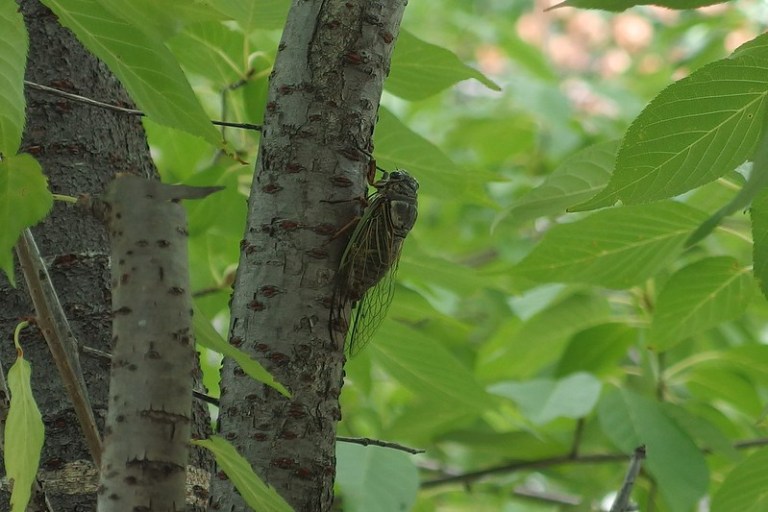
There are over 3,000 known species of cicada, and they've been around awhile.

Not only are cicadas referenced in ancient literature (including Homer's "Iliad"), but they also are found in the fossil record worldwide.
A cicada starts as an egg laid on a twig. Once hatched, the cicada nymph drops to the ground and burrows down to feed for 2-17 years on plant root sap. Eventually, the nymph emerges from its underground tunnel, sheds its final nymph exoskeleton, and reaches adulthood.

The nymph molts are easy to spot each spring and into summer on plant stems and tree branches.
Some cicadas, known as annual cicadas, have a comparatively short life cycle, emerging every 2-5 years. Periodic cicadas, however, have much longer cycles, usually 13 or 17 years.

In West Virginia, we have multiple species of both life cycle types.
One way to tell the difference is that annual cicada species are more greenish color...

...while periodic species sport more reddish tones.

The males of both are still equally loud, though!
According to entomologists, 2020 will be a banner year for cicadas in West Virginia.

Not only will we have the usual annual population nymphs emerging from the ground...
...but we can also expect millions of extra Brood IX periodical 17-year cicadas.

Even though periodic cicadas only emerge once every 13 or 17 years, there are multiple broods with scattered hatching dates, so we end up experiencing a 17-year emergence more frequently than you might expect based on the name.
As you most certainly know, male cicadas "sing" to attract a mate, and with so many extra cicadas set to join the party this year, you can bet that the noise this spring will be deafening.

Thankfully, cicadas are not a danger to humans (they don't bite or sting).

In fact, they are actually eaten as a delicacy in many cultures around the world.
Expect to start hearing these bugs in May and early June, and if you're interested in learning more about them, Cicada Mania is a good place to start. Oh, and if you find yourself a little irritated by their deafening songs, keep in mind that some of these guys are seeing the light of day for the first time since 2003. If that isn't something to sing about, you tell me what is!
In case you missed it, hummingbirds are also heading our way in droves this spring!
Subscribe to our newsletter
Get the latest updates and news
Thank you for subscribing!