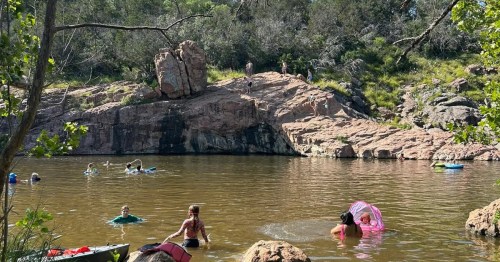
Keep Your Kids And Pets Away From The Toxic Blue-Green Algae That’s Been Spotted In Virginia
Harmful algae blooms in Virginia pose a risk to pets and humans, especially in certain water bodies.
You may have heard of recent reports of pets in North Carolina and Texas dying from exposure to harmful algae. Unfortunately, this very algae has also been spotted in locations in Virginia, specifically, Orange County, Louisa County, and Spotsylvania. The harmful algae bloom, known as cyanobacteria, thrives in warmer conditions which is why advisories tend to be issued during the summer months. The algae can be spotted due to its blue-green hue and should be avoided at all costs, especially if you’re with pets or small children. Here’s more on how to spot the toxic algae.
As of August 7th, 2019, the Virginia Department of Health has reported that the level of cyanobacteria in certain bodies of water in Virginia is considered to be harmful and should be avoided entirely.
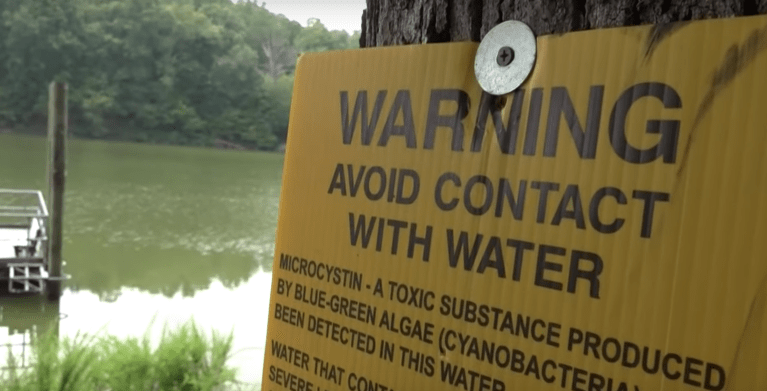
The areas under advisory are the Upper and Middle Pamunkey River Branches and the Upper and Middle North Anna Branches of Lake Anna. These areas in particular have developed a harmful algae bloom.

Encounters with toxic algae are likely to cause symptoms such as skin irritations, rashes, and even gastrointestinal illnesses. These symptoms can be even more drastic in small children and animals.

While there are certain areas in Virginia that are under advisory, the Department of Health urges everyone to take note of stagnant bodies of water before swimming in them. If you notice discolored water or scum that has a bluish tint, it’s best to play it safe and stay out.

Should you, your child, or pet accidentally come into contact with the algae, it’s important to wash off the algae with fresh, clean water as soon as possible.

If any symptoms of algae contact should happen, be sure to contact a doctor or veterinarian and seek any necessary treatment.

Note that fish can also be affected, so before cooking any fish filets that might have been sourced from a compromised water source, be sure to clean the filet appropriately and cook at high temperature.

Take a look at this recent report from WUSA Channel 9, posted on YouTube:
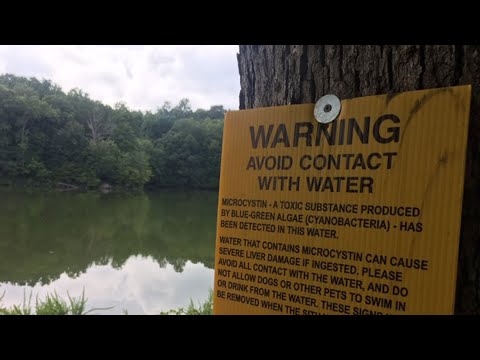
For additional information regarding the toxic blue-green algae, click here.
Have you spotted any of the algae blooms this year or in past years? Feel free to share your experiences with us.
Subscribe to our newsletter
Get the latest updates and news
Thank you for subscribing!