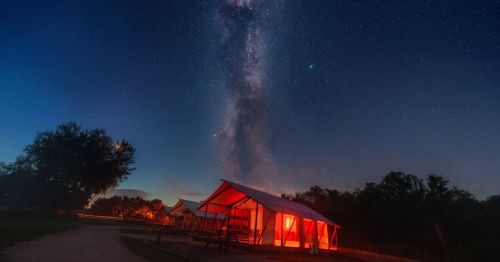
The Night Sky In Texas Will Light Up With Four Different Meteor Showers This November
Explore the diverse and stunning natural wonders of Texas, from canyons and caves to waterfalls and unique rock formations.
Eyes to the skies this month, y'all! Four separate meteor showers will be visible over Texas throughout November, and each one promises to be an awe-inspiring spectacle. Here's everything you need to know:
During the month of November, a whopping four meteor showers will grace the Texas skies: the Orionids, Southern Taurids, Northern Taurids, and Leonids. The showers are named after the nearest constellation; in this case, Orion, Taurus, and Leo.
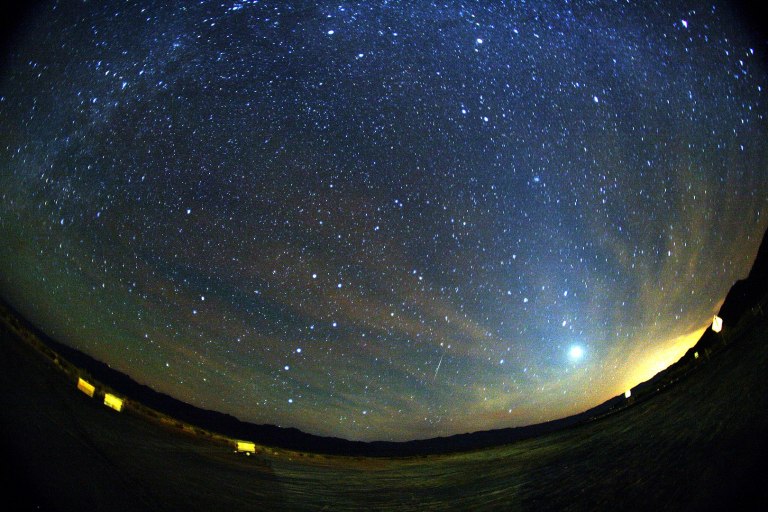
Meteor showers often consist of small rock particles that broke away from comets, and the Orionids, Southern Taurids, and Leonids are no exceptions. The Northern Taurids, however, owe their existence to the asteroid 2004 TG10.

The Orionids were first to appear, peaking from October 20-22 before dawn. All isn't lost, however—they stick around through early November, so there might still be a few stragglers on the early morning horizon.

Your chances of catching the Taurids are much better, as they're split into two parts and span a much longer timeframe. The Southern Taurids peaked in late October, but their northern counterpart doesn't see its most impressive activity until mid-November—which is right now! Shooting stars abound when the two showers intersect, so get those eyes to the skies!

Lastly, the Leonids are seen as a hit-or-miss shower—and unfortunately, we're in a "miss" year. Anything can happen in 2020, though, so it doesn't hurt to look! This shower also peaks in mid-November, just after the Northern Taurids.

For the best view, drive out to an area with minimal light pollution. As long as the moon isn't close to fullness, the cosmos should be ablaze with spellbinding glory.

To further increase your chances of seeing meteor activity, binoculars are always a good idea. Even if the showers themselves are weak, rest assured you'll be in for a spectacular view nonetheless.

Visit the EarthSky website to learn more about the showers.
Have you caught a glimpse of any meteors so far this month? Let us know in the comments, and check out our previous article to learn where you can see some of the most spectacular night skies in Texas - meteor shower or not.
Subscribe to our newsletter
Get the latest updates and news
Thank you for subscribing!