A Meteor Shower Featuring Leftover Remains Of Halley’s Comet Will Soon Be Visible Over South Carolina
Explore South Carolina's incredible natural wonders, from ancient trees to stunning waterfalls and scenic overlooks.
If ever there was a celestial event worth viewing, it's the early May meteor shower known as Eta Aquariids. Set to light up the skies over South Carolina for a period lasting approximately a week between May 2 - May 7 (with a peak on May 4-5), the Eta Aquariids has a special place in the heart of astronomers the world over.
That's because the meteors from Eta Aquariids are from one of the most well-known comets in history: Halley's Comet.
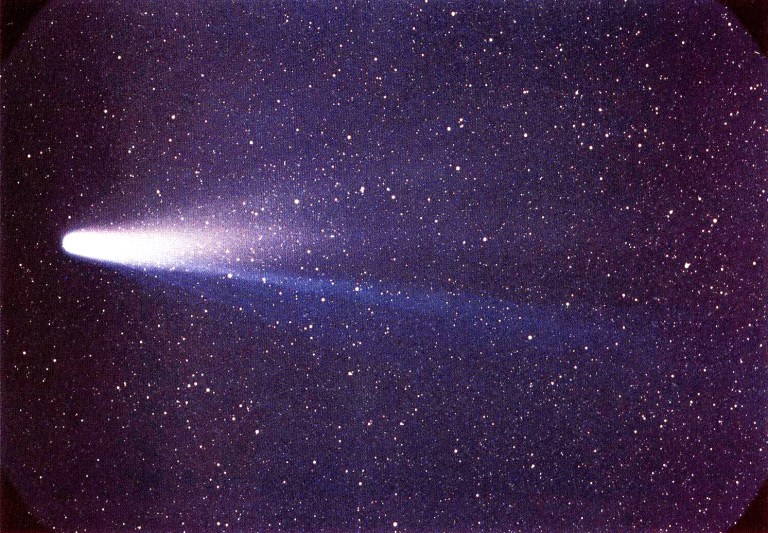
Halley's Comet, which is visible to the naked eye, is pictured here in an image captured the last time Halley's Comet passed close to Earth, in 1986.
That passing, alone, was a rare occurrence that only happens once every 80-90 years — or twice in a lifetime.

Halley's Comet is also one of the few comets that are consistently seen with the naked eye. Sightings are dated all the way back to 164 BC, as recorded on this clay tablet from Babylon.
Halley's Comet isn't expected to make a rotation near Earth again until around 2060. The color image above is from 1986; the black and white image seen here is from 1910.

With its connection to Halley's Comet, it's easy to see why astronomers (both professionals and hobbyists) love viewing the Eta Aquariids meteor shower.

Even though Eta Aquariids is known to produce much fewer meteors than, say Perseids, it's knowing you're seeing some remains of Halley's Comet that makes this show particularly noteworthy!

The remnants seen in next month's meteor shower are thought to have split off from Halley's Comet as many as a few hundred years ago. Wow!
The best time to be on the lookout for Eta Aquariids is in the hours just before dawn.

As with any meteor shower, the farther you can distance yourself from city lights, the better.
Scope out the darkest spot in your yard a few nights in advance so you'll have an unobstructed view of the eastern sky. The Eta Aquariids should be visible beginning approximately 5:30 a.m. in South Carolina on the mornings of May 4 and May 5. (If the weather forecast calls for clouds on those two mornings, then try a day or two before or after the peak.)
Subscribe to our newsletter
Get the latest updates and news
Thank you for subscribing!