Lost Lake Is The One Place In Oregon That Must Be Seen To Be Believed
Lost Lake in Oregon's Willamette National Forest mysteriously disappears and reappears each year due to a collapsed lava tube.
Oregon is full of natural wonders that will truly take your breath away. And in the remote mountains of Oregon, there lies a mysterious lake that's truly remarkable. Every year, a natural phenomenon occurs in this Willamette National Forest lake that's downright unbelievable. Each spring, when the rest of the country is dealing with the ubiquitous "April showers," this 85-acre reservoir in Oregon disappears, in what is perhaps Mother Nature's greatest magic trick. Then the following spring, the lake fills back up . . . as if nothing ever happened. Known as "Lost Lake," this dynamic, disappearing pool is a place in Oregon that must be seen to be believed.
Located in Oregon's central Cascade Mountains, Willamette National Forest is one of the most beautiful wilderness areas in the state, with epic outdoor recreation, breathtaking scenic beauty, and sublime natural wonders.
But in a forest of 1.6 million acres, things are bound to get a little . . . lost.

In a remote pocket of the forest, there is a rushing, resplendent little lake—at least, for part of the year.

In the winter and early spring, when streams and creeks are flowing fast and high, this mountain basin, known as "Lost Lake," fills up like a bathtub.

But by late spring, the water up and vanishes, transforming into a dry, desolate, expanse. And then the following spring, thanks to accumulating snowmelt from the Cascades, Lost Lake is replenished to its former glory.
It's not magic, exactly. Geologists speculate the culprit is a collapsed lava tube created during a period of intense volcanic activity in Oregon over 12,000 years ago.

A lava tube is a geologic feature made when lava cools around the edges of a river of molten rock. After the lava drains away, it leaves an empty space, or "tube." A mountain range formed by volcanism, the Cascades are full of such tubes.
Essentially, when the rains slow down, so do the streams -- but the water cycle of the lake doesn’t stop there.

The water recedes, pours into a seven-foot wide hole, and simply disappears. (But it doesn't really disappear; the water runs into a tributary of the McKenzie River, eventually ending up Clear Lake.)
Oregon is an incredibly geologically diverse state; a tectonically active region with hidden volcanoes, underwater networks, and rock formations.

Lost Lake is simply these underground (or underwater) geological systems in action—running the show, really.
Geology aside, Lost Lake is a truly mesmerizing Oregon wonder that will fill you with awe at the incredible feats of Mother Nature.

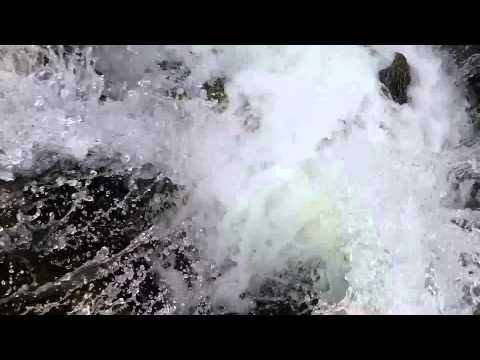
If you can't make it to Lost Lake now, you can watch this splendid natural phenomenon in this video, which is downright hypnotic:
Of all the surprising places in The Beaver State, Lost Lake just might be the most unbelievable. If you want to visit Lost Lake in Oregon's Willamette National Forest, you'll follow US-20 going west and turn right onto NF-835 that wraps around the lake. About half a mile along the path, you'll find there a Day Use parking area on your left, and the lava tube can be found off to your right. View a map of Willamette National Forest here.
And if you'd like to explore an actual active volcano in Oregon, you'll definitely want to check out this national forest!
Subscribe to our newsletter
Get the latest updates and news
Thank you for subscribing!