Millions of Monarch Butterflies Are Headed Straight for North Carolina This Spring
Monarch butterflies migrate through North Carolina from May to August, offering a spectacular natural display.
Are there monarch butterflies in North Carolina? Why, yes! Just when we thought all of the perks of living in North Carolina were already perfectly laid out in front of us, the magical northerly springtime migration of millions of monarch butterflies is about to turn that tide. Each autumn, the monarchs migrate south to winter in Mexico. Conversely, each spring they migrate northward again. That means you can get a front-row seat to the monarch butterflies in North Carolina this spring when they head back north.
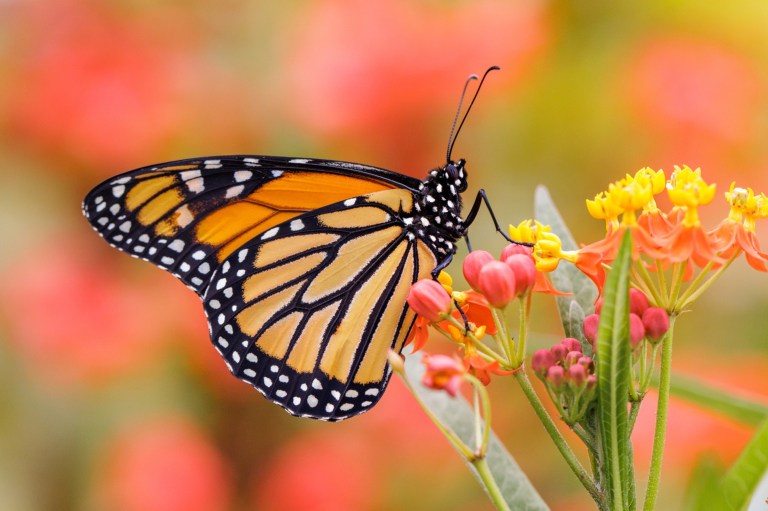
If you've been wondering, "When do monarch butterflies migrate through North Carolina?" and "When is the best time to see monarch butterflies in North Carolina?" we've got the answers. From early May through early August, we can expect millions and millions of them to swarm through North Carolina, roosting and feeding on our tasty flora.
In previous years, the monarch migration was quite impressive when nearly 300 million beautiful butterflies headed back north during the spring. Despite those impressive stats, the monarch butterfly population has drastically decreased in the last several decades. Population decline is blamed on several factors, including climate change, the use of pesticides in the United States, and loss of habitat. However, there is a simple way we can all help the monarch butterflies during their migration: By planting native milkweed for them to eat.

It's no coincidence that our state flower, the blossom of the flowering dogwood, is a treat for the monarchs. But if you want to witness an entire swarm (also called a kaleidoscope) of monarch butterflies where you live, consider planting native milkweed, which you can buy at your favorite garden store or online.
Plant milkweed native to North Carolina, of which there are more than a dozen, including common milkweed, butterfly weed, and swamp milkweed. Milkweed thrives when planted in an area that gets full sun or partial shade. I like to plant milkweed near one of my windows, so I can sit and watch the monarch butterflies and, if I'm not around, I've put a camera up to catch the goings-on in my yard.
While you can plant the milkweed in the spring, the best time is in the fall between the end of September and November before the first frost. The cold will assist in the process of the seeds germinating in the spring. Don't worry, though, you can still plant in the spring, ideally starting indoors and transferring to the ground after the final frost.

For more information on the monarch butterfly migration, stop by the official website of Monarch Watch.
We're thrilled at the news that millions of monarch butterflies migrate through North Carolina. While the population fluctuates every year, we hope to see millions of monarch butterflies in North Carolina this spring. Where do you go to see the monarch butterflies in North Carolina? A favorite park? A popular hiking trail? Let us know by filling out a nomination form.
And did you know you can even set up your own butterfly house? It's a fun and easy way to see monarch butterflies in your yard.
Are you ready for spring? Now's an ideal time to start planning your warm-weather adventures, beginning with a visit to one or all of these amazing natural attractions in North Carolina.
Subscribe to our newsletter
Get the latest updates and news
Thank you for subscribing!