Be On The Lookout, A New Type Of Tick Has Been Spotted In North Carolina
The Asian longhorned tick, first discovered in North Carolina in 2017, is spreading across the U.S. but is unlikely to contribute to Lyme disease.
You might think we have enough, but our latest bloodsucking parasite was first discovered in North Carolina in 2017, the Asian longhorned tick. As of Aug. 2022, other confirmed collections are in Arkansas, Delaware, Connecticut, Kentucky, Georgia, Maryland, Missouri, Massachusetts, New Jersey, Ohio, New York, Rhode Island, Pennsylvania, South Carolina, Virginia, Tennessee, and West Virginia, where the first one was discovered. Let's check out this new type of tick.
According to a recent study, the Asian longhorned tick is unlikely to contribute to the spread of Lyme disease bacteria in the U.S., but research is ongoing.
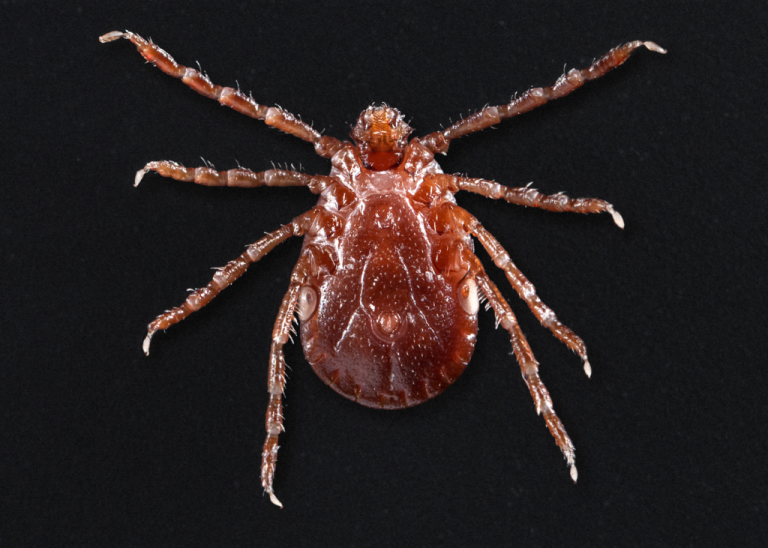
Shown is the front of a female. The difference in the sexes is the scutum, which in adult females covers the front third of the body and the entire body in males.
This lovely tick was first collected in Polk County, North Carolina, on Sept. 15, 2017, from a Virginia opossum.

The most recent was collected on July 5, 2022, from a white-tailed deer in Stanly County. They seem to be less attracted to human skin.
Ticks are active in the spring, summer, and fall, living along shrubby habitats and forested areas.

While research is ongoing, another laboratory study found this tick can carry and spread the bacteria that causes Rocky Mountain spotted fever, but those germs causing Rocky Mountain spotted fever have not yet been found in these ticks in nature.
And do you know how they are so good at grabbing onto us?

Since ticks can't jump or fly, they normally wait for their hosts in this position called questing, such as this blacklegged (deer) tick.
Covered in hooks, a tick's mouth allows it to dig into skin and stay there.

After feeding on blood, ticks get swollen making them easier to see.

They normally fall off after sucking blood for three to six days. Ticks can be removed with tweezers pulling upward as twisting can risk breaking the mouth parts into your skin.
If you find yourself outside, you will probably get a tick on you in your lifetime. However, protection is available. Have you ever come across one of these ticks? If so, please let us know in the comments below. And discover more about ticks in North Carolina.
Subscribe to our newsletter
Get the latest updates and news
Thank you for subscribing!