I Spent a Day at One of the Most Remote National Parks in the Lower 48 and Can’t Wait to Go Back
Great Basin National Park in Nevada is definitely off the beaten track, but visitors are rewarded with a cool, Alpine environment and incredible views
Located just off "America's Loneliest Road" in the mountainous desert of eastern Nevada, Great Basin National Park is far from any major city: Salt Lake City is more than three hours away; Las Vegas is closer to five, and there's not much in between. I'd visited all the national parks in Utah, Arizona, and Wyoming, as well Death Valley National Park - the "other" national park in Nevada, which it shares with California - but due to its remote location, Great Basin was one national park that I just couldn't make fit into any road trip that I had planned. So, I had to make Great Basin National Park a destination unto itself, and boy, am I glad I did.
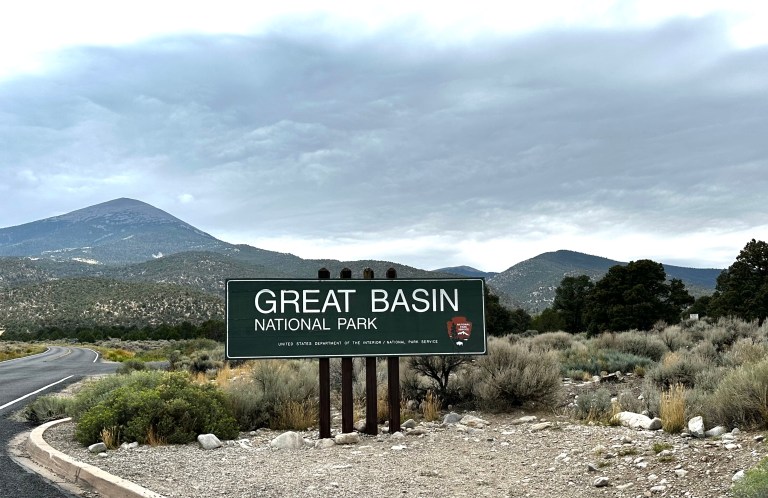
I flew into Salt Lake City, and after a couple days exploring the town, hopped into a rental car and made my way across the salt flats of western Utah to the Nevada border, then slightly south into the park. I don't really know what I'd expected. I read a little ahead of time, but my biggest motivating factor was to get my passport stamped and get it checked off my list (I'm trying to visit all the national parks, and Great Basin was number 40).
Great Basin National Park comprises a large chunk of the Snake Range, a small group of mountains that includes 13,000-foot Wheeler Peak, the third-tallest summit in Nevada -- all things I learned after a stop at the extremely informative visitor center. The main park climbs the shoulder of Wheeler Peak, affording some incredible views of the desert landscape below.

Be sure to take plenty of time on the drive up to pull over at the scenic stops and viewpoints. The Mather Overlook, for example, offers an incredible vista of the Wheeler Cirque and its snowpack - some of which remained even on my late-summer visit.

The thing I was most looking forward to seeing while in the park was the grove of ancient bristlecone pines. However, when I visited, the road to the bristlecone trail head and the Great Basin National Park camping area at Wheeler Peak was under construction, and I didn't have time (or a weather window) to hike the additional four miles the closure added to the route. So, that's one reason I'll have to visit again! I'll also have to go back and spend some time at the Lehman Caves unit of the park, which I forwent on my visit.

The Summit Trail Head was open, though, and invited a leg stretch after spending a good part of the day driving. At elevation, Great Basin National park weather is much cooler than the desert floor below. I experienced an almost 30 degree drop on my foray!

I didn't get all the way to the summit, but my low-lander lungs managed a few miles out and back at 10,000-plus feet of elevation, and I was satisfied with that - especially as some formidable looking clouds began to roll in over the summit of Wheeler Peak. Rain drops splatted against my windshield mere seconds after I got back into the car and closed the door.

The drive down was just as stunning as the drive up, and as I made my way out of the park, I was pleasantly surprised. I guess I had expected an experience that was similar to Death Valley's harsh desert terrain, but Great Basin was more comparable to Rocky Mountain National Park, with its towering peaks and forested slopes - and I would definitely go back.
For more information on the park, visit the Great Basin National Park on the NPS website. Unlike many of the western parks, you don't need a national parks pass or to pay an entry fee to visit the park, itself, although there is a fee to tour Lehman Caves. Have you visited Great Basin National Park? Are there some other places in the area I should add to my itinerary for my next visit? I'd love to hear all about them!
Subscribe to our newsletter
Get the latest updates and news
Thank you for subscribing!