The Most Iconic View in Montana Is Also a Sobering Reminder
Glacier National Park's Grinnell Glacier Overlook is considered the most-photographed spot in Montana. It's also a sobering reminder of our changing climate.
In the pantheon of iconic Montanan views, it's hard to overlook the breathtaking glaciers of Glacier National Park. Of these, Grinnell Glacier is considered by many to be the most photographed. Every year, over three million people visit Glacier National Park, and many of them take on the challenging route that leads to Grinnell Overlook. Over decades, these intrepid adventurers have captured countless photographs of the glacier season after season. Not only are these images proof of Grinnell's enduring allure to outdoor enthusiasts, but collectively, they're a sobering reminder of the impacts of anthropogenic climate change.
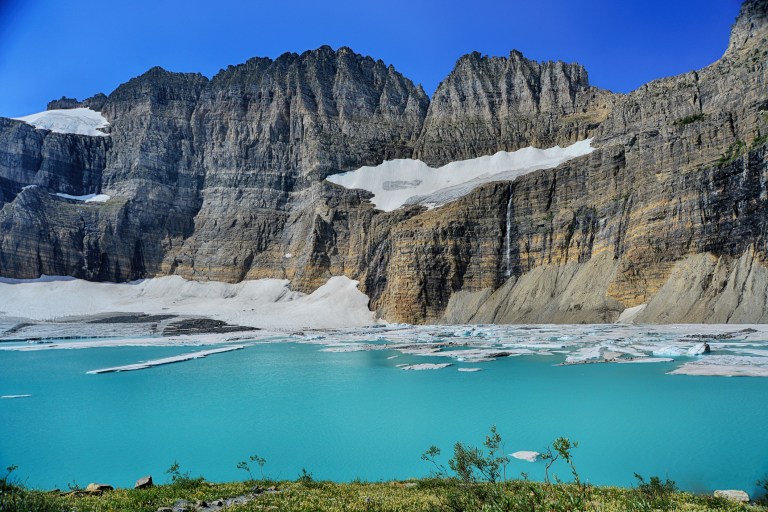
At over 11 miles and with almost 4,000 feet in elevation gain, the trek to Grinnell Glacier is easily one of the most demanding in the park. Still, hikers with the gear and the gumption are rewarded for their efforts with unparalleled natural beauty. From verdant glens to wildflower-painted meadows, the switchbacks leading to Grinnell Overlook hide treasure after treasure.

Explorers first reached Grinnell in the 1800s after a three-day, bush-whacking slog through alpine underbrush, braving steep terrain and perilous conditions. From then on — whether they were park rangers, scientists, or adrenaline-seekers — it became common for visitors to take photographs of the staggering glacier beneath them. This attention helped fuel research. In 1850, Grinnell was measured at 710 acres, making it the second-largest glacier in Glacier National Park.
Since then, elevated global temperatures have carved dramatic changes into the landscape. For instance, though they were once fused, runaway melt has separated Grinnell from its neighbor, called the Salamander. While Grinnell remains spectacular, today's visitors encounter a much different glacier than they would've even fifty years ago. Using over two centuries of reliable data, scientists estimate that the glacier lost 40 percent of its volume between 1966 and 2005.

Though this immense formation of snow, ice, and rock is between 6,000 and 8,000 years old, it will be gone by 2030 if we're unable to minimize the effects of climate change. Even with only modest increases in atmospheric carbon, glaciers like Grinnell will have practically disappeared in another 200 years. There's no doubt that the world is changing. Beyond the environmental loss, for outdoor enthusiasts, there is also a deep emotional toll as the iconic features of our beloved landscapes disappear or are altered beyond recognition.
If you're interested in visiting one of Montana's most iconic views, be sure to check out Grinnell Glacier. This breathtaking spot isn't easy to reach, but it's utterly worth the challenge, boasting unparalleled beauty and a sobering reminder that even the seemingly permanent things on our planet are ultimately ephemeral.
Subscribe to our newsletter
Get the latest updates and news
Thank you for subscribing!