Five Different Planets Will Align In The Minnesota Night Sky During An Incredibly Rare Display
Minnesota offers diverse and stunning natural wonders, including gorges, caves, waterfalls, and scenic vistas.
The Minnesota night sky offers plenty of opportunities to see starry wonders. All you have to do is go to a an area away from city lights - or other light pollution - on a clear night, then look up, and you will likely see a sky full of stars. In fact, Minnesota is even home to an official Dark Sky Park, as well as the world's largest dark sky sanctuary - the Boundary Waters Canoe Area Wilderness - where conditions are ripe to create some of the best night skies in the entire nation. Luckily, you don't have to head to the remotest corners of the state to take in the rare celestial event happening in Minnesota this month. You can see it just about anywhere, as long as it's dark enough! Read on below to learn more about the rare display that will have people stargazing in Minnesota and beyond from March 25 to March 30, 2023.
Between March 25 and March 30, 2023, a rare celestial event, largely visible to Minnesotans' naked eyes, will take place. Five planets, along with a crescent moon, will be visible in the night sky at the same time.
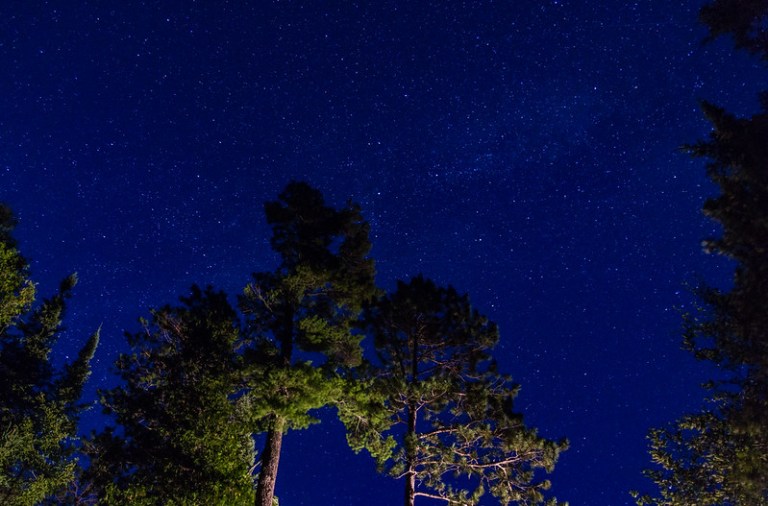
Mars, Uranus, Venus, Jupiter, and Mercury will align, along with the moon, to create an arc in the Minnesota night sky.
A similarly unusual event happened last June, in 2022. The main difference is that last year's alignment involved a different set of planets and was visible for several weeks.

This year's planetary alignment involves more planets - five, along with the moon - but will only be visible for a few days.
For a front-row seat to the event, head out after sunset and find a spot with a clear view of the southwestern horizon.

The brightest planets, Venus and Mars, will be easier to spot. It may be more difficult to see Mercury, which is easily overpowered by lingering sunlight in the sky, and Uranus, which is more distant.

You may want to consider bringing a pair of binoculars to spot these latter two planets. But be sure to wait until the sun is below the horizon before using binoculars to look for mercury.
The best viewing opportunity will occur on Monday, March 27, when the planets will be at their highest points in the sky relative to Earth.

The viewing window will be short, though - only 25 to 30 minutes - so head out around sunset and keep your eyes on the sky.

Will you look for the planets aligning in the Minnesota night sky? Do you have any favorite places for stargazing in Minnesota? Let us know in the comments, or tell us your favorite spots by filling out our nomination form!
Subscribe to our newsletter
Get the latest updates and news
Thank you for subscribing!