Don’t Miss The 11 Best Stargazing Events That Will Light Up The Indiana Sky In 2022
Indiana offers numerous exciting celestial events in 2022, including meteor showers, lunar eclipses, and planetary conjunctions.
Every year, there are a number of fabulously exciting celestial events in Indiana (and everywhere else, really) happening in the skies above us. They range from the average (like full or new moons) to the extraordinary (planetary conjunctions, anyone?), but no matter where in the Hoosier state you are, 2022 is sure to be a busy year for night sky enthusiasts like us! Here's a sampling of things you can look forward to next year.
January 7th: Mercury reaches its greatest eastern elongation
This means that the little planet may be more visible than usual if you have clear access to the horizon; it may appear illuminated in the low western sky very shortly after sunset. Mercury will later reach its western elongation on February 16th, flipping the rules; it'll be visible in the eastern sky just before sunrise at that time.
April 22nd-23rd: Lyrids Meteor Shower

This shower is a moderate one, with around 20 meteors per hour at its peak. Although the waning gibbous moon could be an issue drowning out the fainter ones, the meteors will still appear to radiate from the constellation Lyra, and the brighter ones should be visible despite the moonlight.
May 6th-May 7th: Eta Aquarids Meteor Shower

This one is a little more spectacular if you're in the Southern Hemisphere, but up here in the Northern Hemisphere, we can expect to see around 30 meteors per hour at the peak of this shower. Like just about all meteor showers, this one will peak late on May 6th into the very early hours of May 7th. The moon will be waxing crescent, so it isn't likely to be a major issue when it comes to admiring the magical beauty of this shower.
May 16th: Total lunar eclipse

Woo hoo! What a treat. A total lunar eclipse happens when the moon passes through Earth's shadow in its entirety. The moon will get darker and darker until it takes on a spooky rust color. This one is a can't miss! The eclipse is visible to all of Indiana, weather permitting.
June 14th: Supermoon

Neat! The supermoon is a spectacular optical illusion; in this case, the moon appears larger and brighter than usual for the night.
July 28th-July 29th: Delta Aquarids Meteor Shower

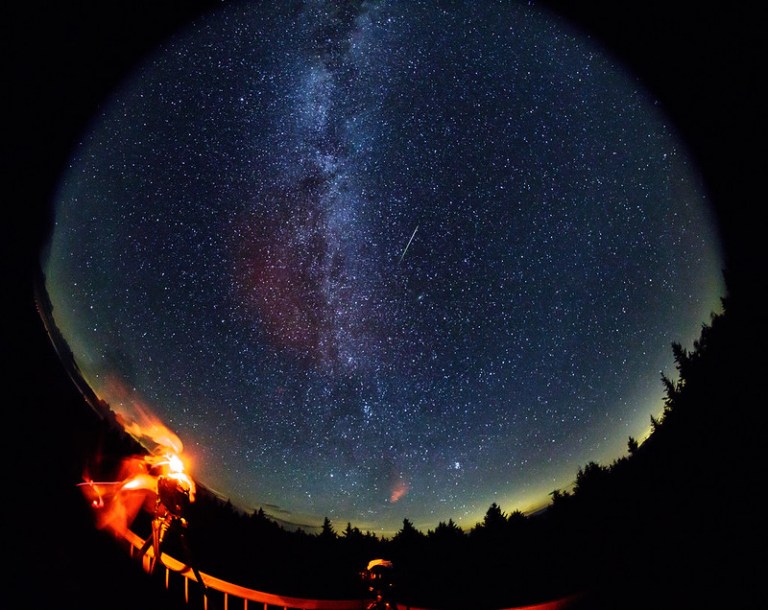
Another annual meteor shower for our viewing pleasure peaks late on the night of July 28th-early morning of July 29th. This one is a more moderate one, with about 20 meteors per hour at its peak, and will appear to radiate from the constellation Aquarius.
August 12th-August 13th: Perseids Meteor Shower

One of the most major meteor showers of the year will light up the Indiana sky late-night August 12th to early-morning August 13th. Unfortunately, a nearly-full moon at this time will drown out all but the brightest of the bright. It'll still be worth it, though! As always, this shower appears to radiate from Perseus.
August 14th: Saturn at Opposition

On this night, Saturn will appear at its closest to Earth and will be fully illuminated by the sun. It's the brightest that the gas giant will appear all year, and it's visible from twilight to dawn.
November 8th: Partial Lunar Eclipse

Once again, the moon is obscured by the shadow of the earth – at least a little. You'll be able to see the eclipse at moonset this time around.
December 13th-December 14th: Geminids Meteor Shower

It's as if nature was saving the best for last because this particular meteor shower is not something you'll want to miss! The biggest shower of the year produces up to 120 meteors per hour during its peak, and they tend to be brightly colored. A waning gibbous moon might drown out some fainter meteors, but there are so many that fall during this shower that we don't think that's going to impede your viewing experience much at all.
This list is in no way exhaustive- if you'd like to see a complete list of celestial goodies to anticipate this year, check out this website. It's quite helpful! What have been the coolest celestial events in Indiana you've ever seen? Tell us all about it in the comments! To fully experience these awesome night-sky events, you might want to consider doing so from a dark sky city.
Subscribe to our newsletter
Get the latest updates and news
Thank you for subscribing!