We Love Our National Parks, but the Stunning Hā’ena State Park Is Just as Worthy of a Visit
Visit Hā'ena State Park and experience one of the most stunning coastlines in the world while immersing yourself in ancient Hawaiian history.
The Hawaiian islands are universally praised for their beauty and are often regarded as paradise on earth. However, although beauty is subjective, Kaua'i is widely believed to be the most beautiful of the eight major islands. With a nickname like “The Garden Isle,” it’s hard to argue against Kaua'i’s eligibility, especially given its green rain forests, stunning beaches, and dramatic mountains. Of course, land like this must be protected, and there are multiple state parks set in place to safeguard a few of the areas most significant to locals and their history. Hā’ena State Park is only one of these parks, but it has carved out an important spot for itself in the northernmost part of Kaua'i.
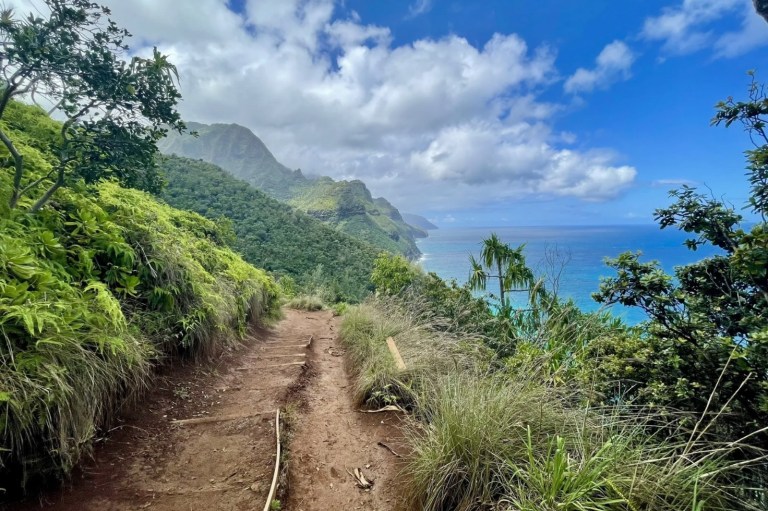
Set at the very end of the Kuhio Highway on Kaua'i’s north shore, Hā’ena State Park is sometimes referred to as “the end of the road.” But this nickname represents more than the literal end of the highway, it reflects the park’s remote and secluded status and how, although it’s a fairly popular area, it still feels untouched by time.
The reason for its popularity comes in many forms, namely the Nāpali Coast State Wilderness Park, the Hanakāpī'ai Falls Trail, Ke’e Beach, and the Kalalau Trail. These all represent part of what is considered to be one of the most gorgeous and recognizable coastlines in the world. Multiple Hollywood movies have been filmed here, including part of the Jurassic Park series, the Pirates of the Caribbean series (you have to love the irony there), the Fast & Furious series, and more. Here, you can swim, snorkel, hike, bird watch, surf, relax, and more all surrounded by incredible views.

This state park offers more than just beautiful scenery and leisure activities, it offers an insight into Hawaiian history and culture. There’s a lo’i kalo, restored taro fields that showcase ancient cultivation techniques. Then, there are the sea caves. Some of these caves are over 4,000 years old and are tied to Hawaiian legends (the Maniniholo dry cave in particular). They were also used for religious ceremonies and shelter. Additionally, there is also a sacred altar dedicated to Laka, the goddess of hula, where people came to worship and practice hula in reverence.

It is important to note that the park has changed and restrictions are in place. This is, in part, due to the fact that it was closed for over a year between 2018 and 2019 due to flooding. However, changes are mainly due to tourism and the need to keep the park a place of peace and beauty. To access the park, you need reservations and there are daily visitor limits (these reservations and limits don’t apply to locals).
Reservations get booked up fast, so it’s smart to plan your trip early and account for the fact that if you have a car and want to stay for the full day, you’ll need to book multiple time slots for your vehicle. If you don’t have a car and/or want to shuttle, you can do so from Princeville or Waipa Park and Ride. This way, you only need a reservation for yourself and not your car. There are also different reservations for other aspects of accessing the park, so always be sure to check the state park's official website, especially if you’re looking to camp.

It is often remarked that beauty comes with a price, and in the case of Hā’ena State Park, that price is reservations and a need to plan in advance. This price would be worth it for the stunning views alone, but the true insight into ancient Hawaiian culture makes the trip invaluable in truly understanding the mana that these islands possess.
Subscribe to our newsletter
Get the latest updates and news
Thank you for subscribing!