Your Guide to Seeing a Rare Southern California Superbloom
Is viewing a Superbloom in Death Valley on your bucket list? If so, here's everything you should know so you don't miss it.
Not only is Death Valley known to have the lowest elevation in North America, but it's also one of the driest and hottest places on Earth. In fact, the highest temperature ever recorded here was 134 degrees Fahrenheit in 1913. But it can also get quite cold and experience rain during the winter months and the summer monsoon season. With such an extreme climate, it's almost a miracle that anything other than hardy, drought-tolerant plants can live and thrive in Death Valley. But flowers can bloom here if conditions are just right.
What is a Superbloom?
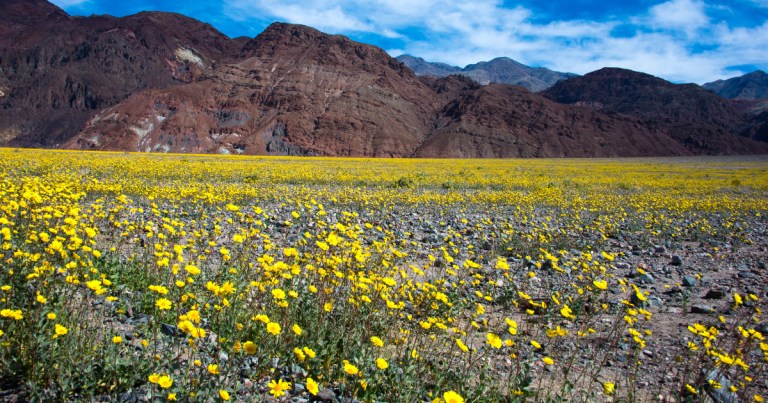
A superbloom is a desert botanical phenomenon characterized by an overabundance of wildflowers blooming in a particular area. Colorful blooms carpet the desert landscape and surrounding hills or mountainsides in a spectacular show that only Mother Nature herself could create. Due to the rarity of a natural event like this, tourism to areas like Death Valley and Antelope Valley spikes among those curious to witness this natural wonder firsthand.
How Often Superblooms Happen in Death Valley

Death Valley's last superbloom occurred in 2016 after El Niño dumped heavy rains and caused flooding in the desert. Before that, it had been nearly a decade on average, with one in 1998 and then again in 2005. The top factor in determining whether a superbloom will occur in a given year is the amount and timing of rainfall, as this helps dormant wildflower seeds germinate and sprout.
How Weather Patterns Influence a Wildflower Superbloom

I asked my husband, meteorologist Tony Merriman, to chime in on the ideal weather conditions that can cause a superbloom. Here are the necessary elements for this colorful natural phenomenon to occur:
Rainfall:
The first ingredient needed for superblooms is ample soil moisture during the winter months. For example, in the case of Death Valley, the area received well above average rainfall during November and December 2025, with 2.40” of rainfall recorded near the Furnace Creek Visitor Center. Normal rainfall during that time of year is 0.37”, which means Death Valley received over 2” of rain above normal!
Sunshine:
Ample sunshine is needed for the wildflowers to blossom. Even though a relatively rainy pattern may be forecasted through the end of February in Death Valley, typical sunny weather may return by March.
Wind:
The winds need to be relatively calm for a long time for wildflowers to bloom. Windy conditions often accompany low-pressure systems off the southern California coast, followed by a rainy weather pattern.
Temperature:
Seeds can start to grow roots in the desert during the cooler winter months, then will sprout, grow, and bloom once the temperatures warm.
A perfect mix of these weather conditions plays a major role in predicting whether a superbloom will occur each year. This is why they are rare, especially in the harsh environment of Death Valley.
Where Can I View the Rare California Superbloom?

Within Death Valley National Park, several areas offer views of the white, yellow, pink, and/or purple wildflowers once they bloom. Some popular viewing destinations within the national park include:
- Ashford Mill Ruins at the end of South Badwater Road is where you may find a mix of flowers like Desert Gold, Brown-eyed Primrose, Sand Verbena, and Five Spot.
- Between the junction of Beatty Cutoff and North Highway on Highway 190, Brown-eyed Primrose often grows.
- Smaller patches of wildflowers bloom in other areas of the park. Visit the Death Valley National Park web page for the current list of viewing spots.
Responsible Wildflower Viewing: Tips to Protect California Blooms

As harsh as a desert environment may seem, it is still a delicate ecosystem that should be respected and preserved. Here are ways to responsibly view wildflowers during a superbloom:
- Stay on designated trails.
- If driving, only pull over in a designated pullout or park in a parking lot.
- Do not enter a wildflower field even for a photo. Flowers are delicate, and so is the desert soil.
- Do not pick wildflowers. It is actually illegal to do so in a national park.
- Follow the Leave No Trace principles.
Natural Phenomena in California
Have you ever witnessed a superbloom in California? If you plan on heading to Death Valley to visit this sight, visit the National Park Service website ahead of time for information on the most current viewing locations.
Among the most popular superblooms in the state is the California Poppy Reserve in Antelope Valley. With orange poppy blooms blanketing the desert as far as the eye can see, it is a sight to behold. Another natural phenomenon is the Firefall at Yosemite National Park in Northern California. And for even more breathtaking sights across the U.S., check out these 10 fleeting natural wonders that only occur when conditions are just right.
Subscribe to our newsletter
Get the latest updates and news
Thank you for subscribing!