We Love Our National Parks, but This Northern California Park Is Just as Majestic
Ready to take a long drive to see old growth forests in California's national parks? It's possible to see equally majestic trees at the Jedediah Smith Redwoods, a stunning Northern Californian state park.
Let's be honest: when people call their home state the most beautiful place on Earth, they're usually just articulating their profound pride for the landscape they know best. And who could blame them? I'm a self-proclaimed Pacific Northwest snob, but my preference for Washington's saturated greens over, say, Arizona's burnished red rock is exactly that: a preference. One shaped less by objective beauty than my childhood memories of scanning hiking trails in the misty Olympics for signs of Sasquatch.
That said, if any region could make a near-universal case for the "most beautiful" superlative, even I have to admit — it's Northern California. And I'm not the only one. Home to iconic spots like Yosemite and the Redwoods, NorCal's national parks draw an estimated eight million visitors each year! These crowds are a testament to the region's undeniable appeal, but they've also transformed these once-peaceful spots. Nowadays, a sunny afternoon at Point Reyes offers as many opportunities for people-watching as gob-smacking ocean vistas.
National parks absolutely deserve a spot on your bucket list. But if you're hoping to take in Northern California's beauty with less foot traffic, head to its state parks. One of my favorites is Jedediah Smith Redwoods State Park, a spectacular grove of ancient trees that includes the widest known coastal redwood on the planet.
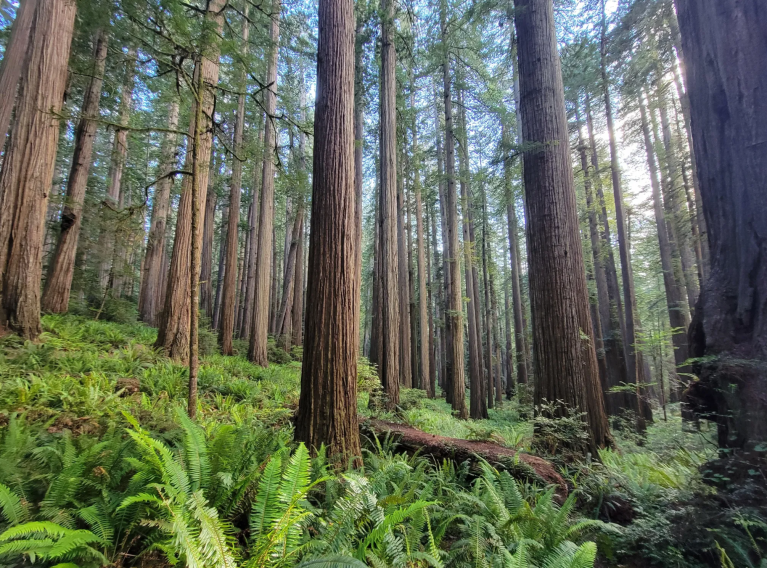
Tucked just outside small-town Crescent City — a fantastic launchpad for both coastal and inland adventures — lies Jedediah Smith Redwoods State Park, a 10,000-acre expanse of towering forest. Since it was first preserved in 1929, the park has become part of the California Coast Ranges International Biosphere Reserve, a UNESCO-backed program dedicated to safeguarding some of the planet's most precious and biologically diverse ecosystems.
If it seems surprising that UNESCO — better known for safeguarding cultural landmarks — would focus on a Northern Californian forest, consider this: according to the National Park Service, some of the redwoods in Jedediah Smith are estimated to be over 2,300 years old. That makes these trees contemporaries of the Acropolis of Athens and the earliest sections of the Great Wall of China!

And it's not just the ancient trees that speak to the deep past at Jedediah Smith Redwoods State Park. Though the preserve is named after a 19th-century explorer, Jedediah Smith, the first non-Indigenous American to cross from the Mississippi River to California, archaeological evidence shows that the area has been home to humans for at least 8,000 years. These early inhabitants were the ancestors of today's Tolowa Dee-ni' Nation, whose peoples maintain a vibrant cultural and political presence throughout the Pacific Northwest.

Without a doubt, the forest's heart is Smith River, the last major undammed river in California. This vital lifeline sustains a thriving ecosystem, home to everything from black bears to steelhead trout. And while you and your hiking boots will have plenty of ground to cover, this is a forest that's been allowed to keep its secrets.
In a conscious effort to protect its wildlife and waters, much of the park remains deliberately undeveloped. The trails that do exist range from family-friendly strolls to ten-mile day hikes. My favorite? The path to Fern Falls by way of Boy Scout Tree Trail. As you weave among its towering redwoods, you may feel something rare: a closeness to the unknown that's both humbling and deeply restorative.

If you're looking to immerse yourself in Northern California's natural splendor, you don't have to head to a national park. There's no denying the enduring appeal of iconic places like Yosemite, but state preserves like Jedediah Smith Redwoods State Park offer equally breathtaking landscapes — often with far fewer crowds.
Subscribe to our newsletter
Get the latest updates and news
Thank you for subscribing!