A Hidden Stretch of California’s Sonoma Coast Is Finally Open to the Public
A once-private stretch of Sonoma coastline is now open to the public, revealing windswept trails, a rare estuary ecosystem, and one of the last truly wild landscapes along California’s coast.
Along Northern California's Sonoma Coast, finding stretches of shoreline that still feel truly wild and undeveloped is becoming increasingly rare.
That’s what makes the Estero Americano Coast Preserve, just south of Bodega Bay, such a remarkable discovery.
For nearly a century, this rugged piece of coastline remained closed to the public, hidden behind ranch gates and private land. Today, after years of conservation work, the newly opened 547-acre preserve offers something few people have experienced along this part of California: the chance to walk windswept coastal prairie and blufftop cliffs where the Pacific meets the narrow, winding waters of the Estero Americano.
And the feeling when you first arrive is immediate—salt air, open sky, grasses bending in the wind, and the distant, steady rhythm of waves breaking far below.
Estero Americano Coast Preserve: A Landscape Hidden in Plain Sight
The preserve protects a rare and diverse coastal ecosystem where rolling prairie meets dramatic ocean cliffs and a narrow, fjord-like estuary that cuts inland toward the sea. Unlike the broader estuaries found elsewhere along the California coast, the Estero Americano feels more enclosed and sculpted — its winding channels bordered by marsh, grassland, and low coastal bluffs.
Along the five miles of trails winding through the landscape, visitors will encounter seasonal wildflower blooms and a remote wildlife habitat that meanders down to the once-inaccessible shoreline.
From the blufftops, the views stretch across the Pacific in shifting shades of blue and gray, while inland the estuary moves slowly through the landscape, reflecting the sky like a ribbon of glass. It’s the kind of place that feels unchanged — a glimpse of what much of California’s coastline once looked like before development reshaped it.
Walking the trails today still feels like stepping into a place few people have ever seen.
Why The Land Was Closed For So Long
For generations, this land was part of a working coastal ranch. The rolling grasslands and estuary edges were privately owned and used primarily for agriculture and grazing, keeping the coastline off-limits to the public for nearly 100 years.
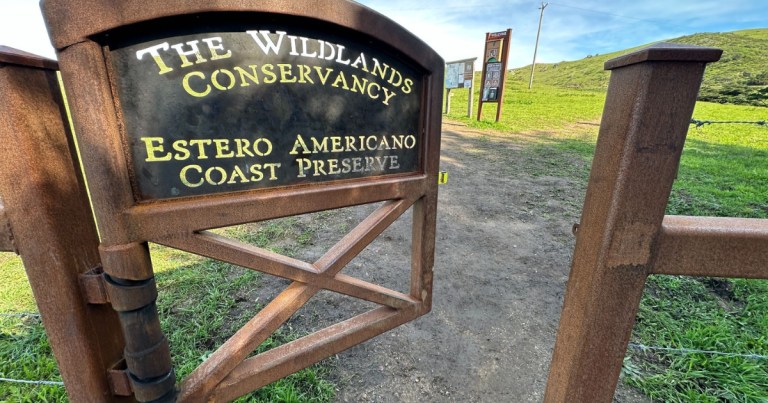
That changed through a long collaboration among conservation organizations, land trusts, and local partners, all determined to protect the area from development while still allowing public access.
Instead of becoming another private coastal estate or luxury development, the land was preserved as open space — protecting both the fragile estuary ecosystem and the sweeping coastal landscape.
Today, visitors can finally experience a stretch of the Sonoma Coast that, until recently, existed almost entirely behind closed gates.
Flora and Fauna Along the Estuary
The Estero Americano is part of the larger coastal ecosystem connected to the Greater Farallones National Marine Sanctuary, one of the most biologically rich marine areas along the West Coast. That connection helps support an incredible diversity of wildlife both on land and in the surrounding waters.
Birdwatchers may spot great blue herons stalking the shallows, snowy egrets moving through the marsh, and hawks riding the coastal updrafts above the bluffs. Seasonal migrations bring shorebirds through the estuary, while harbor seals can sometimes be seen in nearby waters.
Because much of this land remained undisturbed for decades, the ecosystem here feels unusually intact — a rare stretch of coastline where wildlife still moves through a largely uninterrupted landscape.

Visit in spring, and the preserve shifts into something entirely different. The coastal prairie comes alive with color as California poppies, purple iris, lupine, and other coastal wildflowers spread across the hillsides. The air carries a mix of salt, earth, and blooming plants, while bees and other pollinators move steadily through the grasses.
Paired with the constant ocean breeze and wide-open views, it’s one of the most vibrant times of year to experience this stretch of coastline.
Hiking to the Water at This Norcal Nature Preserve
One of the most rewarding aspects of the preserve is the chance to hike all the way down to the coast. Trails descend from the blufftops toward the estuary mouth and the remote beach beyond. Along the way, hikers move through open grassland before gradually approaching the tidal waters where the estuary meets the Pacific.

There is also a rest stop and kayak access point along the estuary, making it possible for paddlers exploring the bay to pause along the shoreline.
Standing at the water’s edge, with waves rolling in and the estuary stretching behind you, it’s easy to understand why conservationists worked so hard to protect this place.
What To Know Before Visiting Estero Americano Coast Preserve

Because the preserve is newly opened, access can still feel a little limited. Currently, parking is mostly in residential neighborhoods, which fill up quickly on weekends.
Visitors who arrive early in the morning or during the week will have the best chance of securing a parking space. The reward for a little extra planning is worth it — a peaceful stretch of California coastline that still feels untouched.
A New Era For Coastal Access
As more of California’s coastline becomes developed, crowded, or difficult to access, places like the Estero Americano Coast Preserve represent something increasingly rare — the chance to experience the coast as it once was.
Wild, quiet, and shaped more by wind, water, and time than by roads or resorts.
For visitors willing to explore just beyond Bodega Bay, this newly opened preserve offers something special: the chance to walk a stretch of California coastline that, until very recently, almost no one had seen.
Subscribe to our newsletter
Get the latest updates and news
Thank you for subscribing!