Seeing This Alabama Park After Dark Is Better Than Daytime
Seeing Cheaha State Park after dark offers a magical experience with fewer crowds, stunning night skies, and a completely different perspective.
We can all agree that Cheaha State Park during the day is absolutely breathtaking, but Cheaha State Park at night is truly an otherworldly experience. As one of the best places in Alabama for stargazing, it tops the charts on many an astrophotographer’s bucket list. Even if you’re not a professional, visiting Cheaha State Park after dark is one adventure you won’t soon forget.
What Makes Cheaha State Park So Magical After Dark
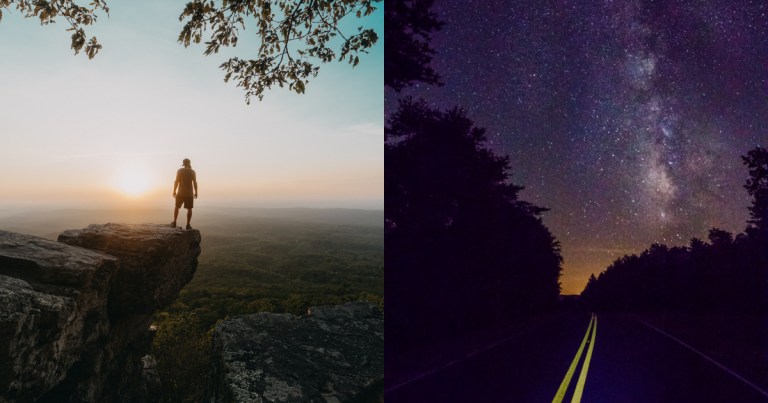
Due to its remote location and high elevation, Cheaha State Park is one of Alabama’s premier dark sky parks. It’s far enough from major cities that there’s minimal light pollution, which can really drown out the night sky. The scenic points overlooking the Talladega National Forest offer some of the best dark skies in Alabama.
Other notable dark sky locations in Alabama include Oak Mountain State Park, the Conecuh National Forest, and Roland Cooper State Park.
Tips for Visiting Cheaha State Park After Dark

Cheaha State Park offers several stargazing events throughout the year, which are great for family nights and even date nights. These are great for all skill levels, and you’ll get to learn all about the constellations in the sky with knowledgeable rangers.
While spending one night stargazing at Cheaha State Park is worth it, you can never guarantee what the weather will be like. Camping at Cheaha State Park for a few nights gives you the best odds at a cloudless night, plus you’ll get to experience the park during the day and see the top attractions and viewpoints like Bald Rock and Pulpit Rock.
Cheaha State Park offers several ways to spend the night, including campsites, cabins, safari tents, chalets, and even a new hotel slated to open in the summer of 2026.
The key to stargazing is finding a spot with an unobstructed view of the night sky. Once you’ve found a spot, sit back and relax while you wait for your night vision to adapt. It’ll take about 20 minutes, and it’s very important you don’t look at any bright screens during this time, so put your phone away! Ditch the flashlights for a red light, too. Red lights will preserve your night vision if you need to see, and it’s also a bit of an unwritten code amongst stargazers.
Some of my stargazing essentials include a chair or blanket to lie down on (your neck will thank you), a red light, bug spray, some snacks, and a beverage. A tripod is key to good night sky photos, as the low-light conditions mean you’ll need a longer shutter speed. If you don’t have a tripod, get creative! I’ve used nearby rocks, tree branches, my backpack, and even my shoe in a pinch.
Of course, no one can predict the weather, and clouds will be your biggest enemy when it comes to the night sky. That’s why camping at Cheaha State Park for a few nights is recommended; it’ll give you the best odds. If you can, time your visit around the New Moon, when the sky is darkest.
Best Times for a Night Visit to Cheaha State Park

Stargazing at Cheaha State Park is a year-round activity, though I think summertime is the way to go.
The Milky Way season in the Northern Hemisphere runs from February to October, with March to September offering some of the best views. July and August are when the core is visible all night, though August has another astro-event you may be interested in—the Perseids Meteor Shower! My favorite meteor shower of the year, the Perseids, takes place in mid-August, and with prime conditions, you can see up to 100 meteors per hour.
Other notable meteor showers to visit Cheaha State Park after dark for are Draconids (early October), Orionids (mid-October), Leonids (mid-November), and Geminids (mid-December). Geminids are about as popular as Perseids and often deliver dozens of meteors per hour.
If you’re looking for something new and exciting to do, Cheaha State Park after dark might be the key. Even if you’ve visited Alabama’s oldest state park during the day, I promise you there’s more to explore once the sun sets and the night shift takes over.
Subscribe to our newsletter
Get the latest updates and news
Thank you for subscribing!