What Happened In This Missouri Prison Will Disturb You To The Core
Missouri State Penitentiary offers historical and ghost tours of its infamous and haunted grounds.
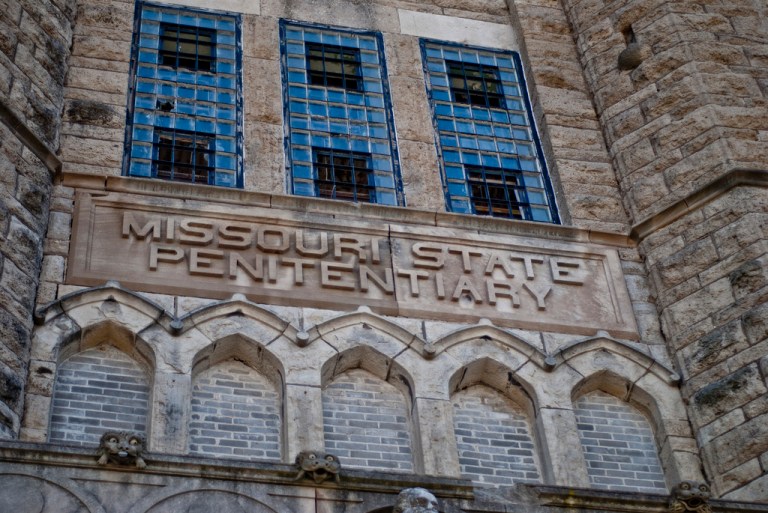
Missouri State Penitentiary, also known as "The Walls", was in operation from 1836 to 2004 and is located in Jefferson City. Before its closing, it was the oldest continually operating penitentiary west of the Mississippi River. In 1967, Time Magazine named it the "bloodiest 47 acres in America", and it was Missouri’s primary maximum security facility. Today, the Jefferson City Convention and Visitor’s Bureau opens the prison seasonally for public tours given by former corrections officers, guards, and wardens who worked within its walls. Could you survive Missouri State Penitentiary tours? Find out about one of the most haunted places in Missouri ... if you dare:
Kate Richards O’Hare was given a five-year sentence for giving an anti-war speech.
The sentence was commuted by President Woodrow Wilson in 1920, and she was later given a full pardon by President Calvin Coolidge.
Famous inmates have included Kate Richards O'Hare, “Pretty Boy” Floyd, Carl Austin Hall and Bonnie Heady, James Earl Ray, and Sonny Listen.

Charles Arthur "Pretty Boy" Floyd was sent there for robbery in 1925 and served 3 ½ years of a five-year sentence. He was an infamous outlaw who was eventually killed by the police while evading his capture in 1934.
Carl Austin Hall and Bonnie Heady were sentenced to death in the 1950s for the kidnapping and murder of a young boy and were sent to the prison to carry out their sentence.

James Earl Ray, the man who later assassinated Martin Luther King Jr., was a prisoner of the penitentiary from 1960 to 1967, when he escaped in a bread box. Professional boxer Sonny Liston was sentenced to five years at the prison in 1950 for robbery, later getting early parole for good behavior.
There were three major riots at the Missouri State Penitentiary, the most deadly occurring in 1954. The guards were overrun and the state highway patrol, state National Guard, and city police departments were all called in to help.

Once it was finally under control, four inmates had been killed, 29 had been injured, and there had been one attempted suicide. In addition, four guards had been seriously injured, and several buildings had been burned with more than 5 million dollars in damages that would take over ten years to repair. Fortunately, no inmates were able to escape during the incident. The State of Missouri’s male death row was located at the Missouri State Penitentiary until April 1989.
The death row inmates were held in a below-ground unit, isolated from other inmates, unable to leave the special facility, and were only allowed one hour of exercise per day in a fenced area adjoining the facility. The restrictions on movement, limited access to programs and turn-of-the-century facilities were a source of controversy and legal embattlements and eventually, the Missouri Department of Corrections began to use an internal death row classification system.

Privileges were awarded for good behavior, medical procedures and delivery were improved, and a "privacy room" was created where death row inmates could attend religious services. Tours of the prison showcase the history of the prison and the early penal eras in the U.S.
On your visit, you might see the control center, the upper yard, cellblocks in housing unit A (the oldest remaining cellblock, built in 1868) and other housing units, the dungeon cells, the industry area, the exercise yard, and the gas chamber where a total of 40 inmates, men and women, were executed.

Tour Restrictions: no children under 10 are permitted due to the nature of the subject matter. Photographs are allowed, but video recordings are not. No smoking or food is allowed. Tours are not wheelchair accessible, simply due to the age of the buildings, and all attendees must sign a waiver of liability, including a guardian’s signature for visitors under 18.
Reservations are required.

It is also cautioned that those with asthma, heart conditions, prone to seizures, or with mobility limitations should not take the tour. You will also be refused entry if you are intoxicated, wearing any form of cast or medical brace, are using crutches or are in a wheelchair.
Ghost tours, ghost hunts, public and private overnight investigations, and other types of tours are also available.

On the ghost tour, strange occurrences are the focus as guests are guided through Housing Unit 1, A-Hall (built in 1868), Dungeon Cells, The Upper Yard, Housing Unit 3 and the Gas Chamber. The prison also provides ghost tour lessons, where you can learn from paranormal experts how to use equipment, take photographs and recognize paranormal activity, followed by a two hour ghost hunt.
Guests are guided and given a history of the prison as well as locations where activity has occurred, then are allowed to do their own investigation using paranormal devices.

For all tours, guests are encouraged to bring their own flashlight for low visibility areas.

Tour schedule and availability is accessible on the website. Student and group rates are also available! For the most up-to-date tour schedule, tickets, and more, make sure to visit the official website.
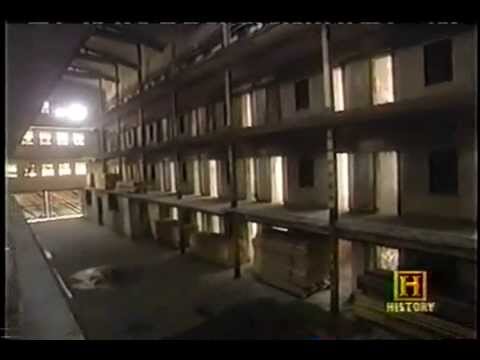
And, finally, here's a short video to further illustrate the history of this terrifying relic from the past and to take virtual Missouri State Penitentiary tours :
Have you ever taken the Missouri State Penitentiary tours? What was it like, and what did you experience? Tell us your tales in the comments - we love hearing from you. For more haunted Missouri, take a look at this creepy, haunted road trip in MO.
Subscribe to our newsletter
Get the latest updates and news
Thank you for subscribing!