This Prehistoric Lake in Wyoming Is a Perfect Road Trip Detour
This ancient lake hasn't had any water in it for at least a few millennia, but it's still full of incredible aquatic life just waiting to be discovered.
You wouldn’t expect to find prehistoric treasures in a place that looks like it’s halfway to nowhere. But just outside Kemmerer, Wyoming — an unassuming small town in Southwest Wyoming — you’ll find one of the oldest prehistoric lakes in the entire country. For those looking for a little extra adventure, you’ll also find one of the most unique and accessible fossil dig experiences you've ever heard of.
Set in the heart of Wyoming's seemingly endless sagebrush expanse, the ancient, now-dry Fossil Lake was once a beautiful subtropical freshwater lake, part of a trio of prehistoric bodies of water that covered the region an estimated 52 million years ago during the Eocene Epoch. Alongside Lake Gosiute and Lake Uinta, Fossil Lake formed a large complex of warm, shallow basins in what was then a lush and uniquely diverse landscape, much different from what it is today.
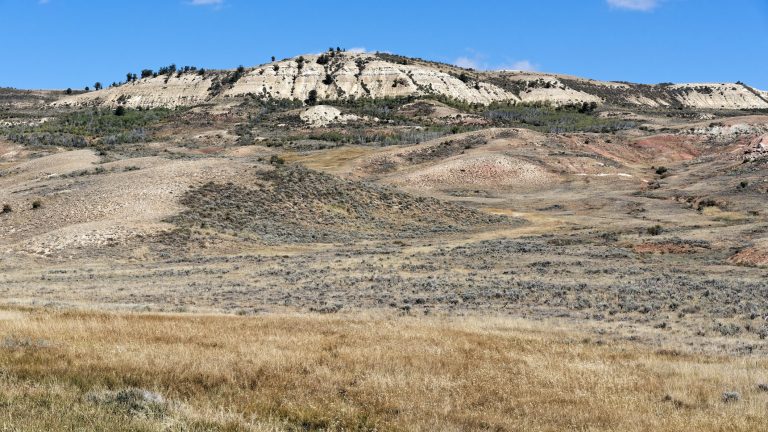
The original lake was massive. It covered about 1,500 square miles at its peak (by comparison, that's roughly 11 times the size of Yellowstone Lake, and slightly smaller than Lake Ontario in New York), but its fine-grained limestone sediments were exceptionally suited for preserving delicate life forms in perfect detail. Oxygen levels at the lake bottom were also extremely low, which slowed decay and kept scavengers away, creating ideal conditions for fossilization.
If you're curious, a few other sites in this corner of Wyoming boast their own ancient properties and uniquely preserved historic remnants, including a 50-million-year-old forest with no trees.
But while the larger Green River Formation is pretty famous, there are quite a few reasons why Fossil Lake is especially world-renowned in the paleontological community. This ancient lakebed has yielded some of the most complete and well-preserved specimens of Eocene-era life anywhere on Earth. Over 60 species of fish have been discovered here, many of them endemic to the lake.

The fossil record here includes not only predators and prey but also full food webs, from algae and plankton to fish and apex species. In addition to marine vertebrates, scientists have recovered soft-bodied insects, feathers from early birds, and plants that paint a picture of a warm, semi-tropical environment with palm trees and flowering plants. Even fossilized bat skeletons and early mammals have been uncovered, some so detailed that their stomach contents and cellular structures are visible under a microscope.
That's the science of it. But this prehistoric lake is far more interesting than its textbook stats, and is even more special because you can actually visit it and see all that history for yourself.

Fossil Lake Safari, run by Fossil Era Adventures, is a guided, boots-on-the-ground dive into this small slice of the ancient world, a geologic goldmine that’s been coughing up fossilized fish, turtles, plants, and insects for over a century. If you happen to be road tripping through Kemmerer, or if you've been tackling Wyoming's Dinosaur Trail piece by piece, a detour might be just what you need, and a Fossil Lake Safari is the perfect opportunity to dig directly into this scientifically significant prehistoric lakebed.
After checking in at the main office/gift shop, guests are driven to the massive quarry location where they’re walked through how to use chisels and rock hammers to split open layers of 50 million-year-old Green River shale. With such an abundant supply of ancient aquatic life, it’s not unusual to uncover a prehistoric fossil in just a few minutes — no need for a paleontology degree.

The rock is thin and brittle, cleaving smoothly along bedding planes that trap entire fish, leaves, insects, and even coveted stingrays with startling clarity. Visitors of all ages can easily leave with multiple complete fossils, many of which are museum quality, with small Knightia and Diplomystus (the long-lost ancestors of anchovies and sardines) being the most common prehistoric creatures found. Afterward, you'll find an area set up at the quarry where you can go to get a fossil preparation demonstration and try your hand at preparing your own finds. Guides are available throughout the entire experience if you have any trouble finding fossils or prepping them to take home.

While everybody is sure to find fish at this ancient lake, the quarry is much more than just a giant hole in the ground. The dig season typically runs from May to September, and every year, FossilEra Adventures puts in a ton of work to make these digs accessible to families and prehistoric rock hounds of all ages. The most productive fossil layers are about 10 feet thick, but there is about 50 feet of overburden rock covering those layers. Heavy equipment is regularly brought in to expose the buried fish layers, ensuring the experience is safe for everyone.
No reservations are required to embark on a Fossil Lake Safari, which makes it an ideal side trip or destination, no matter which way you're heading. Safaris are available in a range of lengths: full day, half day, two hours, and even private digs are all available. Water, coffee, and Wi-Fi are provided, and the excursions happen rain or shine.

Beyond the quarry, Kemmerer may be small, but its surrounding landscape and nearby towns offer a surprising number of offbeat, scenic, and fun places to check out before or after your Fossil Lake visit. At only 10 minutes away, Fossil Butte National Monument is an easy, but phenomenal, spot to head to after your dig for a more museum-like experience or a quick hike. The national monument preserves a large section of the same original lakebed and provides interpretive trails, fossil exhibits, and access to scenic overlooks. The visitor center houses fossils found in the area, including a nearly complete 13-foot crocodile (Borealosuchus wilsoni), primitive horses, and early turtles like Trionyx and Axestemys.

If you feel like sticking with the fossil theme for your weekend adventure, the Red Gulch Dinosaur Tracksite near Greybull is about four hours north of Kemmerer. Here, you can see actual Theropod and Sauropod tracks preserved in Jurassic sandstone. Along the way, stop at the Wyoming Dinosaur Center in Thermopolis to ogle the huge fossil hall with over 30 mounted skeletons, including a Supersaurus. Then, kick back for a post-fossil soak in an equally ancient hot spring.
Or, if you'd rather cast a line for some fish from this millennium that are still actively biting, you can also head to the Viva Naughton Reservoir or Hams Fork River instead. The choice is yours.
Although perhaps most known for being home to the original JCPenney "Mother Store," Kemmerer has been closely tied to fossil history since the early 20th century. Yale University, the American Museum of Natural History, and the Smithsonian Institution all display specimens pulled from this area, so you know Fossil Lake is an incredibly special site. It's also pretty amazing that we have such easy access to it!
For travelers with an interest in natural history, this corner of Wyoming may seem pretty ordinary at first glance, but a lot is hiding underneath the surface. And it’s just waiting to be rediscovered by modern adventurers.
Subscribe to our newsletter
Get the latest updates and news
Thank you for subscribing!