Look Into The Skies This Month As The Perseid Meteor Shower Passes Over Oregon
Oregon offers a diverse array of stunning natural wonders, from lush forests and dramatic coastlines to majestic mountains and unique geological formations.
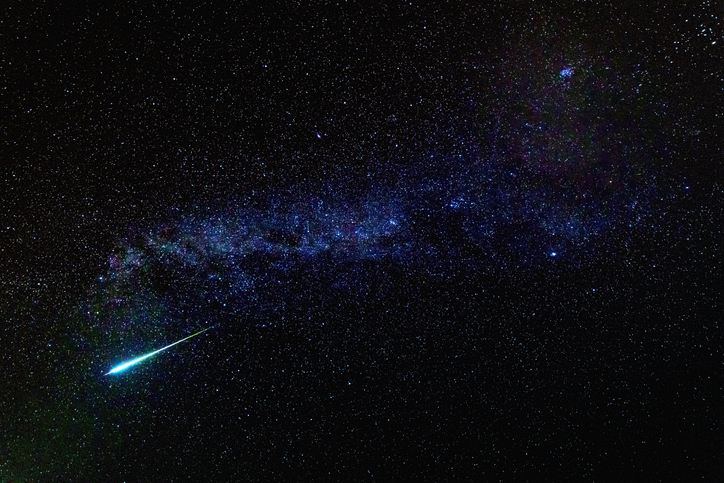
It's no secret Oregon is home to some of the best stargazing in the country, with places like Crater Lake and Prineville Reservoir State Park earning national acclaim for their dark and star-filled skies. Each summer, the Perseid meteor shower (also known as the Perseids) fills the nighttime skies with a magnificent meteor shower that truly is *the* event of the year for stargazers. The Perseid meteor shower will be peaking above the skies of Oregon on August 11 and 12, and it's a celestial spectacle you'll surely want to see.
The universe is vast, and gazing into its infinite expanse is a grounding and life-affirming experience sure to fill you with an immense sense of awe and wonder.
It's also an activity that will undoubtedly stoke your wanderlust, offering up (quite literally) endless opportunities for knowledge and exploration.

For stargazers, there's no better celestial show than the Perseid meteor shower.

Happening each summer in July and August, under clear conditions, the Perseids are what many consider to be the most spectacular cosmic light show in the universe.

The parent comet known as Swift-Tuttle is responsible for this annual summer show. With a nucleus of about 16 miles wide, this comet is the largest object known to repeatedly pass by Earth. It last reached perihelion -- its closest point to the sun -- in December 1992 and is forecast to do so next in July 2126.

You don't have to wait until 2126 to enjoy an amazing show, though! Every summer, Earth crosses the orbital path of the legendary comet. The resulting "meteor shower" is actually pieces of celestial debris combusting upon atmospheric entry; a bright burst of light which blazes a vivid path across the sky at a speed of 37 miles per second. Wild, right?!

Here in Oregon, spectators can expect to see the greatest number of meteors during the shower's peak between Aug. 11-12. While spectators can generally expect to see up to 100 meteors per hour at the shower's peak; the 2022 Perseids won’t be quite as dazzling as they were in previous years, due to the full moon illuminating the nighttime sky.

So how can you set yourself up for stargazing success? Experts advise seeking out the darkest possible location during the predawn hours on Aug. 11-12. You don't need any telescopes or binoculars; the secret is to take in as much sky as possible and allow about 30 minutes for your eyes to adjust to the dark.

Then sit back and prepare yourself for the show of the summer!
The skies over Oregon light up all summer long with man-made celebrations of Independence Day, Labor Day, and more. But the Perseid meteor shower trumps any pyrotechnic showcase, proving, once again, that Mother Nature truly is the most marvelous and inspired artist.

While a full moon this year might affect the showing, the Perseid Meteor Shower is nevertheless *the* must-see summer show in Oregon!
Subscribe to our newsletter
Get the latest updates and news
Thank you for subscribing!