The Completely Free Museum Hiding in an Oregon Monastery Is a Must-Visit
This unassuming museum may be hidden in a 150-year-old Benedictine Monastery, but its exhibits are equal parts postmodern art and ancient geology … and everything in between.
Lush, green, and surrounded by vineyards, forests, and winding rivers, Oregon's Willamette Valley is a gorgeous region in the northwestern part of the state, known for its wine production and natural beauty. In the heart of this picturesque valley, surrounded by verdant farmland and quiet, tree-dotted hills, the stunning Mount Angel Abbey overlooks it all — a serene and spiritual haven that feels like its own undiscovered world.
Founded in 1882 by Swiss monks from Engelberg Abbey, Mount Angel Abbey in Saint Benedict, Oregon carries a rich history that dates back to the Benedictine tradition established by Saint Benedict of Nursia in the 6th century. The Mount Angel Monastery and Mount Angel Seminary are just a small part of the larger campus, which is open to the public to visit and stroll through.
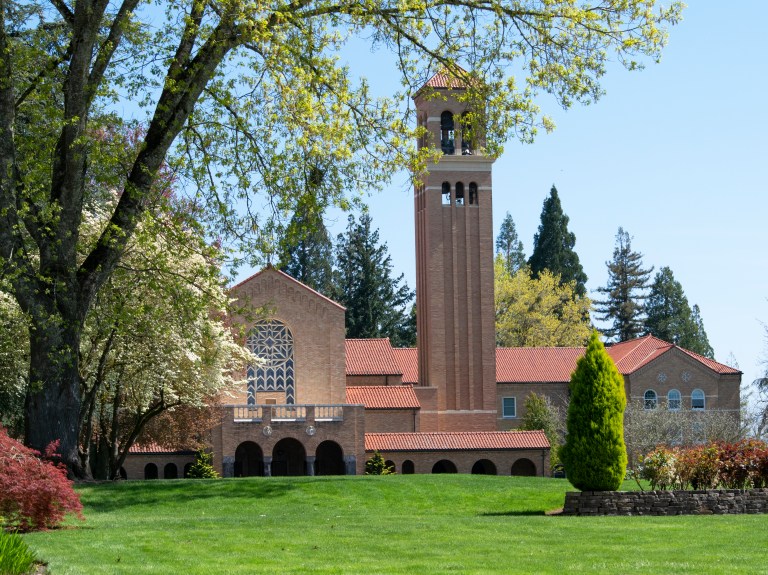
The monastery was envisioned as a spiritual refuge and a hub for education. Its early years were marked by challenges, including devastating fires, yet the monks persisted, laying the groundwork for a thriving community. Over the decades, the abbey expanded its mission, establishing Mount Angel Seminary in 1889 as the oldest seminary west of the Rockies, and opening its doors to students from all over the country. Today, the monastery remains a beacon of hospitality, learning, and faith, inviting visitors to experience its storied past and tranquil setting.
Visitors to the Abbey can pray in the monastery temple, explore the campus' vibrant gardens (more on that later), and even book an overnight stay, among other opportunities. But what few visitors realize is that the 150-year-old Abbey is hiding a few surprises, including the Mount Angel Abbey Museum.
Small and unassuming, in many ways the Abbey Museum feels more like an eccentric collector’s attic than a solemn exhibit hall. Here, you might find a medieval chalice sitting only a few steps away from taxidermy birds and sparkling geodes. It’s quirky, fascinating, free to visit, and unexpectedly enlightening.
The museum got its start decades ago, when some of the monks began collecting various natural science samples for study. Over the years, the wide range of artifacts — some spiritual, some scientific, and some just plain fascinating — eventually became the museum’s collection. Among the most popular specimens: the world's largest pig hairball, a cow with a few extra legs, and more.


Step inside the lower level of the main monastery and into the museum, and it quickly becomes clear this is no ordinary collection. Spread across a cozy space, the museum is a mix of the eclectic and the educational. On one side, cases of sparkling minerals and fossils line the walls, showing off everything from ancient ammonites to colorful quartz crystals. Nearby, another features mounted animals, their lifelike poses offer a closer look at species from across the globe and create a miniature menagerie that’s both fascinating and unexpected in a monastic setting.

Unlike the grandeur of larger museums, the Abbey Museum feels personal. The exhibits reflect the monks’ wide-ranging interests, from geology to global art, and offer visitors a window into their efforts to preserve knowledge and celebrate Creation and the humanities in a multitude of formats. At the entrance to the museum is an area for modern art — an ever-changing display that highlights local artists and the artist-in-residence.
Much like the Abbey Museum, the Alvar Aalto Library on campus is well worth a visit as well for its history and architectural beauty. While the Abbey Museum houses an assortment of tangible "Wonder Room"-style collections and curiosities to be admired and perused from a variety of geological eras, the library has its own art exhibits regularly on display in the lobby. It also houses over 200,000 books from all over the globe in a beautiful and thoughtfully designed space.
A fascinating assortment of rare books and medieval manuscripts can be found here as well, dating back to the 1300s. Here, seminary students, resident monks, and a variety of scholars come to immerse themselves in a fantastic collection of written works that has grown exponentially from the original set of manuscripts brought from Germany. Now, it's one of the most extensive theological collections in the entire country.
These two spots are just a few of the many places guests can visit at Mount Angel Abbey, in addition to enjoying the Monastery's special events, festivals, and guest lectures throughout the year.

As you stroll through the expansive, vibrant gardens and along the clean, tree-lined paths, you can opt for a more structured walking tour as well. Dozens of stops along this self-guided tour take visitors past historical sites, incredible architectural beauty, the stations of the cross, and the foot of gorgeous, larger-than-life works of art. While not every stop on the tour is open to the public, many of them are — like the gift shop, Benedictine Brewery, and their lovely guesthouse (with advance booking, of course).
Whether you’re a history buff, a lover of oddities, or just someone looking for a unique and affordable experience that's full of scenic and historical rewards, the Mount Angel Monastery Museum promises an experience you won’t soon forget!
Subscribe to our newsletter
Get the latest updates and news
Thank you for subscribing!