The Fascinating Archaeological Discovery That Put This Ohio Community on the Map
Once upon a time, Thomas Jefferson made archaeological history when he excavated a burial mound. While it caused tension with the indigenous peoples in the area, it proved to European Americans that these massive hills were, indeed, burial sites. Today, burial-purpose earthworks in the United States are protected by the Native American Graves Protection and Repatriation Act (NAGPRA), but this wasn't always the case. In fact, Cleveland was once purportedly covered in burial mounds, but these features are unfortunately long-gone. While our nation's history with indigenous burial mounds is dotted with missteps, Ohio has done an excellent job of protecting many of its archaeological treasures. We're home to many fascinating ancient features, but one mound in Miamisburg is especially notable. This place is worth a visit, so you might consider grabbing an Airbnb for the night if you're not close to Miamisburg.
Towering 65 feet over the landscape and covering a circumference of 800 feet, the Miamisburg Mound is a true archaeological wonder. This beauty, first excavated in 1869 and preserved in 1920, is the largest burial mound in the Eastern United States.
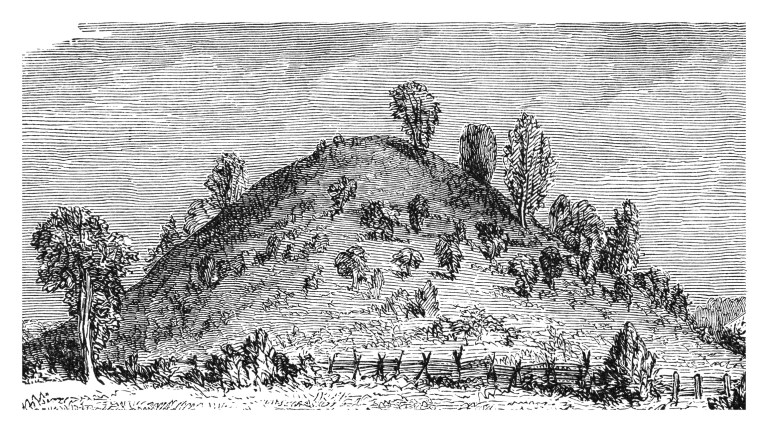
This massive structure contains a whopping 54,000 cubic yards of earth, plus a supposed several generations of ancient Ohioans. While there haven't been any excavations to reveal the total number of burials here (and there won't, now that NAGPRA has protected it from further prodding), the 1869 excavation revealed that the mound was likely built in several stages. Its construction can be traced back to the Adena culture, which flourished in the area from 800 B.C.E. to 100 C.E.
Interestingly, the conical structure of the local mound also mimics the shape of round houses with conical roofs that were characteristic of Adena settlements. While mounds were most likely just the most convenient way to bury the Adena's dearly departed, there's something comforting about the thought that ancient dead were interred in something that looked like a permanent home.

Interestingly, the preservation of this gorgeous site is owed to one famous Ohioan. Charles F. Kettering, an Ohio-born inventor and engineer best known for his hand in shaping the modern car, turned the mound into a public park in 1920. He turned over the keys to the Ohio Historical Society in 1929 to ensure its ongoing preservation. The Civilian Conservation Corps added stone steps to the site in the 1930s to make it even more of a public attraction. Circa five decades after its designation as a park, in 1971, the mound was finally added to the National Register of Historic Places.
Today, the mound is the crown jewel of the 37-acre Miamisburg Mound Park.

Visiting this site is a true treat. In addition to preserving a fascinating (and, unfortunately, often destroyed) piece of American history, it also offers an opportunity to reflect on the Ohioans that came before us. This spot is a cemetery, after all, and one where we'll never know the names of the local decedents. However, they're the ancestors of the indigenous people that populated the Northwest Territory when American settlers were first arriving. These ancient peoples shaped and loved the land circa 3,000 years before the moment we got to stand before their enduring handiwork. This spot is a true monument to humanity!
Love local history? You'll also enjoy a trip to the Great Serpent Mound, the largest serpent effigy in the world and a real Ohio treasure.
Subscribe to our newsletter
Get the latest updates and news
Thank you for subscribing!