These 13 Rare Photos Show Mississippi’s Lumber History Like Never Before
Mississippi's lumber industry in the 1840s transformed the state, leading to economic growth and improved transportation.
To early settlers looking to build, the millions of acres of forests that filled Mississippi were considered nothing more than a nuisance. However, by the 1840s, that way of thinking was on its way out, as saw mills began popping up in the state’s coastal region. Before long, Mississippi had a flourishing lumber industry, and although the boom didn’t last long, it forever changed the state. Take a look at these photos for a rare glimpse at what life was like during this defining period in Mississippi's history.
1. Since early mills depended on water transportation, the first in the state were opened along the Pearl, Escatawpa, and Pascagoula Rivers and Bayou Bernard.
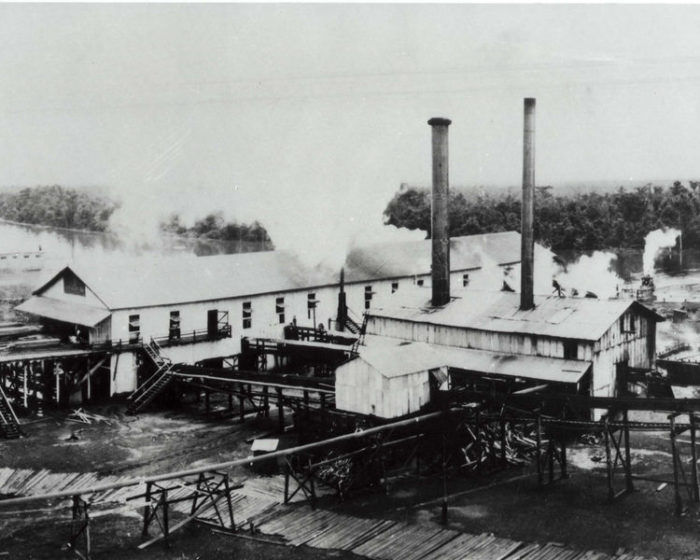
The H. Weston Lumber Company (pictured) was located in near the Pearl River in Logtown. Up until 1930, it was the largest sawmill in the entire world.
2. As the lumber industry flourished, more sawmills were opened throughout the state, which meant more job opportunities.

According to records, many men who had grown up on farms "preferred jobs in the lumber industry and became loggers or sawmill workers."
3. From 1904 to 1915, the timber industry in Mississippi was at its prime – producing more lumber than every other state except Washington and Louisiana.

4. The increased production had a great deal to do with labor-saving equipment that was being introduced.

Initially, lumber was transported by a caralog - an ox-driven two-wheeled wagon. By 1905, it was replaced by the Lindsey Eight-Wheel Wagon, which was designed by Laurel residents, the Lindsey brothers.
5. In 1910, the value of production was nearly $43 million!

6. A great deal of the state's profit came from the long-leaf yellow pine, which was found in the southern half of the state,

7. The thriving industry greatly improved transportation in Mississippi, as several railroads were built across the southern portion of the state.

Aside from shipping finished products, the railroads provided a means to access timberland that had previously been inaccessible, which was essential to the industry since timber near streams was being rapidly depleted.
8. In order to expand trade with foreign countries, several ports, such as Gulfport, popped up around the state.

9. Signs of the thriving lumber industry were just about everywhere.

10. During this time, local farmers would bring truckloads of wood into town to sell.

11. The lumber industry breathed new life into small towns all across the state.

Gloster, circa 1935
12. By the late 1930s, the lumber industry began to greatly decline.

As a way to cut costs and increase production, many farmers began "skidder logging." Although effective, the process destroyed smaller trees and prevented new ones from growing, leaving the land completely depleted. Furthermore, many sawmills were exhausting their timber supply in a few short years because tax laws encouraged sawmill operators cut down as many trees in as short of time period as possible.
13. The dwindling lumber supply, combined with the Great Depression, caused even more mills to close down.

Once a lumber mill was "cut out," families like this one in the Kiln were left without a means of support.
Learn more about one of the state's original lumber communities in "Take A Closer Look At The Lost City Of Logtown, Mississippi."
Subscribe to our newsletter
Get the latest updates and news
Thank you for subscribing!