Grand Canyon National Park Is Hosting Its Annual Grand Canyon Star Party and You Won’t Want to Miss It
For a week in June, the Grand Canyon National Park hosts its annual Grand Canyon Star Party with guest speakers, educational lessons, telescopes, and more!
I’ll tell you a secret: I’ve wished upon a star every single night since I can remember. It’s always the first star I see. I’ve been mesmerized by the night sky for as long as I can remember, but watching the Perseid Meteor shower in 2008 from a proper dark sky really set me off on an astrophotography quest that continues to this day. I encourage everyone to escape the cities and spend one night under a dark sky—it’s life-changing. In just a few weeks, Grand Canyon National Park will host its annual Grand Canyon Star Party, and it’s the perfect stargazing event for just about everyone.
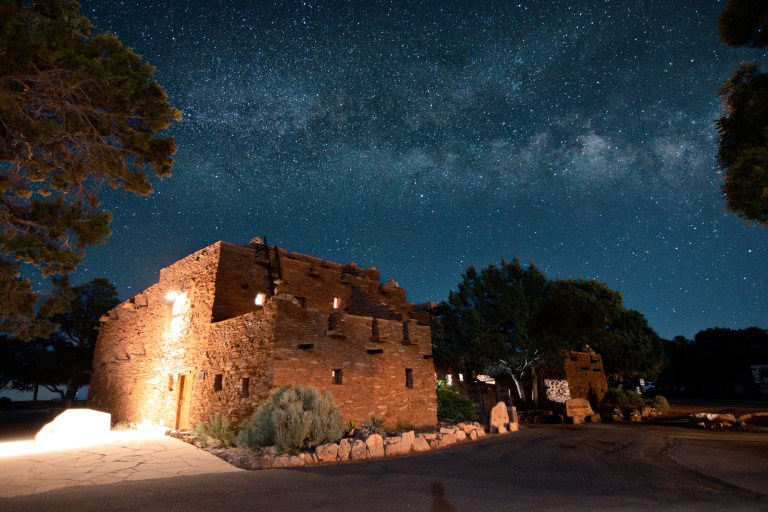
The annual event returns for its 35th year for a week of dark sky fun that’s suitable for everyone. Amateurs, professionals, and educators from all around the world gather under the night sky to gaze up at the heavens and marvel at our endless universe.
The Grand Canyon Star Party will be held from Saturday, June 21, to Saturday, June 28, 2025. Admission to the event is free, but you will need a standard entrance pass ($20 to $35) to enter the National Park, which is good for seven days and includes both the North and South Rims. The moon will be in a Waning Crescent phase, which is ideal conditions for stargazing. The New Moon on June 25 will offer the darkest skies, but as long as there aren’t any clouds, you’re in for an epic show any night of the week.
Presentations for the North Rim will start at 7:30 p.m. in the North Rim Lodge Auditorium. Telescopes will be set up on the porch of the Grand Canyon Lodge every night, and presentations will begin at 7:30 p.m. in the Grand Canyon Lodge auditorium.
The South Rim will begin presentations at 8 p.m. every night and will take place in the plaza in front of the Visitor Center. Telescopes will also be set up in the area. Check out the program schedule to get a list of events for both sides. Seating is limited, so get there early! You are also welcome to bring your own folding chairs.

Several telescopes will be set up on both sides for guests to view planets, star clusters, nebulae, and even distant galaxies. Constellation Tours will be offered nightly at 9, 9:30, and 10 pm.
Parking is available in Lots 1-4, or you can take the free Village Route shuttle bus. If you take the shuttle bus, keep in mind that the last bus leaves the Grand Canyon Visitor Center at 9:30 p.m. The best telescope viewing will be after 9 p.m., so I’d highly recommend driving yourself so you can stay well into the night.
What to Bring to a Star Party

Other astronomers will be volunteering their high-powered telescopes for you to use, but some things will make your experience a little easier.
- Red light: White lights are not allowed at this event. This is a standard rule across the board when star-gazing. They ruin photographs, and they ruin your night vision. Ditch the flashlight on your phone and get a red light headlamp. It will allow you to see where you’re walking without destroying your (and others) night vision. A red light hack you’ll see fairly frequently in this world is just taking some red cellophane and covering a flashlight or your phone light. No judgement here!
- Blanket/Chairs: You’ll be out there for roughly three hours, so get comfy!
- Clothing: Despite it being summer, the temperatures really drop after sunset. Bring a jacket and dress warmly.
Most of the telescopes will come down around 11 p.m., though you may continue to stargaze. Fellow astronomers volunteer these telescopes, so it’s up to them when they decide to take them down. Some may continue to share them into the night!
Tips for Nighttime Photography

If you have a DSLR or a mirrorless camera, now is the time to dust it off and take it for a spin. Astrophotographers modify their cameras to capture those idyllic photos you’ve seen, but you can get a similar effect with just about any camera—even your phone!
I don’t have any astro-modified equipment, because I wanted my gear to be versatile. I use a Sony A7iii with a Tamron 17-28, and I love it. I like to hunt the northern lights in the winter, and this camera stands up to the Arctic weather and takes phenomenal night shots while still being capable of taking amazing daytime landscape photos. My other camera is a Canon G7X Mark II, and this little point-and-shoot is a beast in low-light conditions! It was the first camera I began nighttime photography with, and I use it now for timelapses of the night sky.
The best camera is the camera you have on you. If a cell phone camera is all you have, you can still capture some incredible nighttime shots. Here are some tips for capturing the night sky with a camera:
- Use a tripod: This is a must for nighttime shots. Tripods help prevent camera shake, and even the steadiest of hands can’t hold still for longer than one second. No tripod? Find a rock to prop your camera up. Get creative! You’ll need a tripod regardless of whether you’re using a camera or your phone.
- Wide aperture: A wide aperture allows more light into the camera, and you’ll need all the light you can get for these dark sky shots. The lower the f-number (f/2.8 or f/1.8), the better.
- Long exposure: I won’t go into too much detail with shutter speeds, but if you really want to learn astrophotography, you may want to read up on the “500 rule.” Start with five seconds, then ten, fifteen, and see how it looks. You’ll encounter star trails if you push it too far (read up on the 500 rule to know what your camera's limit is!).
- Remote shutter release: Set your camera on a two-second delay so that the movement of you pressing the shutter doesn’t interfere with the shot. You can set this to any interval, but two seconds works just fine. If you want to be in the shot, maybe go with 10 seconds so you have time to get into place.
Cell phones will typically switch to Night Mode automatically and give you a shutter speed range of 3-10 seconds. I’m an iPhone user, so I’m not sure what your Android options are, but even though I’m loyal to Apple, I’m well aware Androids have the better cameras, so y’all might have even more options!
And there you have it! Everything you need to know about the Grand Canyon Star Party. Mark your calendars for June 21-June 28, 2025. Visit the Grand Canyon National Park website to learn more. Wishing you clear skies!
Subscribe to our newsletter
Get the latest updates and news
Thank you for subscribing!