Five Different Planets Will Align In The Arizona Night Sky During An Incredibly Rare Display
Arizona offers a plethora of natural wonders beyond the Grand Canyon, including stunning canyons, caves, waterfalls, and scenic vistas.
Calling all stargazers! A rare celestial event is gracing the cosmos in the Arizona night sky. Best of all, those who want to check it out can do so without the use of a telescope. Mercury, Jupiter, Venus, Uranus, and Mars will all be visible from sunset through the night. We love local nature, but this is going to be especially fun to see. Read on to learn when and where the spectacle will take place.
Keep your eyes on the skies, as the world gets to experience a rare astronomical treat. Five planets visible to the naked eye will align in the hours just after sunset and into the night. Best of all, you'll be able to spot each one.
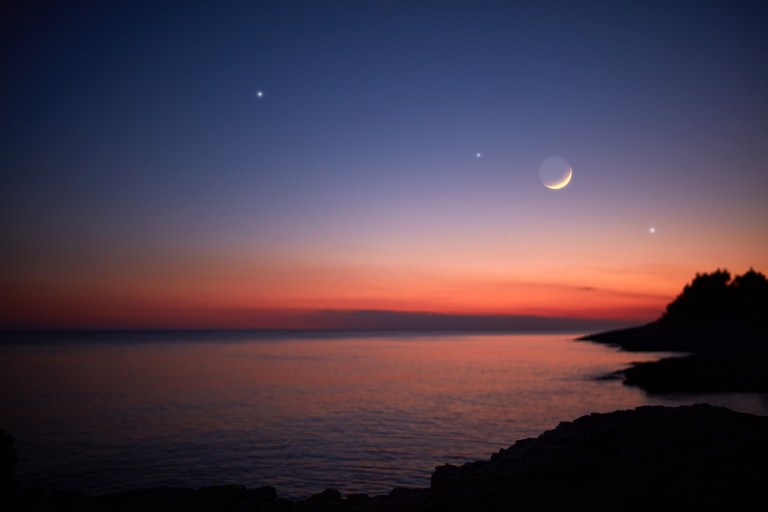
The show begins on March 25 and runs until March 30, 2023. While just a short window, the good news is that you won't need to set any early alarm clocks. The first planets become visible just after sunset.

While they may appear to be close neighbors, the planets are not as close together as they seem. Each one is millions of miles apart from the another.

The event begins just after sunset when Jupiter and Mercury appear. Both will only be visible for about an hour, so be sure to see them early. It's also important to note that Jupiter is so close to the horizon line that it can only be seen until March 28. After that, it will be too low to appear at all.

Next up are Venus and Uranus. Venus is one of the brightest planets, so it should be fairly easy to spot. Uranus, however, will likely require binoculars to see. Both of these planets are best spotted when the sky is completely dark, a few hours after sunset. But, just like Jupiter and Mercury, they'll only be around for an hour or two.

Mars appears a bit later and will shine nice and bright for most of the night. If you're lucky you might even be able to spot Saturn just before sunrise on March 27 and 28.

To ensure the best viewing opportunity, be sure to find a dark place, without any light pollution. This is usually an area away from cities and large towns. You'll also want to make sure you have a clear view of the western horizon.
Will you be looking out for this rare celestial event? If you have a great spot to see it, we'd love to hear about it. Tell us your thoughts in the comments! Love the Arizona night sky? These four spots in the state have the darkest skies in the country.
Subscribe to our newsletter
Get the latest updates and news
Thank you for subscribing!