Big Bend National Park: Explore Dramatic Canyons and Impressive Mountain Peaks in Texas
From the Rio Grande to Emory Peak, few destinations are as rugged, remote, and downright gorgeous as Big Bend National Park in Texas.
If you’ve never visited Texas, it's impossible to truly comprehend just how massive it is. As a result, this single state has incredible diversity when it comes to the natural landscape, featuring everything from gulf coastlines, grasslands, and forests to the deserts that are most commonly associated with the state. When it comes to this desert region, few places are as rugged, remote, and downright gorgeous as Big Bend National Park. Here's everything you need to know about Big Bend National Park and why it absolutely deserves a spot on your bucket list.
Is Big Bend National Park Worth Visiting?
This West Texas gem sits right on the U.S.-Mexico border in the state’s most arid region, but don’t make the mistake of thinking that means it’s devoid of sights worth seeing.
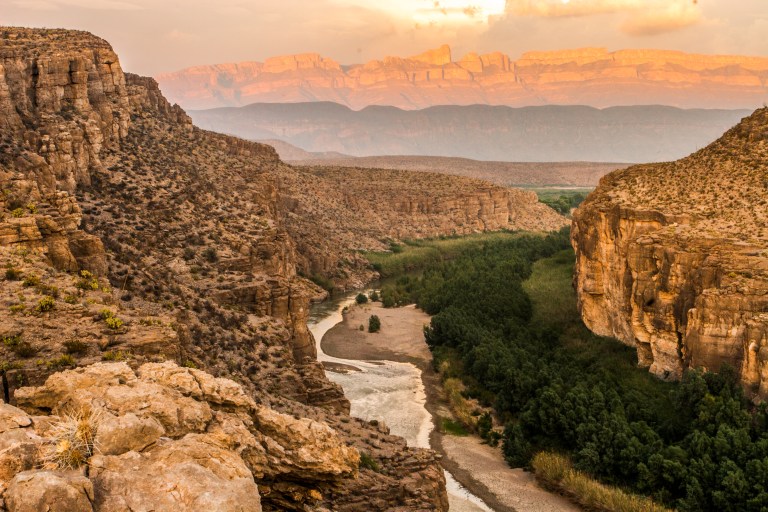
You know the saying “Everything’s bigger in Texas?” Big Bend National Park is proof.
The park stretches across 800,000 acres—that’s almost as large as the entire state of Rhode Island. It’s also home to the largest protected area of the Chihuahuan Desert in the U.S. and the entire Chisos Mountain Range, which is the only mountain range in the country to be fully encompassed within a national park.

When you first see the mountains rising up out of the desert, the sight will take your breath away. The Chisos Basin sits at an elevation of 5,400 feet and is ringed by mountain peaks; the tallest is Emory Peak, which rises to 7,835 feet above sea level.
Best Hikes in Big Bend National Park

As you can imagine, Big Bend National Park is filled with incredible hiking trails. In fact, this national park offers more than 200 miles of trails. Some of the most popular hiking trails in the park are the trek to Emory Peak, the South Rim, the Lost Mine Trail, and the Window Trail, which is an amazing place to watch a sunset. The hike to Balanced Rock is a must-do for anyone in Big Bend National Park. This easy out-and-back trail is less than two miles long and leads to an amazing spot for a photograph.
In addition to the many day hikes at Big Bend National Park, there are miles of backcountry trails perfect for a backpacking adventure. Just remember that a backcountry permit is required for any overnight backpacking excursions.
Santa Elena Canyon at Big Bend National Park

However, one of the most impressive sights is Santa Elena Canyon.
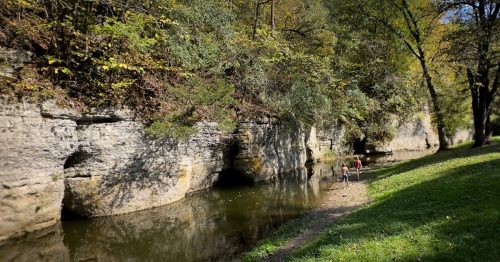
The canyon was carved by the Rio Grande and is the premier kayaking and paddling destination in the park. There are plenty of outfitters in and around Big Bend National Park that offer rafting and canoe trips down the river, but if you prefer to stay on land, there is also a beautiful hiking trail that winds along the river, against the sheer rock faces of this otherworldly gorge. The cliffs also keep the trail shaded, providing a much more pleasant hiking experience than on other, more exposed trails.
Where To Stay in Big Bend National Park

Throughout Big Bend National Park, campsites offer lodging for hikers, backpackers, and RV campers. Throughout this national park in Texas, you will find four developed campgrounds: Chisos Basin Campground, Rio Grande Village Campground, Cottonwood Campground, and the Rio Grande Village RV Park. Reservations are required for each campground. There are also several backcountry campsites throughout the park, and you can learn more on the National Park Service website.
For those planning an overnight stay who don’t want to rough it in a campground, Chisos Mountains Lodge operates the only hotel in the park. You may also consider booking a vacation rental outside of the park for additional lodging options.
While day trips are possible at Big Bend National Park, we highly recommend carving out several days to explore as much of the park as possible. You can also check out Lajitas Golf Resort, one of the best national park hotels in the U.S.!
Plus, nights in the park are downright magical.

Some of the best stargazing in the entire world can be enjoyed at Big Bend. It has been designated as an International Dark-Sky Park; in fact, it’s considered the fourth-best stargazing destination on Earth by the International Dark-Sky Association.
When Is the Best Time To Visit Big Bend National Park?
The best time to visit the park is in the spring or the fall, when the weather is mild. Summertime in the desert is brutal, and winters can be unexpectedly cold and harsh. Occasionally, heavy rains cause flooding and closures in the park, so be sure to keep an eye on the weather.
Practical Tips for Visiting Big Bend National Park

General Information
Accessibility: The park’s main visitor centers at Panther Junction, Chisos Basin, Persimmon Gap, Rio Grande Village, and the Fossil Discovery Exhibit each offer reserved parking and accessible ramps. In each visitor center, restrooms, book shops, water fountains, and exhibits are wheelchair-accessible.
Cottonwood Campground does not have campsites that are designated as accessible, though some are level and able to be used by people in wheelchairs. The vault toilets are wheelchair accessible. Chisos Basin Campground offers one site and restroom that are both fully accessible for people in wheelchairs and other flat sites that may be suitable for visitors with mobility difficulties. Rio Grande Village Campground offers one fully accessible site and adjoining restroom, and others nearby that are flat and may be suitable for visitors with mobility issues. Accessible campsites are reserved for disabled guests until 6 p.m. each night.
The Rio Grande Village Nature Trail Boardwalk, Panther Path Trail, and the Window View Trail each offer short wheelchair-accessible hikes.
Throughout the park, accessible vault toilets and program locations offer opportunities for disabled visitors to enjoy the beauty and history of Big Bend National Park. For more detailed information about accessibility in the park, visit the National Park Service website.
Pet Friendly: Most national parks are not extensively pet-friendly, as part of their effort to preserve delicate ecosystems. In Big Bend National Park, pets are not allowed on trails, on the river, or off-road—meaning your pet can only travel where your car can travel. If you do bring a pet, it needs to be on a short leash (no longer than 6 feet) or in a crate at all times. Pets cannot be left unattended in cars or campers. There are no kennel services in the park.
Seasonal Access: Park entrances and campgrounds are open 24 hours a day, every day. Ranger stations and entrance stations are staffed during various hours. If you arrive after hours, you can self-register at a campground or entrance station.
Cost: Entrance fees to Big Bend National Park range from $15 for individuals on foot or by bicycle to $30 for non-commercial vehicles, and they are valid for seven days. Motorcycles are charged $25 for a seven-day pass as well. Annual passes are available as well, and both the federal Access Pass and America The Beautiful Pass are valid in Big Bend National Park. Cash is not accepted at Big Bend National Park.
Restrooms: You'll find bathrooms located at each of the visitor centers and campgrounds. Also, vault toilets can be found at the following locations: Boquillas Canyon, Dugout Wells, the Fossil Discovery Exhibit, the Hot Springs area, and Santa Elena Canyon.

Whether you visit for just a few days or make a longer vacation out of your time in Big Bend, you'll find yourself falling in love with this desert mountain scenery every second of your journey. After a single visit, it is easy to see why this is a bucket-list-worthy destination in Texas. It's a place with so much to offer.
For more information about planning your trip to Big Bend National Park in Texas, visit the National Park Service website.
Feeling inspired to fill your Bucket List? Check out our previous feature of Hoh Rain Forest in Washington and Acadia National Park in Maine, then make sure to check out Only In Your State's itinerary planner to prepare for your next national park adventure.
Subscribe to our newsletter
Get the latest updates and news
Thank you for subscribing!