Most People Don’t Know These 12 Treasures Are Hiding In Vermont
Vermont is home to numerous legends of hidden treasures waiting to be discovered.
Vermont is rich in history, filled with both facts and legends. Some of our favorite stories are those of hidden, lost treasures in Vermont which have been passed down for generations. From wars to robberies to panning for gold in Vermont, these treasures are reportedly still out there just waiting to be found. Sure, there is no guarantee that some (if any) of the treasures below are still out there, and the variations of each story may not match, but we certainly enjoy the stories and dream what it would be like to happen upon an unclaimed treasure. Here are 12 popular tales of cashes and stashes around the great state of Vermont.
1. Bristol
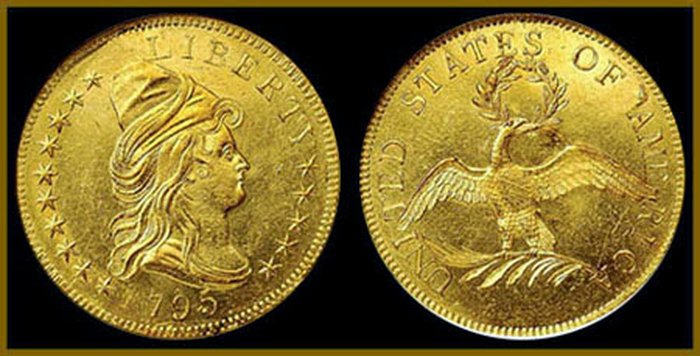
In 1752, four Spanish deserters from the galleon San Jose made off with 80,000 gold doubloons. The party was attacked by Indians who killed their pack horses and the gold was buried in a space between two giant rocks in the area known today as Hell's Half Acre near Bristol.
2. Newport

Buried somewhere on the southern shore of Lake Memphremagog, near Newport, is a treasure of British sterling and gold and silver coins cached by British officers while fleeing the patriots during the Revolutionary War.
3. Bennington

Several chests containing $90,000 in gold coins were buried near Bennington, and were originally stolen from the British Army by Patriot raiders who were later captured and shot. The treasure was not recovered.
4. Stave Island

A cache of buried treasure in Vermont is believed to be buried on Stave Island in Lake Champlain, north of Mallet's Bay.
5. Smuggler’s Notch

It is been said that "If all of the loot reportedly cached, hidden or buried in the caves at Smuggler's Notch was found, it would take a dozen semi-trucks to haul it all away." Almost every thief, counterfeiter and smuggler in the area in the 1800s used this area as a hideout and storage place at one time or another. Care to try your luck?
6. Middlesex

In the early 1700s, lumberman David Jarvis made a fortune in the logging industry and kept a large cache of gold coins buried somewhere on his farm near the headwaters of the Winooski River. He died in a logging accident and for more than two hundred years following his death, treasure hunters have searched for this fortune in coins, but to date, according to researchers, it has never been found.
7. Wallingford

During the late 1700s, a group of Spanish prospectors passed through the area now known as Wallingford seeking fortune in the new land. In the mountains, they discovered a rich vein of silver and the group began to set up mining operations and began to dig deep cavities at the base of the mountain. Here, they were able to work in secrecy where they melted the ore and turned it into silver coins. Having no way to transport all of their newly found wealth back to Spain, they filled their saddle bags with what they could and hid the rest in the mine. Today, the treasure has yet to be found, and the mountains still remain as elusive and mysterious.
8. St. Albans

One of Vermont’s best known treasure mysteries involves the 1864 St. Albans Raid when 22 Confederate soldiers snuck into St. Albans and robbed the city’s three banks in a daring daytime heist. All told, they made off with more than $100,000 in paper currency, gold, and silver. Only $80,000 was ever recovered. According to Vermont Civil War expert and author Howard Coffin, "What happened to the rest of it is unclear." For years, legends have circulated that the money was buried somewhere along the escape route which led up into Enosburg Falls and across the Canadian border.
9. Stowe

In the early 1800s, Old Indian Joe was a regular customer of Riverius Camp's store in the Lower Village of Stowe, Vermont. He paid his bills with gold dust or nuggets which soon aroused both the greed and the curiosity of the storekeeper and the rest of the town’s residents. They began to question Old Joe regarding the source of his supply of gold, but Joe refused to divulge any information, despite them trying to get him drunk with Indian rum to coax it out of him. It was known that Joe lived in a skin-covered hut in the woods on Worcester Mountain near the source of present day Gold Brook, so it was decided to set spies around his hut to see where he went for the gold. The spies soon tired of being led in circles through the woods whenever they tried to follow Joe, and no trails could be detected leading to the gold mine. Interest petered out, and Indian Joe was left in peace. His stash (or source) was never definitively identified.
10. Allen Farm

Located on Lake Champlain, this site was used as an encampment by both sides during the Revolutionary War and there may be many treasured relics left behind. The most common found treasure in this area is dropped or lost coins worth hundreds or even thousands of dollars.
11. Cedar Beach

In 1773, British soldiers, while under attack from Indians, buried approximately $75,000 in gold coins near Cedar Beach. The soldiers who survived the attack were unable to locate their hidden treasure.
12 The Levi Bailey Treasure

Somewhere between Mount Ascutney and Reading, Levi Bailey buried a large treasure on the stream near his mill. He admitted to this while on his deathbed, but the treasure was never located.
So many lost treasures in Vermont, so little time… Share this with anyone who would be up for an adventure!
Looking for more Vermont history content? Check out this article about 11 things you probably didn't know about Vermont.
Let us know if you've tried to find any of these hidden treasures in Vermont. Drop a comment below with your stories. We love reading your responses.
Subscribe to our newsletter
Get the latest updates and news
Thank you for subscribing!