Most People Don’t Know The Unusual Story Behind This Mississippi Town
Mound Bayou, an all-African American town in Mississippi, has a rich history and played a significant role in the Civil Rights Movement.
Known as the "jewel of the Delta," Mound Bayou has a remarkable backstory, to say the least. Established in the late 1800s, the allAfrican American town was completely unlike any other of its time. Fast forward to 2017, and some precedents set by the town still have yet to be surpassed. A small town with a huge history, Mound Bayou is one of the most interesting places in the entire state, if not the country.
Located in Bolivar County, Mound Bayou was established in 1887.
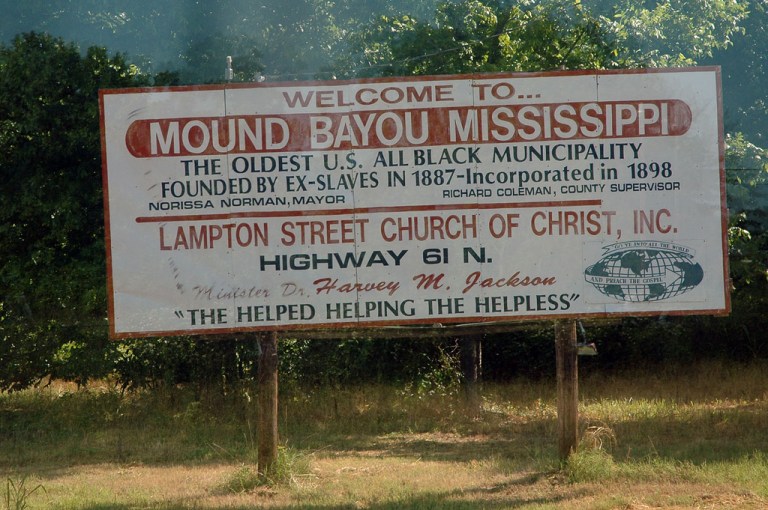
The town was founded by Isaiah T. Montgomery, a successful businessman, and Benjamin Green. The former slaves purchased the 840-acre area for $7 per acre.
The piece of land was chosen for several reasons, one of which was the Louisville, New Orleans, and Texas line railroad, which ran right though the center of Mound Bayou.

As of today, the old track bed is still visible; however, the rails have since been removed.
Aside from forests and dense foliage, the land included two bayous, which came together at a prehistoric Indian mound, resulting in the name Mound Bayou.

Within a short period of time, the town was flourishing, and before long, Mound Bayou became the largest all African-American community in the nation.

The thriving town included 3 schools, 40 businesses, 6 churches, a train depot, newspaper, 3 cotton gins, cottonseed oil mill, zoo, the Carnegie library, a bank, swimming pool, sawmill, farmers cooperative, mercantile company, and a hospital.


In 1941, a fire broke out, destroying most of Mound Bayou’s business district, but that wasn’t the end of the town.


Things began to turn around for Mound Bayou in 1942, when the Taborian Hospital was opened.

In business for over two decades, the hospital provided "low-cost healthcare for thousands of blacks in the Mississippi Delta."
In 1952, future civil rights leader Medgar Evers moved to Mound Bayou. It was in the small town that Evers was introduced to civil rights activism.

According to records, Evers moved to Mound Bayou to sell insurance for Dr. T.R.M. Howard. Eventually Evers attended an activism meeting with Dr. Howard and the rest is history.
Mound Bayou was also vital to the Civil Rights Movement in another way – the town hosted the Regional Council of Negro Leadership's annual rallies from 1952 to 1955.

The annual rallies drew crowds of ten thousand people or more.
Galvanizing the Civil Rights Movement, the trial of Emmett Till’s killers is one of the most infamous in the nation’s history, and Mound Bayou played an important role in the monumental event.

Records indicate that Dr. Howard opened the doors of his home to reporters and witnesses, giving them a place to stay during the trial. Additionally, the doctor gave them armed escorts to the Sumner courthouse.
Visit Mound Bayou today and you’ll find less than 2,000 residents, along with a few remnants of the town’s past.

Pictured above is the former home of Isaiah T. Montgomery, which is one of three sites in Mound Bayou listed on the National Register of Historic Places.
Did you know about the "jewel of the Delta," and it's interesting past? Ever visited this unique town? Tell us in the comments section!
Looking for another one-of-a-kind town in the state, check out "The Unique Town In Mississippi That’s Anything But Ordinary."
Subscribe to our newsletter
Get the latest updates and news
Thank you for subscribing!