There Are Underwater Ghost Towns Hiding Beneath Quabbin Reservoir In Massachusetts
The Quabbin Reservoir in Massachusetts, created by submerging four towns, is a crucial water source with a haunting history.
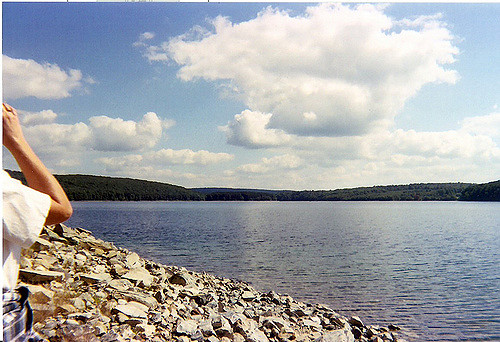
The Quabbin Reservoir is one of the most important water sources in the state, and a beautiful place to spend a sunny afternoon. However, the history of its construction is a much darker tale than you might expect. In order to build this massive reservoir, not one, but four thriving towns were drowned. The towns of Dana, Enfield, Greenwich and Prescott all met watery ends beneath the gentle waves of the Quabbin. Read on to learn more about these underwater ghost towns in Massachusetts, and how you can see some of their ruins today.
In the late 1920s, Boston had a serious problem: it was running out of water.
Clean drinking water was becoming increasingly scarce as the city and its suburbs rapidly expanded. There simply weren’t enough groundwater and river water resources to go around. The city was getting thirstier and thirstier. Boston had faced this same problem before in the early 1800s. At that time, the city had built the Cochituate Aqueduct to bring water from Lake Cochituate. Later on, Wachusett Reservoir was also constructed. However, by the time the Roaring Twenties came around, the city was drying up once more. This time, drastic measures had to be taken.
The state decided to construct the Quabbin Reservoir. However, there was a problem: four fully-populated towns stood on the proposed site of the reservoir.

Though the residents of the towns campaigned to have their homes, businesses and historic cemeteries saved from the flood, they lost the battle with the state.
Dana, Enfield, Greenwich and Prescott were disincorporated and submerged in 1938.

The towns' residents were relocated to nearby areas. Their beloved homes and communities were drowned as they departed.
This is one of the last surviving photographs of Enfield.

The photograph was taken in 1938, right after most of the town had been demolished. It depicts the Enfield town hall, which was last downtown building to fall.
At the town of Enfield’s final community ball, the last song played was "Auld Lang Syne". When the song ended, the town was officially dissolved and its land absorbed into Belchertown.

All of the towns held some sort of "farewell" celebrations, though the occasions were bittersweet at best.
Visitors to the area can stop by the Enfield Overlook, and gaze out across the land that was once the town of Enfield.

Surveying the reservoir from such a height really gives you a sense of how vast the underwater towns must have been.
If you want to get a glimpse of these underwater ghost towns, head to the former site of the town of Dana.

Because Dana was originally situated on some of the highest land in the area, some parts survived the flooding. The cellar hole above is one of many such historic remnants of the town.
A few of Dana's old stone walls and paths also survive.

The above-water ruins of the town of Dana are only accessible by foot. There is an old, narrow road leading into the area, but cars are not allowed.
The Dana town common features a stone marker that commemorates the loss of the town.


The marker reads: "SITE OF DANA COMMON 1801-1938 To all those who sacrificed their homes and way of life (Erected by Dana Reunion, 1996)."
Some of the town of Prescott actually survived the flooding, but is closed to the public except for one day a year.

Prescott was the least populous town of the four, with only 300 residents in 1900. Pictured above is Old Prescott Town Hall, which is only viewable during the annual Swift River Valley Historical Society tour. The underwater portions of Prescott are, obviously, not accessible at any time.
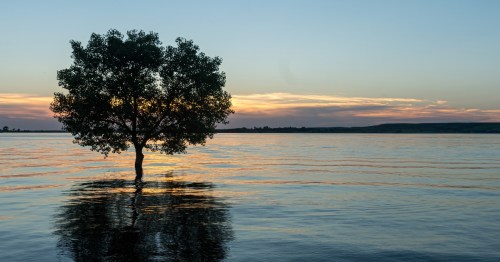
Today, the former homes, roads, businesses, and crypts of the Quabbin towns lie under the placid waters of the reservoir.

If you live around Boston, you're probably using water from the reservoir every time you turn on your kitchen faucet or take a shower. It's incredible to consider how much history and land was once sacrificed to make way for this resource. Check out this footage from YouTube channel "WGBH News" for an inside perspective on how the construction of the Quabbin Reservoir affected former residents of the drowned towns. If you're interested in learning about another Massachusetts ghost town, check out our article on Dogtown.

Subscribe to our newsletter
Get the latest updates and news
Thank you for subscribing!