An Unexpected City Of Tunnels Is Hiding Underground In This Rural Town In Idaho
Idaho's Magic Valley hides a vast network of underground tunnels created to drain water-saturated farmland, now a fascinating and largely forgotten historical site.
It seems no matter where you turn, Idaho is one exhilarating, awe-inspiring, and picturesque landscape after another. But if you've read any of our articles before, you know that our state's history is just as fascinating as the beautiful landscapes we've all come to treasure. In fact, hidden beneath the surface of Idaho's soil is a number of hidden surprises, sometimes in the form of our vast cave system - the product of our turbulent geologic history. Other times, these secrets are in the form of forgotten underwater ghost towns, left to decay in their watery graves. But did you know that there is an underground city of tunnels in Idaho?
Twin Falls is home to a surprising and unique underground city that few people know about but provides the very foundation upon which the Magic Valley thrives today. And it's far more vast than you might expect.
Tucked away deep within Rock Creek Canyon, just south of Twin Falls, lies a forgotten remnant of the Magic Valley's origins, concealed by overgrown brush and poplar.
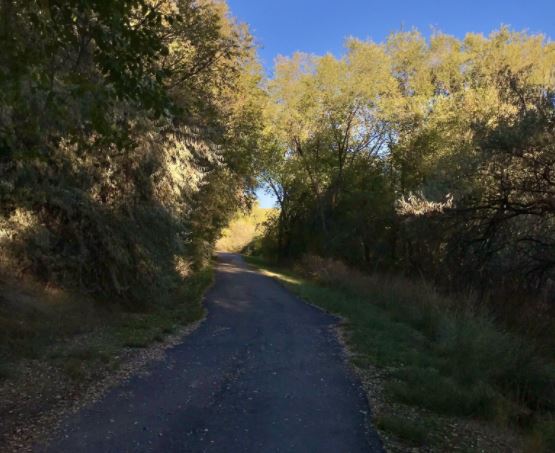
An underground city of tunnels. And it's one of the most fascinating abandoned places in Idaho.

Precious few people know of this underground city and even fewer have stepped foot inside the slick, waterlogged remnants.
Here, Klaar Tunnel - a name that is just as obscure as its history - acts as the entrance to an underground network of interweaving basalt caverns beneath the valley.

Klaar is just one of 49 tunnels that stretch for nearly 22 miles beneath Magic Valley, blasted decades ago in order to drain the region's water-saturated farmland. Most are about six feet in height and four feet wide.
The tunnels were intended to be the answer to the flooding concerns caused by the building of the Milner Dam in 1905.

With the Snake River diverted for irrigation, resident farmers quickly realized there was too much water coming in.
They also discovered that southern Idaho's basalt rock isn't as porous as other types of rock, causing poor drainage and exacerbating the flooding situation. While the dry desert landscape flourished, the agricultural land became a sludge.

The need for a solution was urgent. The water table was so high that farmers walking out to their fields were wading through mud that was calf-deep as water seeped up from beneath the soil.
Thus, these cavernous canal tunnels were dug for miles, anywhere between 30 and 40 feet below the surface of the town.

Idaho's unique "city of tunnels" was blasted by the Twin Falls Canal Company in the early 1920s. The plan seemed simple enough: forge tunnels beneath the landscape and then drill vertical shafts to drain extra water directly into Rock Creek.
Nearly 350 men worked tirelessly on the tunnels, dozens of whom lost their lives to errant dynamite blasts.

A project of this scope had never been attempted before, Hundreds of square miles of farmland needed to be drained, and a special mining drill from Montana had to be shipped in to make headway. In 1951, the project was declared a success, dead-ending at a gushing underground waterfall.
Today, one can still hear the pouring water deep within the tunnels and see its eroding effects on the rock floors and walls. The ceilings are covered with mineral deposits from the constant trickling water seeping through the hundreds of drilled holes. Everything is preserved by nature and kept obscured from the public, sealed with concrete to protect the vital irrigation ecosystem.

Of course, in the first few years after the tunnels were completed, locals used these tunnels as shelter, for bootlegging, and as a base for other illegal acts. As a result, the entrances were blocked, concealed, and shrouded with time to prevent further activities, as well as for public safety. And for good reason: many of the tunnels lack breathable air and are easy to get lost in.
But while this city of tunnels may be long-forgotten and its precise entrance concealed, the very existence of these tunnels are a testament to the power of water in the state.

They're also a sobering tribute to the lives of the workers who were lost in the process. Their efforts paved the way for the Magic Valley to flourish into the rich, geologic marvel that it is today.
Who knew there was an underground city of tunnels in Idaho? What other underground secrets are hiding in Idaho?
Subscribe to our newsletter
Get the latest updates and news
Thank you for subscribing!