A Longtime Favorite Motel In Kentucky Has New Owners And It’s Now Ready For More Decades Of Memories
Wigwam Village No. 2 in Cave City, Kentucky, is a historic and unique roadside motel with a complex cultural history and new ownership aiming to honor its past while looking forward.
There are lots of unique places where you can spend the night in Kentucky, but there's nothing quite like this attraction in Cave City. Wigwam Village No. 2 isn't just the only wigwam village in Kentucky, it's also one of only three remaining wigwam villages in the entire country. And, as you'll soon learn, it's actually not a wigwam village at all... but we'll get that in a moment. A longtime favorite motel in Kentucky, the Wigwam Village recently underwent a change of ownership, and the new owners are finally doing this historic place right.
If you've driven along Dixie Highway in Cave City, Kentucky, chances are you probably passed this roadside attraction.
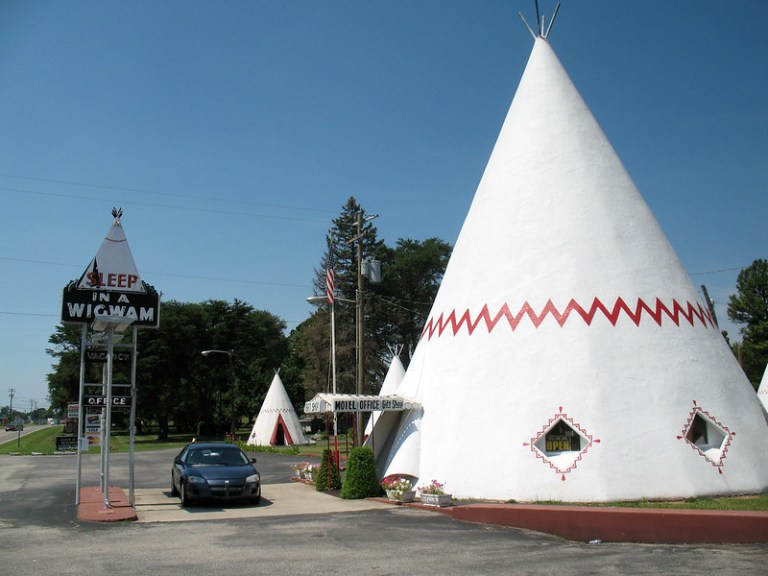
Wigwam Village No. 2 has been hosting travelers and guests since 1937.

Inspired by a trip to California (where there was an ice cream stand shaped like a teepee), Frank Redford returned home to Kentucky and created his own lunch counter/gas station shaped like a teepee.

The idea caught on, and Redford expanded his business in 1935 to include six concrete tepees -- wigwams, as he called them -- for sleeping.

In 1937, he built what is now known as Wigwam Village No. 2, which has 15 concrete "wigwams" for sleeping.

Redford decided on the location at Cave City on Highway 31W, counting on its proximity to Mammoth Cave National Park to boost his business.

The concept was a smashing success. Soon, Redford had franchised Wigwam Villages all around the country. Seven in total were built (No. 3 in New Orleans, No. 4 in Orlando, and No. 5 in Birmingham), but only No. 2 in Cave City, Kentucky, No. 6 in Holbrook, Arizona, and No. 7 in Rialto, California remain today.

While Redford's concept was a hit, what he'd created weren't actually wigwams, but rather, tepees (or tipis).

There's a big difference between the two dwellings: wigwams are semi-permanent, dome-shaped structures that indigenous people built in the Northeast; tepees are temporary, cone-shaped structures favored by the indigenous people in the Great Plains and Canadian Prairies.

Redford's cultural appropriation (or in this case, misappropriation) of the wigwam motif was wrong -- and insensitive.
But it's a new day, and the Historic Wigwam Village No. 2 is under new ownership. The new owners acknowledge the cultural theft the motel represents, and want to provide context and background to help guests understand its ramifications.

They also want to celebrate Historic Wigwam Village No. 2’s place in Americana -- the cultural identity and history of the country. So they're moving ahead, and focusing on what Redford did right, starting with the cozy, homey nature of the dwellings.

Redford also created an undeniable community at the motel. A fire pit invites guests to gather 'round and share tales from the road.

A big, wide-open green space is perfect for kids to play a game of baseball or run free, the way kids should -- but don't often do anymore.

There is a winsome, nostalgic vibe at the village that cannot be denied; and frankly, not many places have.

While Wigwam Village No. 2 has a tenuous history, frankly, so does America. We grow and learn from the past; we learn from our mistakes; and we move forward, stronger and better informed.

And this is precisely what's happening at Kentucky's Wigwam Village No. 2, a historic place that's looking ahead to a bright future.
Have you driven past Wigwam Village No. 2 in Kentucky before, or stayed there overnight? Did you know about its history? Share your experiences with this historic motel in the comments below! To learn more and make a reservation at this memorable attraction, visit the Wigwam Village website.
Subscribe to our newsletter
Get the latest updates and news
Thank you for subscribing!