History Left A Definite Mark At This One Fascinating Spot In Washington
On May 18, 1980, the course of Washington's history was changed forever when Mount St. Helens erupted. The incident was not without warning, but no one was fully prepared for what ended up being the most disastrous volcanic eruption in United States history. And while time has brought some changes and regrowth, the mountain will never look the same.
Mount St. Helens National Monument is located near Castle Rock, and it's a beautiful place.
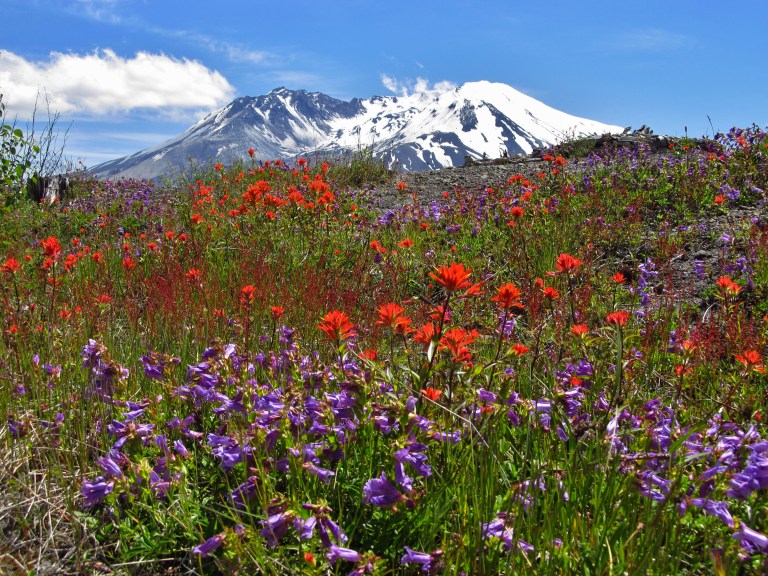
From far away, you'd never guess what once occurred here.
In the two months prior to the eruption, a series of small earthquakes and steam-venting episodes warned experts that something was about to happen.

It was all caused by an injection of magma at the shallow depth below the volcano that created a large bulge and fracture system on the mountain's north slope.
But take a close look at the mountain and you'll see that some serious damage has been done.

Early on the morning of May 18, 1980, an earthquake caused the north face to slide away, which created the largest landslide ever recorded.

This caused the volcano to explode, erupting 80,000 feet into the air. The thermal energy released during the eruption was equal to 26 megatons.
Sadly, 57 people lost their lives in the eruption.

Thousands of animals were also killed, and hundreds of square miles were reduced to wasteland. The damages reached $1 billion, equivalent to $3 billion today.
Since that fateful day, Mount St. Helens has seen some activity, but nothing like the 1980 eruption.

That being said, this is still an active volcano, and another eruption could occur -- although experts believe the next one will be mild.
Do you remember the day Mount St. Helens erupted? If not, you probably learned all about it in school. These Washington facts, however, remain largely unknown.
Subscribe to our newsletter
Get the latest updates and news
Thank you for subscribing!