There’s A Poisonous Plant Growing In Virginia Yards That Looks Like A Harmless Weed
If you've grown up in Virginia, you're probably aware of the handful of most poisonous plants in Virginia: poison ivy, Virginia Creeper, and poison oak. Yet there are several others that are lesser known and could still cause irritation and harm if touched. One of those is known as hemlock, and it's a relatively common plant that looks harmless. Here's more on how you can identify this poisonous plant.
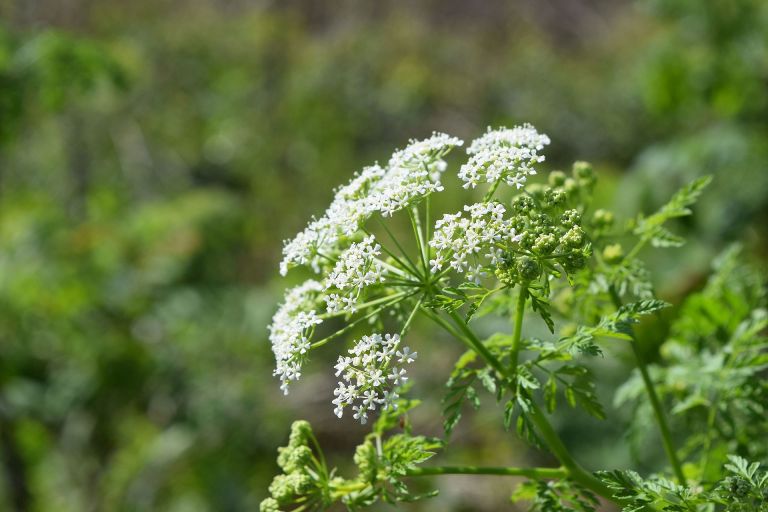
The hemlock plant, also known as Conium maculatum, is part of the carrot family Apiaceae and is native to Northern Africa and Europe.
However, this hardy plant is capable of living in a variety of climates, and has since spread to Australia, Asia, South America, and North America -- including Virginia.

The plant features a long root and can grow up to 8 feet in the right conditions. It has a smooth and hollow stem that is often spotted or sometimes streaked with red or purple near the bottom and top of the stem.

All parts of this flowering plant are hairless and the flowers are small and white, growing in delicate clusters, with five petals each.

Hemlock is often confused with the wild carrot plant, also known as Queen Anne's Lace. There are a few noteworthy differences, however: Queen Anne's Lace has hairy stems with no purple or red markings at all. This non-poisonous plant is also often much shorter in height. Also, the flowers of Queen Anne's Lace don't form in clusters.
All parts of hemlock are poisonous, but the roots and stems are especially toxic. The plant is harmful to touch and can be deadly if ingested.

Moreover, the hollow stems of the plant remain deadly for up to three years after the plant has died.

Curious how to get rid of poison hemlock growing in your yard? The best practice is to dig it out in small patches (wearing gloves for protection). You'll want to be sure to remove all roots. Do not cut, mow, or burn the plant, as the seeds can quickly re-sprout and any fumes can be dangerous.
Have you seen this poisonous plant in Virginia? Feel free to share your experiences with us in the comments below! As mentioned above, if you are finding hemlock in your yard, be sure to handle the plant with some protective gardening gloves. Afterward, be sure to wash your hands -- and the gloves -- thoroughly.
Subscribe to our newsletter
Get the latest updates and news
Thank you for subscribing!