I Survived a Copperhead Snake Bite—Here’s What I Learned
Consider this a PSA to all you outdoorsy folks.

When I headed off to a family reunion last month, I expected to return with an article on a quiet, long weekend at a peaceful state park. Instead, I was bitten by a venomous snake, and now I'm here to share with you everything I learned about what to do after a copperhead bite—and what you should do, too.
What to Know About Copperhead Snakes
"A copperhead won't kill you," an old-timer told my dad when my family moved to Appalachia, "but it will make you wish it had." Their bites can permanently disable you, making them real emergencies requiring immediate medical attention, but they are not generally considered lethal.
I was my doctor's second snakebite victim that week—the first had picked up a copperhead because it looked pretty. (What?!) In fact, they are the most common snake bites in the U.S., accounting for about 3,000 bites per year.
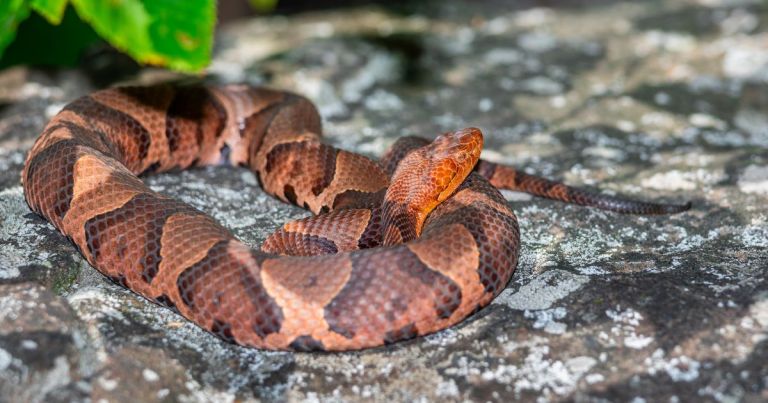
These venomous snakes live in most midwestern and eastern states, so if you live in or frequently visit these areas, sharpen your identification skills and look out for that infamous dark brown hourglass or "Hershey's Kiss" shape on their skin.
What to Do if You’re Bitten by a Copperhead
First and foremost: Elevate the bite above your heart and call poison control. Here's what a poison control operater might tell you to do:
1. Take a picture of the snake if you safely can.
Don't try to kill the snake or bring it with you to the hospital—you could get bitten again. If you can't safely get a picture, that is okay. All copperhead, rattlesnake, and cottonmouth bites in the U.S. respond to the same antivenom, so identification is not strictly necessary.
2. Assess your bite from a safe place out of range.
Some copperhead bites are dry, meaning no venom is injected. Dry bites typically feel like those from nonvenomous snakes—it doesn't cause significant swelling or significant pain, just stinging and bleeding. It doesn't require medical attention (just wash it with soap and water), but if at any point it begins to swell or ache, it was not a dry bite. In that case, medical attention is required.
A bite that continues to hurt or swell is often a wet bite (i.e., venom was injected), and you'll need to get to the hospital ASAP.
3. Have someone else drive or take an ambulance to the hospital.
It's important not to drive after getting bitten. Before you go, call your state's poison control center to check which local hospitals have antivenom stocked (if you can't get through, just go to the nearest ER). Make sure you have important items like your ID, insurance card, and phone with you. Keep your bite elevated above your heart in transit.
4. Remove all rings and tight clothes.
Make sure you remove all rings, jewelry, and any tight clothes that could worsen swelling. Instead, change into a loose t-shirt and shorts with an elastic waist, which will also be more comfortable at the hospital.
5. Do not use ice or compression.
It's crucial that you do not use ice or compression to minimize swelling—both can further damage fragile body tissue. Do not take pain-relief medications like ibuprofen or aspirin, as both can affect bleeding. Also, do not apply a tourniquet, or cut or suck the site of the bite (this is a commonly believed myth that could make things worse!).

What to Expect From a Copperhead Bite
Every snake bite is different, so recovery will depend on where you were bitten, how you were treated, how much venom the snake injected, etc. That said, a copperhead bite promptly treated with antivenom and regularly elevated usually recovers in 1 to 2 weeks. A copperhead bite not treated with antivenom could take months to recover, with a higher chance of permanent damage and disability.
Most bites occur on a leg, foot, hand, or arm. The closer a bite is to an important joint or tendon, the more potential damage and the longer the recovery. Bites can be very painful, compounded by intense pressure from swelling. Mine ached like a badly broken ankle that had been stung by hornets.
If you are bitten in the Achilles tendon like I was, clear your calendar for 10 days to 2 weeks, accept any meals your friends and family offer, and procure crutches for early trips between the bed and the bathroom. Speaking of my bite...
My Experience Being Bitten by a Copperhead
At 9:30 p.m. in mid-July at a state park in the Southeastern U.S., I was struck in the Achilles tendon by a medium-sized copperhead hidden along the shoulder of the road between the lodge and my cabin. I felt the bite instantly: two points of intense pain in my heel, similar (but worse) to yellow jacket stings. I leaped out of reach, then turned to make sure it was a copperhead. It was.

I walked quickly to the lodge for help. Throbbing pain shot up my leg, and blood dripped from the fang marks on my heel. I did not have vomiting, diarrhea, blistering, or changes in vital signs (some people do). My husband drove to the nearest hospital while I sat in the back, removed my rings, and propped my foot on the headrest in front of me. My uncle-in-law navigated. He called 911 en route, and the dispatcher notified the hospital.
By the time we arrived, 30 minutes after I was bitten, I could no longer use my ankle. The ER had a bed ready. My vital signs were monitored, blood was drawn (labwork helps assess a venomous bite), and the ER doctor called poison control (snake bites are rare, so physician consultation with poison control is advised). Some hospitals hesitate to give antivenom for copperhead bites, but thankfully, mine did not.

After receiving four vials of antivenom via IV, I was admitted to the ICU for monitoring. It took two days for my swelling to go down and for me to be released. My pain was controlled by codeine, then Tylenol. During my recovery, I regularly pointed, flexed, and rolled my ankle just to the point of pain. I improved each day, but it was still a full week before I even tried walking again.
As I draft this article 2.5 weeks later, I am almost back to normal—coming downstairs requires a deep ankle flex that's still tricky. Some bites require physical therapy to fully restore function, but I doubt mine will. I also have a high deductible insurance plan that I almost met (four vials of antivenom alone were $41,000 before insurance, plus the actual ER visit and two-night hospital stay).
What I Wish I Knew Before Getting Bitten by a Venomous Snake
The bite should be constantly elevated above the heart at a 45 to 60-degree angle for days (and days) to minimize swelling and tissue damage. I elevated my foot on the way to the ER, but then I just lay flat in bed without elevation. No one corrected me until the following morning, and I think this contributed to my having to spend an extra night in the hospital.

How to Avoid a Snake Bite
While it's inevitable to completely avoid crossing paths with a snake outside, especially if you're an outdoorsy person, there are a few precautions you can take to help yourself. For one, purchase a good snake field guide to identify different species, and maybe even snake tongs—to safely move a snake if you come upon one.
Be sure to watch your step and reach in wooded areas from April to October in snake areas. Wear snake chaps and long gloves when walking or working in areas with impaired visibility (i.e., long grass, deep leaf litter, etc). Use a flashlight at night. Encouraging your local rat and king snake populations also discourages copperheads.
If you're ever unsure of how to protect yourself or treat snake bites, several medical experts run a website and Facebook group called National Snakebite Support, which is a phenomenal resource for all things snakebite-related (for people and pets).

Have you ever been bitten by a copperhead snake? Do you know someone who has been bitten by a copperhead? If you know someone who spends a lot of time outdoors, be sure to send them this article so they know what to expect if they ever encounter a copperhead in the wild.
Subscribe to our newsletter
Get the latest updates and news
Thank you for subscribing!