The Little-Known Story Of Wolves In Oregon And How They’re Making A Big Comeback
After years of declining populations, followed by decades of no wolves at all, wolf packs are making a comeback in Oregon.
Wolves are native to Oregon and thousands of them used to live in packs across our great state. However, the development of human populations pushed wolves from many of their natural habitats. Hunting and conflict with ranchers and farmers also drove down numbers, eventually eradicating wolves from Oregon. There were no wolves here for over 50 years beginning in 1947, when the last known wolf in the state was killed for bounty.
Over the past few decades, wolves have slowly begun returning. There are now estimated to be around 200 wolves in Oregon. They are spread across the state in approximately 25 different packs. Many of them live in the Northeast but they are opportunistic animals that migrate as needed for safe access to food, water, and shelter.
Learn more about these majestic pack animals.
Oregon is home to gray wolves, which are also called timber wolves. The original population died out.
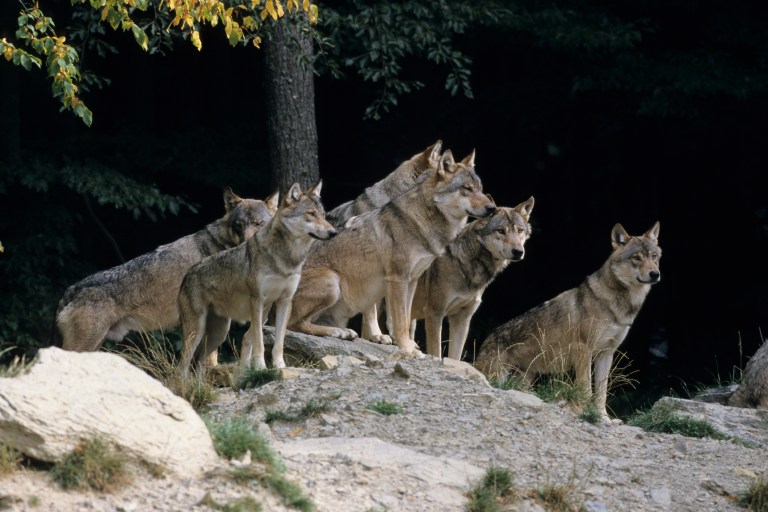
According to the Oregon Department of Fish and Wildlife, "The wolves in Oregon today are part of the Northern Rocky Mountain wolf population. They are descendants of wolves that naturally recolonized northwest Montana starting in the early 1980s and wolves captured in Canada and released in Yellowstone National Park and Idaho in the mid-1990s."
Gray wolf packs consist of parents and cubs forming the core pack. However, in winter, multiple primary units join to form larger packs.

Even though they are called gray wolves, their coats range in color from white to brown to gray to black.
Over 1 million wolves used to live across America. Those numbers plummeted due to human interference. Many wolf populations are now endangered but conservation efforts are making headway to bring them back to stable levels.

Types of wolves in the United States include the gray wolf, the eastern wolf, and the red wolf.
Wolves are found in Northern Europe, Asia, and North America.

Gray wolves look like big German shepherd dogs. They are the biggest living wild canine species.
Grey wolf packs need a large territory for hunting, ranging from 50 to 1,000 miles.

Wolves eat large prey, such as caribou, moose, deer, and bison. They will also eat smaller animals like rabbits, beavers, and fish.
Wolves have been spotted in many places in Oregon, including near the Metolius River.

Keep in mind that wolves are much larger than coyotes, which also live in Oregon. It is illegal to hunt wolves in the Beaver State.
I've seen a wolf in the wild once. It was a magical experience! (Luckily, I was in my car with the doors and windows closed!) If you happen to see one, hopefully, you'll also be in your vehicle, have a camera ready, and have road-trip snacks on hand!
For more information about Oregon wolf populations, visit the Oregon Department of Fish and Wildlife's Oregon Wolf Population, Specific Wolves and Wolf Packs in Oregon, and Wolf Program Updates websites. Learn more about Oregon's wolves at the Oregon Department of Fish and Wildlife's Wolf Biology website.
Have you ever seen wolves in the wild in Oregon? If so, please leave a comment!
Subscribe to our newsletter
Get the latest updates and news
Thank you for subscribing!