There’s A Deadly Plant Growing In Louisiana Yards That Looks Like A Harmless Flower
Oleander is a beautiful but highly toxic plant commonly found in Louisiana and other subtropical areas.
Gardening in Louisiana has always been widely popular. I've definitely become interested in gardening and have loved introducing new plants into my garden and trying to find the balance between what survives and what thrives in my little space. If you’re considering adding to or planting your own garden, there’s one beautiful (but toxic) plant that you should be aware of, because it’s one of the most poisonous plants in Louisiana, and it’s more common than you’d think! Read on to find out more!
This beautiful blossom is oleander.
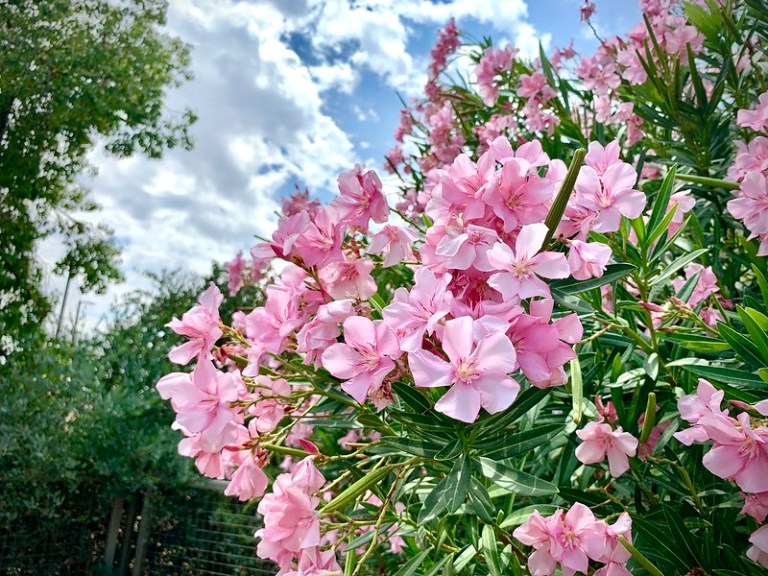
While it’s typically associated with the Mediterranean Basin, oleander is cultivated worldwide and thrives in subtropical areas. Because it does so well in these climates, states like Texas and California have planted it on median strips. There are roughly 25 million oleanders dotting highways in California!
Oleander has a bit of a sweet smell to it and, depending on the variety, can produce white, pink, or red blooms.

And these things are durable! They were one of the first plants that were planted on Galveston Island after the Hurricane of 1900, and have thrived so well that Galveston earned the nickname “Oleander City,” and hosts an annual festival around them.
Oleander is also the official flower of Hiroshima because it was the first flower to bloom after the 1945 atomic bombing.
Oleander has been around since the dawn of time (practically).

Ancient Greeks and Romans had several names for it, and even believed that oleander was an effective antidote for venomous snake bikes. (It’s not.)
Oleanders even made their mark on the artistic side of history, with many famous artists painting them into their works. Pictured above is ‘Oleanders’ by Van Gogh, which he painted in 1888.
In local lore, you may be familiar with the story of Chloe, the slave from the Myrtles Plantation who baked a pie laced with oleander in an attempt to kill the master of the house, but ended up killing the wife and kids.
While these flowers are beautiful, they are toxic and can be deadly.

Ingesting oleander can ruin your day. You would need to ingest a large amount for it to be fatal, but even a tiny bit can affect your heart and your central nervous system. On the gastrointestinal side, you’re looking at nausea, vomiting, abdominal pain, and diarrhea. Even worse, your whole central nervous system could glitch and cause tremors and seizures that could land you in a coma.
Even just touching oleander can give you a bad rash and cause an allergic reaction.
Oleander grows well here in Louisiana, and it's not uncommon to see them planted on lawns or in containers.

This beauty is just living her best life on a balcony in the French Quarter.
If you do plan on growing oleander, there are a few things you should know.

First, get yourself a good pair of gardening gloves. You do not want to touch this plant, and even after you plant it and remove your gloves, wash your hands and change your clothes. Why take the risk?
They're not attractive to pollinators (bees/butterflies) or even hummingbirds, so just know these beauties are just for looks. Because they have a sweet smell to them, birds and livestock tend to be curious, but they are toxic to all animals and there have been numerous livestock deaths in areas where oleander grows.
The U.S. Geological Survey website offers some additional quick tips regarding Oleander, one of the most poisonous plants in Louisiana. Importantly, use common sense. If you have kids, make sure they know the dangers of this plant. If you've got pets, maybe keep an eye on them when you let them out of the house, or even better, plant oleander in an elevated area where they are safe from kids and critters! Identifying this plant, especially when camping, can be a lifesaver. You wouldn't want to pick these branches as your chosen skewer for s'mores. That mistake could ruin your entire camping trip!
https://www.onlyinyourstate.com/louisiana/best-camping-in-louisiana/
Subscribe to our newsletter
Get the latest updates and news
Thank you for subscribing!