Exploring Savannah’s Hidden History with Archivist Lillian Grant Baptiste
Learn little-known facts about Savannah's history, and ways the Riverside Plant District is helping to bridge the gap between the past and the future.
And, they worked not just as laborers, but as cultural architects, who were entrepreneurs, midwives, blacksmiths, and boat makers. They were here, and a lot of people don't realize that. And I think that is so very important that we embrace that. We've always been here.
Savannah is world-renowned for its moss-draped oaks and cobblestone charm, but beneath the surface of this picturesque city lies a narrative written by "cultural architects" whose stories are often left untold. From the rhythmic pulse of the Savannah River to the hidden legacies of the Gullah Geechee people, the city is more than just a destination—it is a living archive.
On a recent family trip to the Plant Riverside District, we discovered that Savannah’s history isn't just found in museums; it’s whispered in the stones and sung in the traditions that still thrive today.
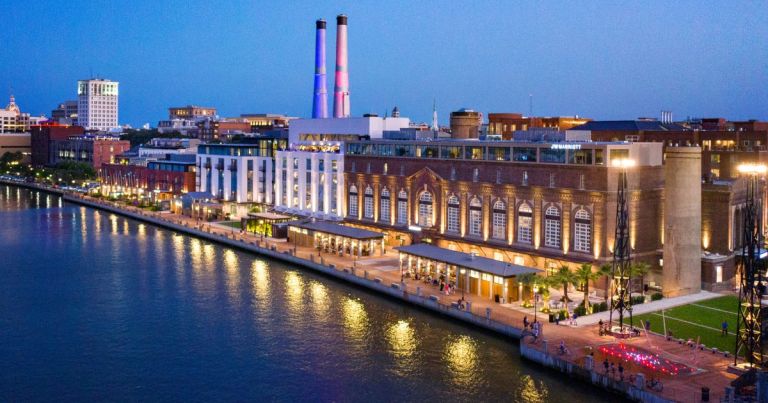
While visiting the Landmark District area, we discovered the First African Baptist Church, the Ralph Mark Gilbert Civil Rights Museum, the Savannah Pirate Museum, and the Pin Point Heritage Museum, among many other wonderful destinations, restaurants, and shopping locations.
But what stuck with me most after this trip is how intentional the town has been about how history is archived in Savannah. From tours that delve into the town’s past to carefully curated cultural experiences and even the preservation of the area’s Gullah Geechee culture, Savannah was a surprise for my family.
Upon returning home, and after doing more research on the town’s history, I felt compelled to speak with a nationally-recognized Savannah-based Master Storyteller and Cultural Archivist, Lillian Grant-Baptiste, about the many ways that Savannah’s Plant Riverside District is emerging as a Southern cultural hub that is helping to preserve Savannah’s history through contemporary art, music, and storytelling.
Little-Known Facts About Savannah's History

Africans and African Americans were present in Savannah when it was founded. Grant-Baptiste shared, “And, they worked not just as laborers, but as cultural architects, who were entrepreneurs, midwives, blacksmiths, and boat makers. They were here, and a lot of people don't realize that. And I think that is so very important that we embrace that. We've always been here. We've built the foundation of Savannah and shaped the city from its very beginning.”
The presence of Black people and Africans in Savannah during the 1730s-1750s, living freely outside of the context of slavery, speaks volumes about a legacy of resistance and unyielding pursuit of happiness that America promises all.
In fact, there was a community of African Moors that lived near the swamps of the Savannah River. “Most people don't know about Bear Creek, which was founded in the 1780s by a troop of loyalists who fought on the side of the British, and formed this community about 20 miles up the Savannah River. This community was very fortified, and the Moors lived there in the marsh. They were hidden, and many people did not even know their culture flourished there. Grant-Baptiste also shared that in many historic towns, historical records (libraries, courthouses, business documents) are often destroyed. So, passing down history through oral tradition is one major way that many people and cultures were able to hold on to their distinctiveness. “That's how we carried out history forward. That's how we passed on our values. That's how we gave each other's strength through storytelling, through song, through call and response.”
4 Must-Try Soul Food Spots in Savannah

Of course, you can’t chat with an elder or a cultural archivist without getting the lowdown on the best places to grab some “soul food”. And, according to Grant-Baptiste, Savannah has some fun options. “A place that is so fun is Geneva’s Famous Chicken and Cornbread Co., and it’s on the east side on the way to Tybee Island. That's one of the best spots.
We have Belford’s Seafood & Steaks, which has spectacular food. And then, there are a couple of spots down here that I love like Sisters of the New South. They’re a good soul food spot, that’s also on the east side of Savannah. I do want to talk about one other spot called Randy's Barbeque. It looks like there’s nothing to it, and you can't sit down and eat, but they have the best ribs!”
Gullah Geechee Communities in Savannah Thrive Due To Isolation
Gullah Geechee people are known for their distinct dialect, unique culinary traditions, and deep ancestral roots. When I asked Grant-Baptiste why the Gullah Geechee people have been able to preserve their African roots so well compared to many cultures influenced by the African Diaspora, she shared that being separated from society has helped preserve the essence of Gullah Geechee communities, especially in Georgia. “I think one of the reasons why is because of isolation. We live in the coastal areas, and it's hard for outsiders to get in. And so, we were able to hold on to many of those African and African-American traditions in that isolation.
They brought Africans over from the same region, from the rice coast of Africa. So, many of the traditions were closely aligned in language patterns and foodways. During the malaria season, many of the planters would leave. And so, African Americans and the enslaved folks were able to really grow and practice their traditions because there wasn't much outside interference. So, their traditions were able to flourish. It was also the unique everyday practices of cooking, making nets, going fishing, and living off the land that helped the culture to thrive without needing to be dependent on outside help."
The Best Activities for Families in the Riverside Plant District All Year Long (or, Throughout The Year)

Learning about history shouldn’t be compartmentalized just a month or two out of the year. As human beings, we are all connected in some way. In many ways, we have more in common than we are different. Grant-Baptiste emphasizes that participating in cultural activities at historical sites is important, and performing in the Riverside Plant District is significant. “I think it's important that it is here [near the Savannah River], because for many of us, it was a point of entrance, through that river. So, that river speaks. The cobblestones on those streets were laid there by enslaved hands; the trees, and everything about that area whispers and speaks the history of who we are.”
Grant-Baptiste further stated, “It’s important that people who were disconnected, along with their history, be brought back to a place where all that history can now be connected to tourism. It's important that people who were disconnected can now be reconnected to an area where they came and helped to build.”

In Savannah, Georgia, the Plant Riverside District has emerged as a cultural hub for bridging history and modern creativity to honor one of America’s oldest cities, as well as the Gullah Geechee tradition. Once rooted in the coastal communities of the Southeast, these centuries-old narratives of freedom, resilience, and faith are being reimagined for new audiences through live performances, public art, and educational programming that transform Savannah’s riverfront into a living museum of America’s history.
This year’s 2026 programming will continue to amplify these voices as part of a broader effort to ensure Gullah Geechee culture remains visible, celebrated, and passed on to the next generation. Some of the 2026 Tentpole Moments include:
- Black History Month celebrations (February 2026): A month-long celebration featuring gallery exhibitions, live storytelling, and educational programming that explore the intersection of African American art, identity, and history.
- And the forthcoming 2026 Juneteenth celebration: Building upon the success of previous years, “The Day of Jubilee” will return with expanded performances, family-friendly workshops, and partnerships with local cultural institutions to deepen community engagement and awareness.
Some of the past types of cultural programming for families with kids and teens have included:
- “The Day of Jubilee: Reflections of Freedom, Faith and Fortitude”, a powerful Juneteenth celebration led by Lillian Grant-Baptiste, a nationally recognized ritual celebrant, master storyteller, and preservationist of Gullah Geechee traditions. Joined by the Gullah Geechee Ring Shouters and Abeni Cultural Arts Dancers, the performance brought together song, drumming, and dance to honor the enduring spirit of freedom.
- “Under the Baobab Tree”, a storytelling dinner inspired by African folklore and Gullah Geechee heritage, featuring traditional dishes, wine pairings, and stories shared by Lillian Grant-Baptiste. The event celebrated the Baobab as a symbol of resilience, unity, and cultural wisdom, bringing guests together to honor ancestral traditions through food and narrative.
- “Kwanzaa on the River”, being held on December 26, this community celebration invites guests to gather at District Live for “Harambee! Celebrating Kwanzaa on the River,” hosted by Lillian Grant-Baptiste. The evening includes drumming, dance, candle lighting, and storytelling focused on the seven principles of Kwanzaa, culminating in a collective affirmation of unity.
- The 2nd Annual Soul Sessions Masquerade is a rhythmic, art-filled celebration of Black music and creativity that transforms Plant Riverside into a lively night of performance and connection, blending R&B, spoken word, and visual expression.
- “I Shall Not Be Moved” is a moving tribute to Gullah Geechee strength told through drumming, song, and poetry.
For families visiting Savannah’s historic districts, be sure to check out events around town and further explore Savannah's Gullah Geechee culture.
Subscribe to our newsletter
Get the latest updates and news
Thank you for subscribing!