5 Things Archaeologists Discovered In Georgia That May Surprise You
Georgia's rich history is revealed through significant archaeological discoveries.
Everyone who's lived in or visited Georgia understands just what a rich history this state holds. Not only was the state at the forefront of huge political change back in the day, but it also was the 13th and last of the British colonies. But doesn't that make you wonder just what's buried underneath all these sidewalks and cement roads? There have been huge archaeological discoveries over time in The Peach State, many of which will surprise you. Take a look at five discoveries that are important in the study of Georgia archaeology:
1. Etowah Indian Mounds, Cartersville, Georgia
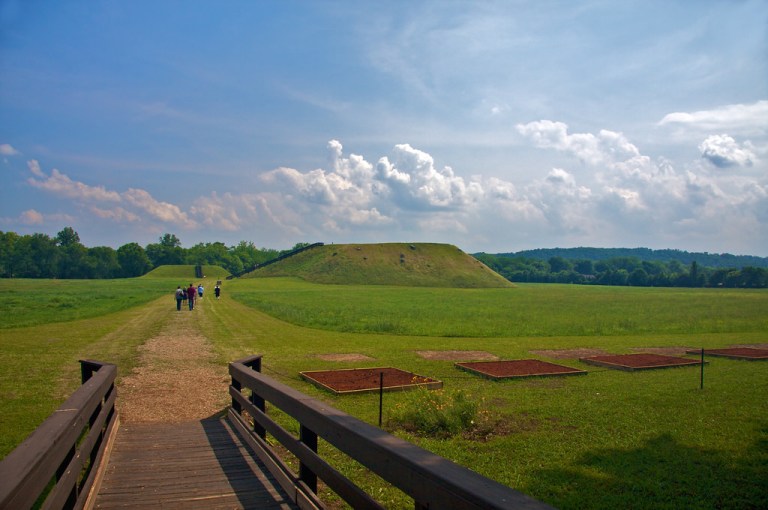

Etowah Indian Mounds are a popular tourist spot in Bartow County, Georgia. Late 20th-century archaeological studies showed that the mounds were built and occupied by prehistoric indigenous people of South Appalachian Mississippian culture, the largest occupation of this culture in the southern United States.
2. Native Americans Drank Something Similar to Coffee


Archaeologists have been chemically testing Cahokian pottery for evidence of what they were drinking. It turns out, remnants of two chemical compounds of Ilex, a certain type of holly, were found, indicating that there was trade of this caffeinated tea up and down the Gulf Coast, dating back thousands of years.
3. Quarried Stones in Pine Mountain, Georgia

In 1950, archaeologist Phillip E. Smith of Peabody Museum of Harvard University, excavated several stone architecture sites in northeast Georgia. According to history books, round stone building ruins and quarried stone were not supposed to be in the Southeast before Columbus. However, they clearly were! This discovery prompted rewrites of history books as to who inhabited this land prior to discovery by Columbus.
4. Ceremonial Sites in Cohutta Mountains


Recently, archaeologist Julia Sennette discovered a ceremonial site in the Cohutta Mountains that will change the archaeology books. Within the site are several monoliths. At least two have been quarried into geometrical shapes. This is proof that these mountains were inhabited by a culture previously unknown in the area.
5. Archaeological Dig in Camp Lawton Reveals Secret Life of Camp Imprisonment


Georgia Southern University’s archaeology team unearthed some unique, priceless artifacts from the site of the largest prison camp of the Civil War. Dr. Sue Moore, President of the Society for Georgia Archaeology said they thought anything of historical value at the site of Camp Lawton had been lost, looted or destroyed. However, the discovery of certain artifacts contirbute to unlocking many of the secrets of life in a prison camp in Georgia.
Do you know of any unusual archaeological discoveries in The Peach State? We'd love to hear from you!
Subscribe to our newsletter
Get the latest updates and news
Thank you for subscribing!