I Did Not Enjoy My Hike Through Washington’s Ape Cave, and I Won’t Do It Again
Our writer did not love his experience hiking the Ape Cave lava tube in Washington. But it certainly was an adventure.
Let me start by saying I don't hate caves - I really don't. I've been to many caves across the United States that I thought were fascinating. Moreover, if I didn't like caves, I certainly would not have made the three-hour drive from my hotel near Seattle to spend a sunny Sunday afternoon in a dark hole - which is exactly what I did on a recent trip to the Evergreen State. So, it's not that I don't like caves...I just didn't like the so-called Ape Cave in Washington.
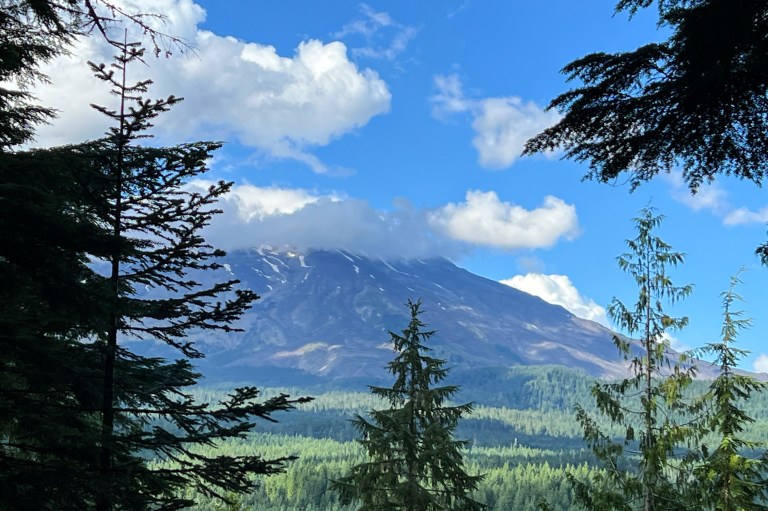
Let's start with the most obvious problems. First, my trip to Ape Cave was just a day trip arranged by my friends in the Seattle area. It seemed like a fine idea: a jaunt down to a national forest I've always wanted to visit, pop my head in a cave, do a little hiking, grab some local dinner, and head back to the hotel. We left on a glorious summer morning, got on the freeway, and drove. And drove... and drove. I spent the first three hours of that sunny Washington day stuck in a car. But we finally reached the Mount St. Helens National Volcanic Monument in the Gifford Pinchot National Forest, where the Ape Cave Interpretive Site is located.

Problem number two: no apes. None. Not even a Bigfoot print. Ape Cave is just an ancient lava tube that extends underground for a couple of miles. While this does make it the longest lava tube on the North American continent, at the end of the day, it's still just a lava tube - and I learned the hard way that when it comes to lava tubes, longer is not better. As for the name, the lava tube received its moniker from a troop of Boy Scouts who explored the cave in the 1950s and their sponsor, the St. Helens Apes, a group of local foresters.

From the parking lot, where you'll find a small interpretive center and gift shop - Ape Headquarters - that offers lantern rentals, snacks, and information about the area, a paved trail leads through the mossy, fern-covered forest to the lava tube entrance. The setting is lush and dramatic, like something out of Jurassic Park. A set of stairs leads down into the cave, where you have a choice to make: hike the lower cave route, three-quarters of a mile each way, out and back, and exit where you came in, or take the longer, 1.5-mile upper cave route, which requires rock scrambles and an exit a mile-and-a-half away from the main entrance. My companions and I - along with every other person I saw that day - chose the lower route.

You will definitely need a fully charged, proper light source, like a headlamp or flashlight (not your phone). A light jacket is a good idea, as well, because the air in the cave is considerably cooler than that on the surface. As I examined the walls and floor of the tube and descended farther into darkness, I thought the first few hundred feet of the Ape Cave were pretty neat. But it kept going, and it was all kind of... the same: no stalactites or stalagmites or interesting features. Instead, it just slick walls that continued downhill in pitch darkness, becoming shorter and narrower until it just, well, petered out.

At this point, you turn around and hike back three-quarters of a mile, past the same, relatively uniform walls, in pitch darkness. Except, on the return, it's uphill all the way. I should also mention that although there are no stalagmites, the floor of Ape Cave is not featureless. Rather, there are several rough patches where you can trip and slick spots where I slipped. So that was fun, too.

If nothing else, I was very happy to see the cave exit (which does, admittedly, make for a cool photo). As far as lava tube experiences, I definitely prefer something more akin to Nahuku at Hawaii Volcanoes National Park: shorter, lighted, and located on a loop that doesn't require an out-and-back. As it turned out, we spent too much time at the cave and had no time left for above-ground hiking, which added to my disappointment with the experience. Now that I know, I wish I'd hiked the first 1,000 or so feet of the lava tube and turned back. I would have had the full experience and plenty of time left to explore the Mt. St. Helens area. On the other hand, if I hadn't gone all the way, I'd probably have considerable FOMO about it.
If I haven't completely deterred you from the experience, and you want to check out Ape Cave for yourself, there are a few things you'll need to know. First, the lava tube is only open seasonally from May through October. Second, timed reservations, as well as a non-phone illumination source, are required to enter the cave. Finally, you'll need to pay an entrance fee when you make your reservation or present your America the Beautiful Pass with your reservation when you arrive at the site.
If you go, I hope you enjoy it more than I did! And if there's another lava tube in Washington you think I should explore, be sure to let me know.
Subscribe to our newsletter
Get the latest updates and news
Thank you for subscribing!