People Have Lived In And Visited Utah’s Capitol Reef National Park For Thousands Of Years
Capitol Reef National Park in Utah is a fascinating destination with a rich history and stunning natural beauty.
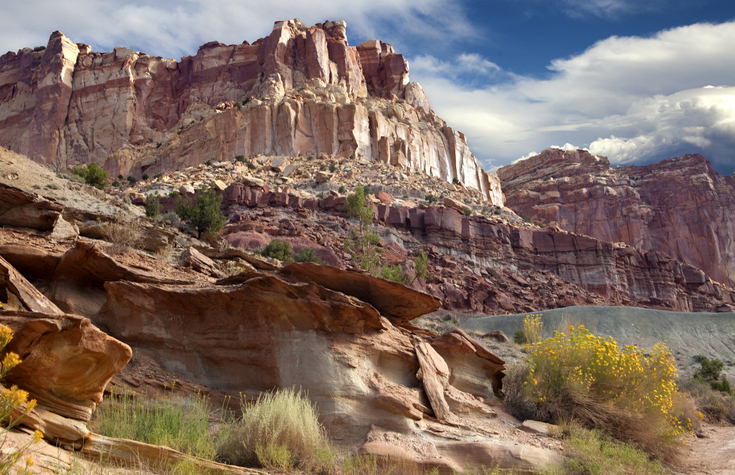
Every year, around 1.25 million people visit Capitol Reef National Park, a truly fascinating national park to visit in Utah. Its remote beauty and expansive history draw visitors from all over the world, but people have been visiting this area for thousands of years (albeit in much smaller numbers!).
Capitol Reef National Park was welcomed into the national park system in 1971, but people had already been visiting this place for thousands of years.
The first people were Paleo-Indians, who were hunter-gatherers that likely lived in the area 12,000 years ago.
Desert Archaic Indians lived 8,000 years to 1,600 years ago. They moved around often, searching for the best hunting grounds. Ancient pictographs found in nearby Horseshoe Canyon give us some insight into how these people lived.

During the Archaic period, people typically lived in caves. They moved frequently, gathering plants and hunting animals for food. Just east of Capitol Reef National Park, Horseshoe Canyon is part of Canyonlands National Park, but it's believed that the same people may have frequented the area around Capitol Reef, as well.
Fremont and Ancestral Puebloan people lived in Capitol Reef as many as 2,000 years ago.

Generations of these peoples lived and thrived for more than 1,000 years. They lived in pit houses and farmed the land, growing squash, corn, and beans. Pictographs and petroglyphs from the people of this era are plentiful around the park, and they show a fairly advanced culture.
In 1776, Franciscan priests Fransisco Atanasio Dominguez and Silvestre Velez de Escalante came through the area.

In 1853, explorer John Charles Fremont passed through, and John Wesley Powell brought his party of geologists through in 1871.

On that expedition, Solomon Nunes Carvalho created what is now thought to be the first image of Capitol Reef. Part of the Fremont party, Carvalho was fascinated by the new technology of the daguerreotype, and he created this pen and ink drawing from his original photograph.

In the 1870s, the first Mormon settlers began making homes in the area, and in 1880, Nels Johnson claimed his stake in Fruita, and planted fruit orchards. He married Mary Jane Behunin, the daughter of another settler who would later donate land for the Fruita Schoolhouse.

The Fruita School was built in the late 1800s, and educated the children of Fruita until 1941.

Dewey and Nel Gifford settled into Fruita and raised their four children here, starting in the late 1920s. The last residents of Fruita, they moved out in 1969. You can visit their homestead at the park today.

In 1937, President Franklin D. Roosevelt protected 37,711 acres and named it Capitol Reef National Monument. In 1971, President Richard Nixon set aside 254,000 acres and designated Capitol Reef as a national park.

Today, when modern visitors come to Capitol Reef National Park to gaze at its wonders, they often feel as though they discovered something truly amazing. They certainly did - they just weren't the first to do so!

Learn more about the people of Capitol Reef on the national park's website. You might also give its Facebook page a follow to see more photos and learn about what's new at the park. You'll quickly discover why Capital Reef is considered the most fascinating national park to visit in Utah.
Subscribe to our newsletter
Get the latest updates and news
Thank you for subscribing!