The Great Outdoors Is Calling – It’s up to Each of Us to Leave No Trace
U.S. Forest Service budget cuts mean a worker shortage, so we must do our part to protect our public lands by practicing Leave No Trace principles.
In August 2024, the United States Forest Service (USFS) announced that the agency faced several budget challenges for the upcoming fiscal year. As a result, USFS officials said the agency would take a number of severe cost cutting measures, including the drastic step of a hiring freeze. This means there will be no seasonal workers, other than those in fire response positions, hired by the Forest Service in 2025. If you're like me and enjoy recreation in our national forests, brace yourself for some potentially unpleasant results of this belt-tightening. At the very least, we should be prepared to embrace and practice Leave No Trace principles with even more care than we may have before.
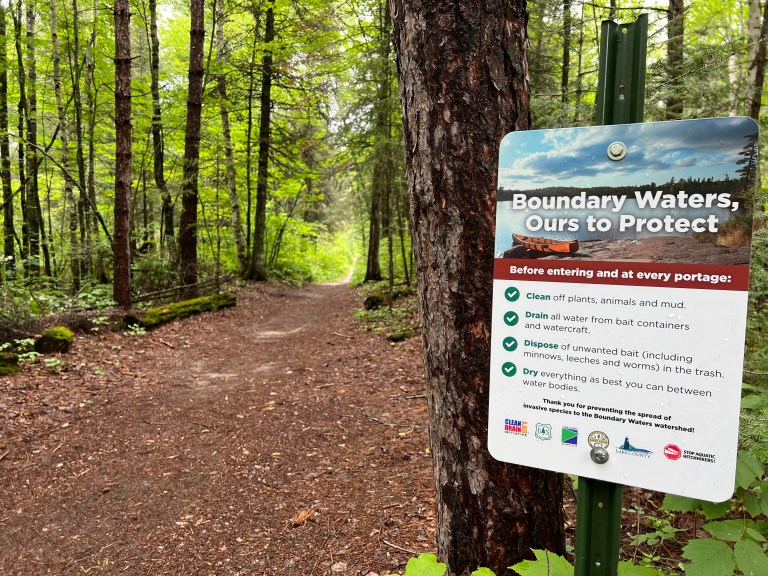
Of the 650 million acres of land owned by the federal government, the Department of Agriculture's Forest Service is tasked with managing approximately 193 million acres, or almost one-third of all the federally-owned land in the United States - and more than twice the number of acres managed by the National Park Service. We know these USFS managed lands as our national forests and national grasslands. In my home state of Minnesota, the Forest Service oversees the Chippewa National Forest and the Superior National Forest; within the latter, the agency manages the Boundary Waters Canoe Area Wilderness - one of the largest and most visited wilderness areas in the Lower 48 states.
Our neighbors to the east enjoy the Chequamegon-Nicolet National Forest in Wisconsin and the Huron-Manistee, Hiawatha, and Ottawa National Forests in Michigan. To our west, you'll find the Dakota Prairie and Little Missouri National Grasslands in North Dakota, as well as the Buffalo Gap National Grassland in South Dakota. I'm sure you can think of several examples in your neck of the woods. These are places where we hike, paddle, camp, fish, ski, snowshoe, go birding, and much more.

Although these forests and grasslands may feel like the wilderness to us, they contain quite a bit of infrastructure that we rely on when we visit - even in designated Wilderness Areas like the Boundary Waters. Most of us camp in developed campsites, hike on designated trails, and use picnic tables and facilities (e.g., bathrooms and latrines) at waysides, boat launches, and rest areas. And how do we get to these spots? Often, by traveling over a portion of the 265,000 miles of roads that the Forest Service maintains. In comparison, the Interstate Highway System consists of "only" about 49,000 miles of roadways.

We rely on this infrastructure to enjoy our national forests and grasslands, and the Forest Service relies largely on seasonal workers to maintain this infrastructure. Well... it did. The 2025 season is going to be considerably different. The hiring freeze will result in cuts to approximately 2,400 jobs - most of them seasonal, and almost all them in the field. These include biologists and arborists working with the U.S. Forest Service, as well as folks who interact with visitors, like naturalists and recreation specialists, and even the workers who maintain trails, campsites, and sanitation facilities. Outdoor enthusiasts are concerned that the lack of workers and maintenance will result in a repeat of what happened during a recent government shutdown, when short-staffed parks, campgrounds, and wilderness areas were vandalized, garbage was left behind, and natural features were destroyed.

So anyone who enjoys recreating in our national forests must be ready to take matters into their own hands. First, you'll want to be prepared for self-sufficiency. Bring your own toilet paper and hand sanitizer, as well as something to use for taking your trash out with you. If you're visiting a designated Wilderness Area, you're required to do all this anyway, but now you should be ready to treat developed and front country areas in the same way.
Under these circumstances, being diligent about practicing Leave No Trace while camping, hiking, or anything we do when enjoying our public lands is more important than ever. More than 160 million people visit national forests and grasslands every year. This is already an overwhelming number of visitors for the employees tasked with picking up after us. With fewer Forest Service workers to prepare for and handle the aftermath of our visits - along with all the naturally-occurring events that require cleanups, like windstorms and floods - we need to do our part to make sure we leave our forests and grasslands, at the very least, in the same condition in which we found them, better if possible. For example, if you come across rubbish that someone else has left, consider being the bigger person and packing it out along with your own.
In these difficult times, our national forests and grasslands need us to be their stewards if we hope to preserve and protect them for the next generation and generations to come. Those of us who enjoy these public lands must do our part - and perhaps a little more - when the folks we elect turn their backs on some of our nation's greatest resources.
Subscribe to our newsletter
Get the latest updates and news
Thank you for subscribing!