One Of The Biggest Meteor Showers Of The Year Will Be Visible In Oregon In December
Oregon offers a diverse array of stunning natural wonders, from lush forests and dramatic coastlines to majestic mountains and captivating waterfalls.
If you've ever witnessed a meteor shower, you know how incredible it is to see falling stars tracing their way across the heavens above. The Perseid meteor shower is the most well-known, probably because it occurs in August, when the weather is perfect for star gazing, but the strongest meteor shower of the year is actually the Geminid shower, and it's happening right now.
The Geminids are visible in the northern hemisphere every December, and this year, visibility occurs from December 4th through the 17th, 2019.
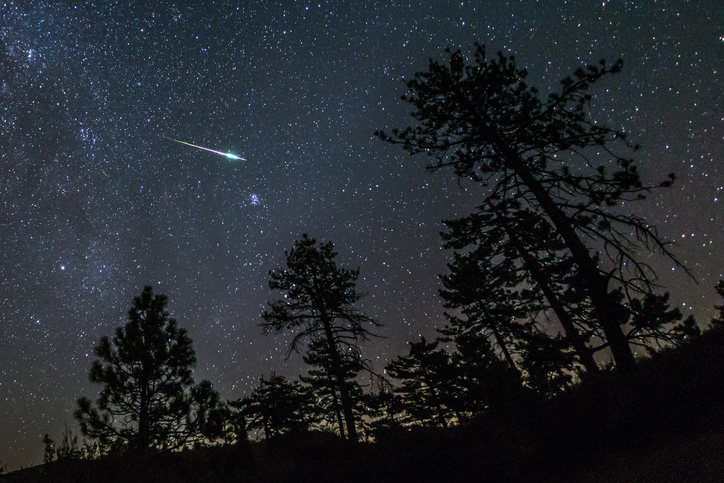
The peak of the Geminids will happen on December 13th and 14th, when as many as 30 meteors will trace across the sky every hour.

You might want to mark your calendar for these dates, because it's a spectacle worth seeing.

This year's Geminid shower will be a little less bright than other years, due to the fullness of the moon.

The full moon occurs on Thursday, December 12th, 2019, so it will still be at about 96% fullness at the peak of the Geminids, and the light of the moon will make it a bit harder to see the meteors...but it will still be an incredible show!
For the best, brightest meteor shower experience, try to get as far away as possible from city lights, because light pollution makes it much more difficult to see the stars (and the meteors).

Trillium Lake, shown here, is a great option for night viewing. Other spots include the Alvord Desert, Steens Mountain, John Day Fossil Beds National Monument, and Crater Lake National Park, just to name a few.
You might even catch some great views on the coast, as long as there isn't a lot of cloud cover present. This photo was taken at Cape Arago State Park during a previous meteor shower.

No matter where you choose to witness the Geminids over the next week, snuggle in and enjoy! You'll be able to see the meteors as early as 9 p.m., but the peak typically occurs around 2 a.m., so take a nap and bring along some coffee!

Learn more about the Geminids Meteor shower and other meteor showers coming soon on the American Meteor Society's website. Are you planning to snuggle in and stay up late to see this meteor shower? Tag the people you want to hang out with!
Subscribe to our newsletter
Get the latest updates and news
Thank you for subscribing!