This Year’s Icy Arctic Freeze Has Triggered An Unusual Natural Event In Cleveland
The arctic freeze of 2019 is now a mere memory, but Clevelanders will never forget it. Not only was it the region's coldest freeze since 1994, but it also triggered an unusual natural occurrence that has left many locals stumped. Frost quakes have historically striken the entire Midwest, and many Clevelanders have been affected. Have you heard a few unusual bumps in the night during deep freezes? Turns out, you aren't alone.
On January 29th, 30th, and 31st, 2019, Cleveland, along with much of the Midwest, was plunged into an incredible arctic freeze.
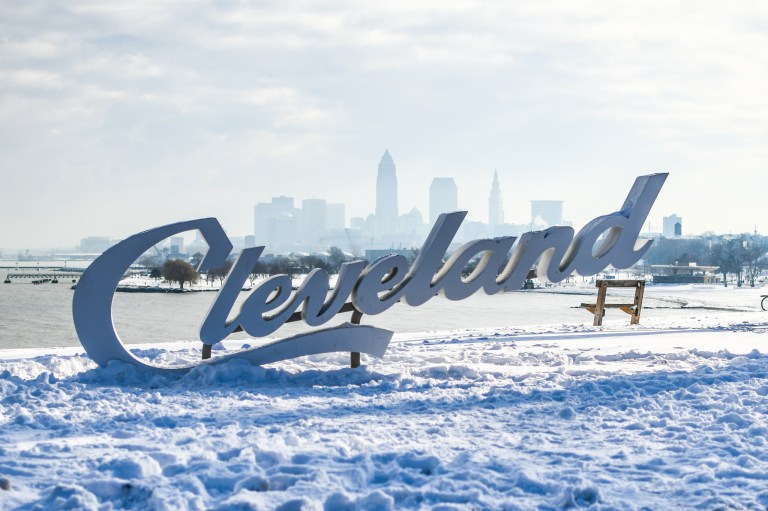
Wind chills easily reached -20 degrees, chilling locals to the bone and coating the landscape in patches of black ice.
The snow that has accumulated across Cleveland is gorgeous, but it's hard to overlook the patches of ice.

Rare late-January rains combined with an excess of melted snow allowed water to accumulate in ditches, on sidewalks, and on flat surfaces like driveways and roads. Once the freeze descended upon the region, these lovely pools became super slick pieces of ice.
However, it's the ice we can't see that may have made the biggest impact on Cleveland.

Not all of the excess water accumulated on roadways, despite what driving conditions may have led you to believe. Much of it seeped underground, and it froze suddenly as arctic temperatures hit the region.
As you probably know, water expands when it freezes...

Ice takes up more space than liquid water, so conditions underground were altered ever so slightly. This might not have been a big deal if the region had not just dealt with flooding related to rain and melting snow.
...And soil and rocks are shifted and broken up in response to the ice's natural movement.

The expansion of ice and the pressure it built has resulted in a natural phenomenon that, although rare, has plagued Cleveland with loud pops, bangs, and booms this year.
If you heard some of these loud noises during the arctic freeze, you weren't alone. Conditions in Northeast Ohio were perfect for ice quakes.

Ice quakes, also known colloquially as frost quakes, are called cryoseisms by the scientific community. These harmless little quakes merely break up soil and rocks, but the noises they produce can be unbelievably loud.
Remarkably, this phenomenon is hyper-localized.

A quake that occurs at your home or workplace may not be felt or heard next door, and a little frost quake on the West Side certainly couldn't be heard on the East Side.
As temperatures became particularly frigid in the dead of night on Tuesday, January 29, and Wednesday, January 30, these rare quakes startled locals who heard the loud noises.

Though harmless, it's certainly surprising to hear such noises. If you did happen to hear the pops, bangs, and booms, count yourself lucky; it's incredibly rare for conditions to be perfect enough to result in such a quake.
Isn't winter in Northeast Ohio magical?!

It is extremely rare for conditions to produce such frost quakes, but many Clevelanders experienced this phenomenon in January. Did you hear any pops, booms, or bangs during the arctic freeze? Share your experience in the comments below!
If you're fascinated by the beauty of Cleveland winters, you'll surely adore a trip to our frozen lighthouse.
Subscribe to our newsletter
Get the latest updates and news
Thank you for subscribing!