Don’t Try This One Hike in New Hampshire if You’re Afraid of Heights
The most extreme hike in New Hampshire challenges hikers with dizzying heights, boulder fields, and steep scrambles to Mount Washington’s summit.
New Hampshire’s White Mountains are known for their beauty, but they also contain some of the most unforgiving terrain in the country. If heights make you uneasy, or even just a little nervous, the Huntington Ravine Trail in White Mountain National Forest is one hike you should seriously reconsider. This route is widely considered the most extreme hike in New Hampshire, and once you commit, there’s no easy way out.
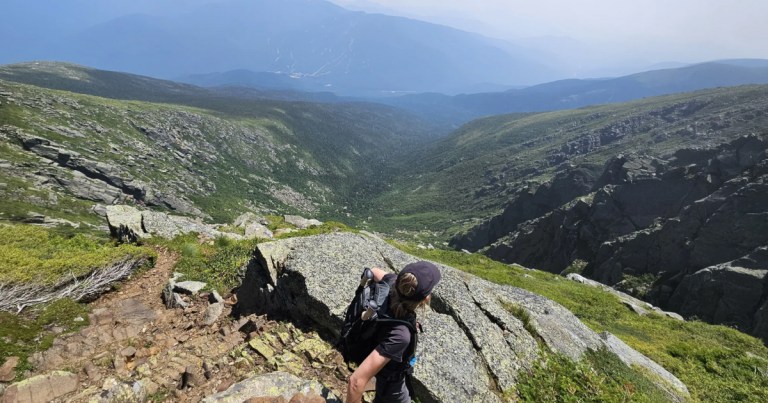
This 7.9-mile loop reaches the summit of Mount Washington, the tallest peak in the Northeast. While there are multiple ways to the top, climbing via Huntington Ravine and descending by Lion Head is in a category of its own. This isn’t a typical hike. It’s a steep, exposed scramble that demands full focus and constant use of your hands and feet. Even experienced hikers find it intimidating. One AllTrails reviewer, Martin Kuka, who has completed all 48 of New Hampshire’s 4,000-footers, said the trail made them extremely uncomfortable. They noted that if they had hit a dead end, there was “no way” they could have climbed back down. For anyone afraid of heights, that’s a terrifying thought.
Navigating the Ravine
The hike starts at the Pinkham Notch Visitor Center. The first stretch follows the Tuckerman Ravine Trail, which feels manageable with a steady climb through the forest. That sense of ease doesn’t last long. Once you turn onto the Huntington Ravine Trail, the terrain changes quickly.

You’ll soon reach an area called “The Fan,” a wide field of massive boulders that have fallen from the cliffs above. After carefully navigating the rocks, you arrive at the headwall, the most intense part of the hike. Here, the trail turns into a near-vertical scramble up smooth granite slabs. There are no cables, ladders, or handrails. You rely entirely on your footing and the grip of your boots. The exposure is significant, and glancing back reveals a long, steep drop that can make even confident hikers pause. Calm nerves and steady focus are essential.

Reaching the Summit and Heading Down
After climbing out of the ravine, you’ll cross the Alpine Garden to reach Mount Washington’s 6,288-foot summit. The Mount Washington Observatory is a chance to rest and regroup, but the challenge isn’t over yet.

Descending Huntington Ravine is strongly discouraged and considered dangerous due to its steepness. Instead, hikers descend via the Lion Head Trail. While safer, it’s still tough on the knees and requires careful footing over rocky steps. Along the way, you’ll pass Hermit Lake and get a clear view of the Lion Head rock formation before reconnecting with the main trail back to the parking area.

Essential Prep
Only attempt this hike in dry conditions. Wet granite becomes extremely slippery and dangerous. In winter, Huntington Ravine turns into a technical mountaineering route that requires ice axes, crampons (I recommend the Hillsound Trail Crampons based on reviews), and avalanche training. Dogs should be left at home—the steep slabs and narrow chimneys are not passable for them.
This trail earns its notoriety as one of the most extreme hikes in New Hampshire. It takes strength, composure, and zero fear of heights. It’s a bucket-list challenge for some, but if you prefer solid ground beneath your feet, the White Mountains offer plenty of incredible trails that won’t leave your heart racing.
Before heading out, check the Mount Washington via Huntington Ravine and Lion Head Trail on AllTrails for current conditions, recent photos, and trail reports.
Feeling inspired? Try planning your own trip using Only In Your State’s itinerary planner.
Subscribe to our newsletter
Get the latest updates and news
Thank you for subscribing!